

Christian artwork is defined as sacred visual art that depicts biblical themes, figures such as Jesus and the Virgin Mary, saints, and scriptural narratives central to the Christian faith. For American families and individuals, these pieces serve a dual purpose: they beautify living spaces and act as daily devotional reminders. Whether you are drawn to a Byzantine icon, a watercolor print of the Transfiguration, or a bold rendering of the Sacred Heart, understanding what makes religious art meaningful helps you choose pieces that genuinely deepen your faith life rather than simply fill wall space.
What are the main types and themes in Christian artwork?
Christian art covers sacred subjects using Christian themes, most commonly featuring Jesus, biblical scenes, the Virgin Mary, and saints. The range of subjects is broad, but certain themes appear across nearly every tradition.
Core subjects in Christian art include:
- Images of Jesus. Scenes from the Life of Christ, including the Nativity, the Last Supper, the Crucifixion, and the Resurrection, are the most common subjects in Christian art across all denominations. A Nativity Scene print brings this foundational story directly into the home.
- Marian devotion. Depictions of the Virgin Mary, from the Annunciation to the Pietà, are central in Catholic and Eastern Orthodox traditions. These images emphasize her role as the Mother of God and intercessor.
- Saints and holy figures. Catholic and Orthodox traditions place strong emphasis on saint imagery. Patron saints, martyrs, and doctors of the Church each carry specific iconographic symbols that identify them at a glance.
- Biblical narratives. Scenes like the Road to Emmaus, the Sermon on the Mount, and the Feeding of the Five Thousand translate scripture into visual form, making abstract theology concrete and accessible.
- Angels and heavenly figures. Archangels such as Michael and Gabriel appear frequently, often in scenes of protection, announcement, or battle against evil.
Protestant and Reformed traditions tend to favor less figurative imagery, focusing instead on scripture text art, crosses, and symbolic motifs. Catholic and Orthodox traditions embrace a fuller range of figurative sacred art. This difference is rooted in centuries of theological debate rather than mere aesthetic preference, and it shapes what feels right for your home and your faith community.
How do Christian art styles differ across traditions?
The visual style of faith-based paintings varies dramatically depending on the theological tradition behind them. Theological and historical contexts produce distinct art styles across Christianity, and those differences directly affect what feels authentic for your home.
| Tradition | Visual Style | Key Characteristics |
|---|---|---|
| Eastern Orthodox | Byzantine iconography | Flat, symbolic, gold backgrounds, elongated figures |
| Roman Catholic | Western naturalism | Realistic figures, narrative depth, emotional expression |
| Protestant / Reformed | Minimal figuration | Text-based, cross motifs, abstract or landscape imagery |
| Contemporary Christian | Mixed modern styles | Watercolor, abstract oil, digital illustration |
Byzantine iconoclasm from 726 AD banned figurative sacred representation entirely, leading churches to replace images with crosses, geometric patterns, and landscapes. Icon production resumed after 843 AD, but the experience permanently shaped Orthodox visual theology. This history explains why Byzantine icons look so different from a Renaissance painting of the same subject.
Christian Byzantine iconography prioritizes conveying religious truth through abstraction and symbolism rather than naturalism. The flat, stylized figures in an icon are not a failure of technique. They are a deliberate theological statement: the saint depicted exists beyond physical reality, and the image reflects that transcendence.
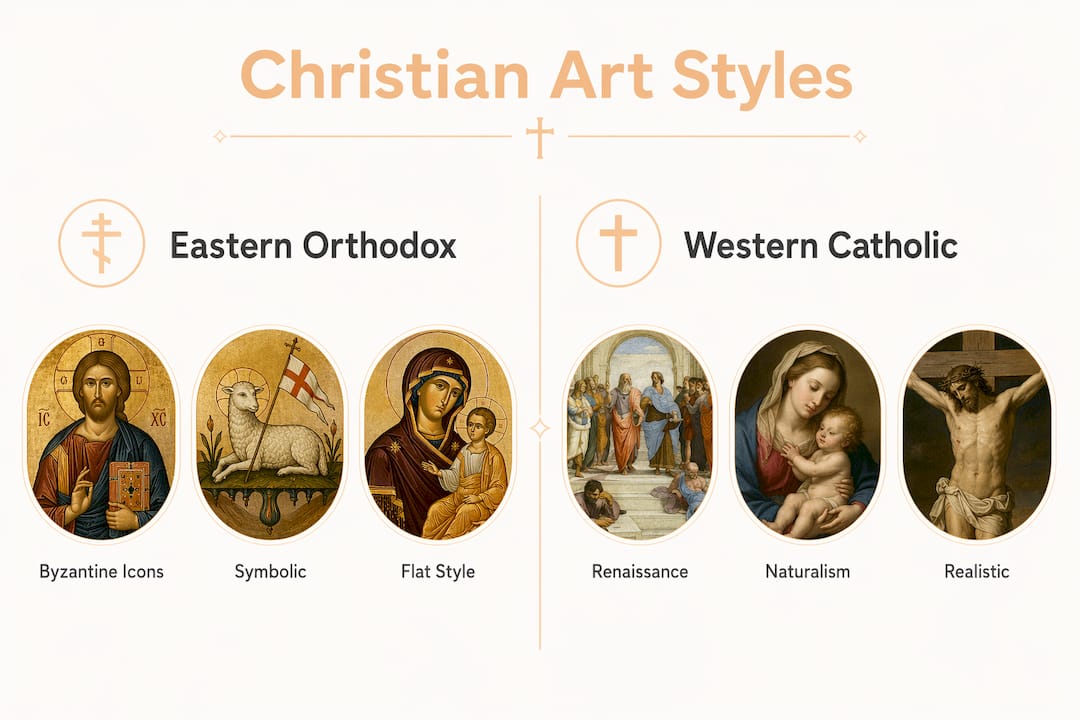
Western Catholic art, shaped by the Renaissance and Baroque periods, moved toward naturalism. Artists like Raphael and Caravaggio rendered biblical scenes with emotional depth and physical realism, making scripture feel immediate and human.
Pro Tip: Before purchasing a print, identify which tradition resonates with your faith practice. An Orthodox-style icon and a Baroque-inspired Sacred Heart print carry very different theological emphases, and both are valid. Choosing consciously makes the piece more meaningful.
What is the spiritual meaning behind key Christian images?
Sacred images function as more than decoration. Images like the Divine Mercy help viewers form prayer routines and remind them to perform works of mercy, turning art into a devotional tool that shapes daily spiritual habits.
The Divine Mercy image is one of the most widely recognized pieces of Christian art in the United States. Its symbolism is precise and intentional:
- The red ray represents the Blood of Christ, symbolizing the life of souls.
- The pale ray represents the Water that flowed from Christ’s side, symbolizing the grace that makes souls righteous.
- The inscription “Jesus, I trust in You” serves as a short, memorized prayer that accompanies veneration of the image in homes and parishes.
Pope Benedict XVI emphasized sacred images as encounters with the risen Christ that go beyond physical realism, encouraging what he called an interior gazing of the heart. That framing changes how you interact with a print on your wall. You are not simply looking at a picture. You are engaging with a visual theology that invites prayer and reflection.
Sacred art is a tool for faith that transcends aesthetics, helping believers meditate and participate in sacred mysteries through visual prompts. A well-chosen piece of spiritual wall decor can anchor a morning prayer routine, mark a dedicated prayer corner, or simply remind a family of their shared values every time they pass through a room.
Christian sacred art’s unique abstraction invites viewers into an encounter with the divine that realistic art may not convey as effectively. This is why many families find that a stylized icon or an abstract watercolor of the Last Supper carries more spiritual weight than a photorealistic print.
How to choose and use Christian art meaningfully in your home
Selecting the right piece of religious art requires more than matching colors to your living room walls. The most meaningful choices align your faith tradition, your devotional goals, and your home’s physical spaces.
-
Know your tradition. Discussing art choices with faith leaders and understanding tradition-specific meanings helps families choose artwork compatible with their beliefs. A Catholic family may want a Sacred Heart print in the living room. A Protestant family might prefer a cross with a scripture verse. Neither is wrong. Both are intentional.
-
Choose placement with purpose. A prayer corner or home altar benefits from a central, prominent image. Bedrooms work well with quieter, more intimate images such as a guardian angel or a gentle depiction of the Nativity. Placing images prominently in multiple life spaces, combined with short memorized prayers, produces the strongest devotional effect.
-
Balance aesthetics with spiritual function. A print that clashes with your home’s style will get moved or ignored. Look for pieces where the artistic quality and the spiritual content reinforce each other. The Transfiguration of Jesus in watercolor, for example, combines a key biblical event with a style that works in both modern and traditional interiors.
-
Consider art as a meaningful gift. Biblical illustrations and saint prints make thoughtful gifts for Confirmation, baptism, First Communion, and graduation. A patron saint print tied to the recipient’s name or vocation carries personal significance that a generic gift cannot match. The Sacred Heart of Jesus is a perennially meaningful choice for nearly any occasion.
-
Build iconographic literacy over time. Iconography literacy helps believers decode the visual grammar in sacred art, enabling them to select pieces that fit their doctrinal emphasis and enhance spiritual life. Learning what a lily symbolizes in a depiction of the Annunciation, or why Saint Michael carries a sword, transforms passive viewing into active engagement.
Pro Tip: Start with one anchor piece in a high-traffic area of your home, such as the entryway or kitchen. A single well-chosen print that your family sees daily does more for faith formation than a dozen pieces scattered without intention.
Key takeaways
Christian artwork is most effective when chosen with both theological awareness and devotional intent, not simply as decoration.
| Point | Details |
|---|---|
| Define your tradition first | Catholic, Orthodox, and Protestant traditions each favor distinct visual styles rooted in theology. |
| Understand image symbolism | Key works like the Divine Mercy carry precise theological meaning in every visual element. |
| Place art with purpose | Prominent placement in daily living spaces, paired with short prayers, strengthens devotional habits. |
| Match style to spiritual function | Abstract and symbolic styles often invite deeper prayer than purely realistic depictions. |
| Use art as a meaningful gift | Saint prints and biblical scenes make deeply personal gifts for faith milestones. |
Why I think most people underestimate what a sacred image can do
Most people hang religious art the same way they hang any other print: they find something that looks nice, they put it on the wall, and they move on. That approach misses almost everything that makes Christian art worth having.
The first time I really paid attention to a Byzantine icon, I was struck by how uncomfortable it made me. The figures were flat, the proportions were off, and nothing about it matched my instinct for what “good art” looked like. Then someone explained that the flatness was intentional. The icon is not a window into a historical moment. It is a window onto eternity. That reframing changed everything.
Sacred images work best when you know what you are looking at. A Last Supper watercolor print is not just a scene from scripture. It is a visual meditation on sacrifice, community, and covenant. When you understand that, the print stops being background and starts being a conversation.
My honest advice: spend ten minutes learning the iconographic symbols in any piece before you buy it. Read about the rays in the Divine Mercy image. Look up what the lamb represents in a depiction of John the Baptist. That small investment of time turns a decorative purchase into a devotional practice. The art does not change. Your relationship to it does.
— Griffin
Faith-inspired prints from Divineprints for your home and gifts
Divineprints offers a growing catalog of high-quality Christian wall art designed for both home devotion and meaningful gifting. Every piece is chosen for its faithfulness to tradition and its ability to inspire daily prayer and reflection.
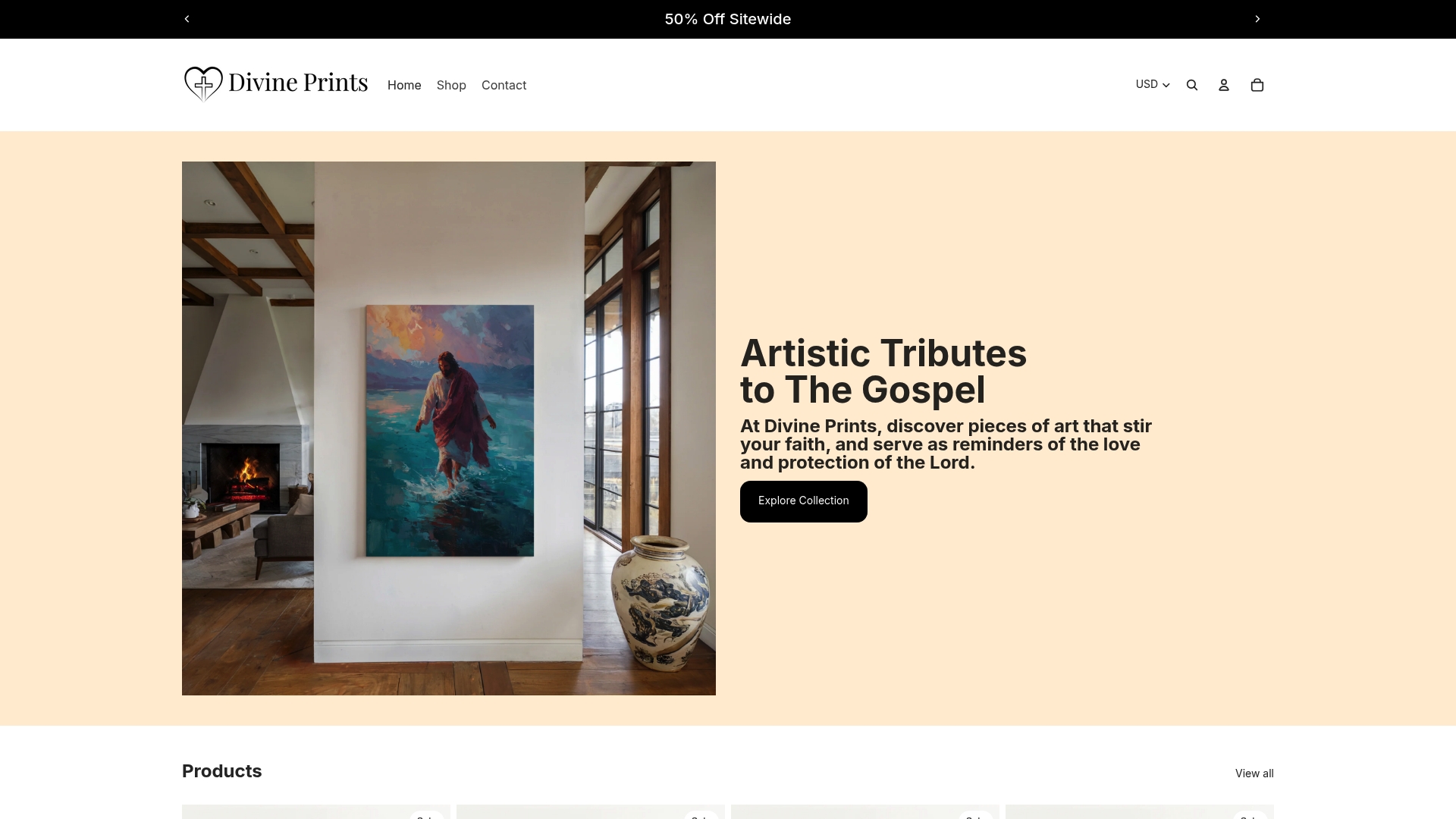
The Transfiguration of Jesus watercolor print captures one of the most theologically rich moments in the Gospels, rendered in a style that works beautifully in modern American homes. The Sacred Heart of Jesus remains one of the most beloved images in Catholic devotion, making it a natural choice for living rooms, prayer corners, and gift occasions alike. Browse the full collection at Divineprints to find prints suited to your tradition, your space, and the people you love.
FAQ
What is Christian artwork?
Christian artwork is sacred art that visually depicts biblical themes, figures such as Jesus, the Virgin Mary, and saints, and scenes from scripture. It serves both as home decor and as a devotional aid that supports prayer and faith reflection.
How do I choose Christian art for my home?
Start by identifying your faith tradition, since Catholic, Orthodox, and Protestant styles differ significantly. Then consider placement: a prayer corner, bedroom, or living room each calls for a different type of image and level of visual intensity.
What does the Divine Mercy image symbolize?
The red ray in the Divine Mercy image represents the Blood of Christ and the life of souls, while the pale ray represents the Water that makes souls righteous. The image is designed to prompt the prayer “Jesus, I trust in You” and to encourage works of mercy.
Is Christian art appropriate for all Protestant homes?
Protestant traditions generally favor less figurative imagery, preferring crosses, scripture text art, and symbolic motifs over depictions of saints or the Virgin Mary. Families should choose art that aligns with their specific denominational beliefs and feels spiritually authentic to them.
What makes a Christian print a good gift?
A print tied to a specific saint, biblical event, or devotional image carries personal meaning that a generic gift cannot match. Patron saint prints, Sacred Heart images, and biblical scene prints are especially meaningful for Confirmation, baptism, First Communion, and graduation gifts.