

Archangel Raphael is the principal patron saint of healing in Catholic and broader Christian tradition, invoked for healing of body, mind, and spirit. When you need a more specific intercessor, these saints are widely venerated for particular needs:
Commonly named patrons include Archangel Raphael for general healing; St. Blaise for throat ailments; St. Camillus de Lellis for nurses and healthcare workers; St. John of God for hospitals and mental illness; St. Peregrine Laziosi for cancer and serious illness; St. Dymphna for mental health; St. Padre Pio for chronic illness; and St. Bernadette Soubirous for physical illness.
Start with Raphael when you want a broad healing prayer. Reach for a specialist saint when the need is specific.
Key Takeaways
Archangel Raphael is the principal patron saint of healing in Catholic tradition, grounded in the Book of Tobit, with specialist saints like St. Blaise, St. Peregrine, and St. Dymphna serving specific ailments and needs.
| Point | Details |
|---|---|
| Raphael for general healing | Invoke Archangel Raphael (feast: October 24) for broad healing of body, mind, and spirit. |
| Specialist saints for specific needs | St. Blaise for throat, St. Peregrine for cancer, St. Dymphna for mental health, St. Camillus for nursing care. |
| St. Blaise throat blessing | Attend a parish throat blessing on February 3 using the traditional crossed-candle rite. |
| Nine-day novena structure | The St. Raphael novena repeats daily with a personal intention slot — start on any day. |
| Divineprints saint prints | A framed saint print from Divineprints keeps your chosen patron present as a daily prayer reminder. |
Table of Contents
- Who is Archangel Raphael, the patron saint of healing?
- Major healing saints and what each one is known for
- Which saint should you pray to for a specific ailment?
- How do you actually pray for healing through a saint?
- Parish traditions and feast-day practices tied to healing saints
- A pastoral perspective on praying for healing
- Keep a healing saint close with devotional wall art
- Sources
Who is Archangel Raphael, the patron saint of healing?
Raphael’s identity as a healer comes directly from scripture. The Book of Tobit describes him as the companion who guides young Tobias on a dangerous journey and restores his father Tobit’s sight. His name in Hebrew means “God has healed,” and that meaning has shaped his devotional role for centuries. He is not simply a symbol of healing; he is the biblical figure who actually performed it.
In Catholic devotional practice, Raphael is invoked for healing of the whole person: physical illness, mental suffering, and spiritual wounds. He is also associated with doctors, nurses, pharmacists, and counselors, making him a natural patron for anyone in healthcare. His feast day falls on October 24, shared with the archangels Michael and Gabriel since the 1969 revision of the Roman Calendar.
A typical line from the St. Raphael healing novena captures the devotional tone well: “O Raphael, lead us toward those we are waiting for, those who are waiting for us; Raphael, Angel of happy meeting, lead us by the hand toward those we are looking for.” The novena calls him “the medicine of God” and repeats a request format that invites you to name your specific intention each day.
One pastoral note worth making: praying to Raphael is not worship of an angel. The devotional framing is always intercession — you are asking Raphael to bring your petition before God, the same way you might ask a friend to pray for you. That distinction matters for Christians who feel uncertain about angelic devotion.
Pro Tip: Raphael devotion often pairs a healing petition with a request for guidance and safe passage, reflecting the Tobit narrative. If you or someone you love is facing a medical journey, that dual framing (heal and guide) fits the tradition exactly.
Major healing saints and what each one is known for
If you want a named patron for a specific need, the saints below cover the most common situations. The Fourteen Holy Helpers tradition, which grouped saints by the ailments they were invoked for during medieval epidemics, established the principle of specialist intercession that still shapes Catholic devotional practice today.
| Saint | Known for / Patronage | Who typically asks | Feast Day | Common devotional practice |
|---|---|---|---|---|
| Archangel Raphael | General healing, body, mind, spirit | Anyone seeking healing | October 24 | Nine-day novena, daily prayer |
| St. Blaise | Throat ailments, respiratory illness | Those with throat or voice conditions | February 3 | Throat blessing with crossed candles |
| St. Camillus de Lellis | Nurses, hospitals, healthcare workers | Nurses, caregivers, patients | July 14 | Prayer for caregivers, hospital ministry |
| St. John of God | Hospitals, mental illness, heart patients | Those with mental illness, heart conditions | March 8 | Prayer for the sick, hospital chapels |
| St. Peregrine Laziosi | Cancer, serious and chronic illness | Cancer patients and families | May 4 | Novena, relic veneration |
| St. Dymphna | Mental health, anxiety, emotional distress | Those with depression, anxiety, trauma | May 15 | Novena, shrine pilgrimage |
| St. Padre Pio | Chronic illness, spiritual healing | Those suffering long-term illness | September 23 | Chaplet of Divine Mercy, relic devotion |
| St. Bernadette Soubirous | Physical illness, those who feel forgotten | The chronically ill, the overlooked | April 16 | Lourdes water devotion, novena |
A few profiles deserve more than a table row.
St. Camillus de Lellis founded the Camillians, a religious order entirely dedicated to the care of the sick, and Pope Pius XI formally declared him a patron of nurses and healthcare personnel in 1930. That declaration covered not just physical care but the psychological and spiritual dimensions of caregiving — which is why nurses and hospital chaplains still invoke him today. St. John of God received the same papal patronage declaration alongside Camillus.

St. Peregrine Laziosi is the go-to patron for cancer patients, partly because of his own story: he developed cancer in his leg, prayed through the night before his scheduled amputation, and woke to find the cancer gone. Whether you read that as miracle or legend, it has made him a powerful figure of hope for people facing serious diagnoses.
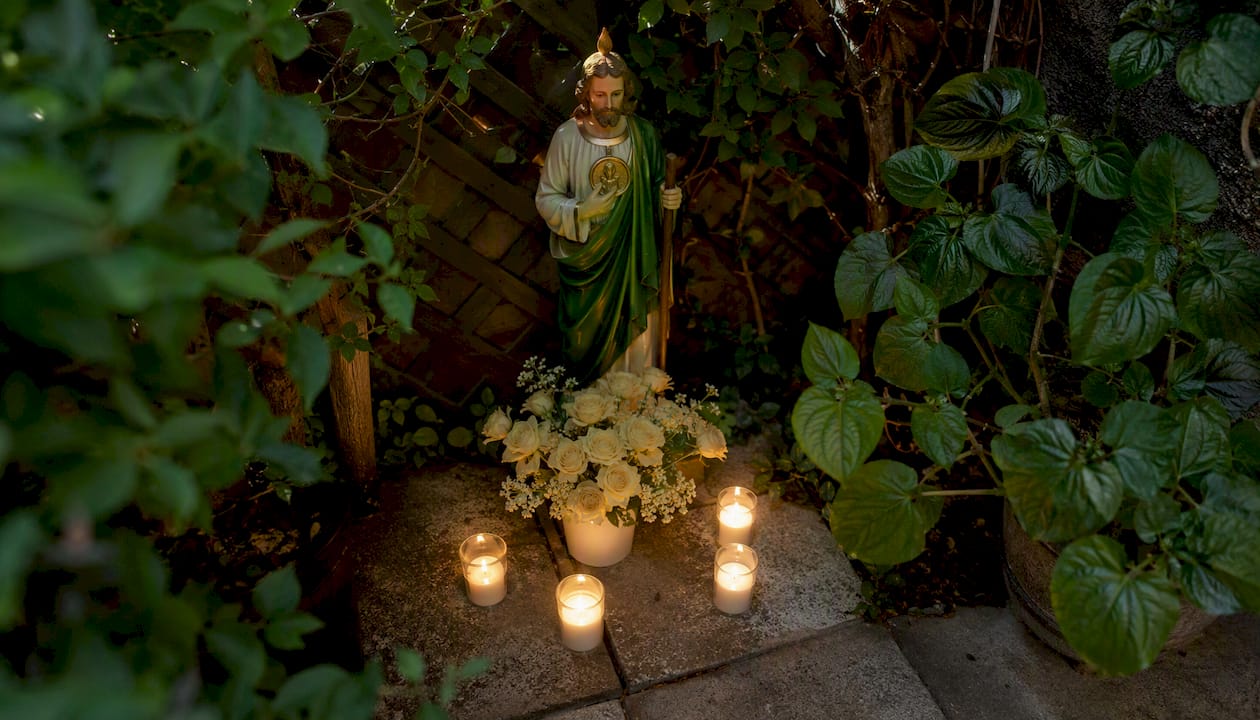
St. Dymphna is less well known outside Catholic circles, but parish devotional guides consistently list her for mental health, anxiety, and emotional distress. She is the patron of those with nervous disorders, and her shrine in Geel, Belgium, has a centuries-long tradition of caring for people with mental illness that predates modern psychiatry.
Which saint should you pray to for a specific ailment?
Start with Raphael for broad healing. For a specific condition, the Fourteen Holy Helpers framework gives you a historically grounded way to match need to saint.
- Throat problems, voice loss, tonsillitis — St. Blaise (February 3 feast; the throat blessing is a living parish rite)
- Cancer, tumors, serious illness — St. Peregrine Laziosi (May 4; novena widely available)
- Mental health, depression, anxiety, trauma — St. Dymphna (May 15) or St. John of God
- Hospital care, nursing, caregiver support — St. Camillus de Lellis and St. John of God (both declared patrons of nurses and healthcare workers by Pius XI)
- Chronic illness, long-term suffering — St. Padre Pio or St. Bernadette
- General healing, guidance through illness — Archangel Raphael (October 24)
- Heart conditions, those with mental illness — St. John of God (March 8)
Pro Tip: You do not have to choose just one. Catholic tradition encourages petitioning multiple saints for different aspects of a need. A cancer patient might pray to Peregrine for healing, Raphael for guidance through treatment, and Dymphna for the anxiety that comes with a serious diagnosis.
Prayer and medical care are not in competition. Invoking a healing saint is a devotional act that complements, not replaces, the care of doctors, nurses, and mental health professionals.
How do you actually pray for healing through a saint?
The structure is simpler than most people expect. Address God first, name the saint as your intercessor, state your intention clearly, and close with a surrender to God’s will. That four-part frame works for any healing prayer.
- Address God directly. Open with “Heavenly Father” or “Lord Jesus” — the prayer goes to God; the saint carries it.
- Name the saint as intercessor. “Through the intercession of St. Raphael…” or “I ask St. Peregrine to bring this petition before you…”
- State the intention specifically. Name the person, the illness, or the need. Vague prayers are fine, but specific ones tend to focus the heart.
- Add the surrender clause. “If it is Your will” or “according to Your mercy” — this is not a hedge; it is the theological core of Christian petition.
- Close with gratitude. Thank God in advance, as an act of faith.
For a structured nine-day practice, the St. Raphael healing novena is the most widely used template. It repeats the same prayer each day with an explicit slot to insert your personal intention, which makes it easy to stay consistent. The novena refers to Raphael as “the medicine of God” and asks for healing of both soul and body.
For families and caregivers, there are a few practical steps worth knowing. You can request that your parish include a sick person in the general intercessions at Mass. Most parishes also offer the Anointing of the Sick, a sacrament specifically for those facing serious illness. Hospital chaplains can arrange blessings and prayers at the bedside, and many Catholic hospitals have chapels dedicated to healing saints.
Parish traditions and feast-day practices tied to healing saints
Healing devotion is not just private prayer. Several of the most beloved healing saints have living parish traditions you can participate in right now.
- St. Blaise throat blessing (February 3): The most widely practiced healing rite in American parishes outside of the sacraments. A priest holds two crossed, blessed candles against the throat and recites: “Through the intercession of St. Blaise, bishop and martyr, may God deliver you from ailments of the throat and from every other evil.” The EWTN coverage of this rite traces the practice to early modern parish custom and confirms it remains a living tradition on February 3.
- Archangel Raphael feast (October 24): Many parishes offer a novena in the days leading up to October 24. Some hold a special Mass or healing prayer service on the feast itself.
- St. Peregrine novena and relic devotion: Parishes with a Servite presence often hold a public novena before May 4. Relic veneration, where a first-class or second-class relic of the saint is available for veneration, is common at shrines and some parishes.
- St. Camillus and St. John of God (hospital ministry): Catholic hospitals and healthcare systems often observe July 14 (Camillus) and March 8 (John of God) with chapel Masses and prayers for staff. Some nursing schools hold a blessing of nurses on or near these dates.
If you or someone you love is homebound or hospitalized, call your parish directly and ask for a priest to visit for the Anointing of the Sick or a simple blessing. Most parishes accommodate this readily. You can also ask to be added to the parish prayer list, which means your intention is prayed aloud at Mass by the whole congregation.
Pro Tip: If your parish does not observe the St. Blaise throat blessing, check neighboring Catholic parishes on February 3. The rite is brief (under two minutes) and open to anyone, not just parishioners.
A pastoral perspective on praying for healing
Pray to Raphael for general healing today. Name a specialist saint when the need is specific. That is the practical answer, and it is enough to get started.
What often goes unsaid in devotional guides is how much the act of naming a saint matters psychologically and spiritually. When you invoke St. Peregrine for a cancer diagnosis or St. Dymphna for a panic disorder, you are not just reciting a formula. You are placing yourself in a tradition of millions of people who have faced the same fear and found a companion in it. Saints are not vending machines for miracles. They are, in the language of Catholic tradition, friends in heaven who have already walked through suffering and come out the other side.
For caregivers especially, this framing is worth sitting with. Invoking St. Camillus is not only a prayer for the patient. It is a prayer for yourself, for the endurance and compassion that caregiving demands. The Camilliani tradition frames his patronage around the psychological and spiritual dimension of care, not just the clinical one. That is a gift to nurses and family caregivers who often feel their own suffering is invisible.
One more thing: do not wait until you feel spiritually ready to pray. The novena structure exists precisely because consistency matters more than eloquence. Start on any day. Use the printed text if your own words fail you. The tradition is built for exactly that moment.
Keep a healing saint close with devotional wall art
A saint print placed in a bedroom, hospital room, or home prayer corner does something a phone screen cannot: it stays. When you wake at 3 AM anxious about a diagnosis, a framed image of Raphael or Peregrine on the wall is already there, already pointing you toward prayer before you have formed a conscious intention.

Divineprints carries a growing collection of saint prints featuring Archangel Raphael and other beloved patrons, printed on museum-grade fine art paper and canvas in multiple sizes and frame styles. A St. Raphael print makes a meaningful gift for someone facing illness, a Confirmation gift for a young person choosing a patron, or a devotional anchor for a home prayer space. Prints ship across the United States and are available framed and ready to hang. Browse the saints collection at Divineprints to find the patron that fits your devotion.
Sources
These are the primary sources used throughout this guide, each worth bookmarking for deeper devotional use.
- Raphael the Archangel the Patron Saint of Healing
- CATHOLIC ENCYCLOPEDIA: St. Raphael the Archangel
- Healing Prayer of St. Raphael (novena text) — Our Lady of Joy
- St. Blaise blessing of throats (EWTN Vatican coverage)
- 28 August 1930: Pius XI declared St. Camillus the patron saint of nurses (Camilliani)
- Fourteen Holy Helpers — Wikipedia