

The saint Irene Chrysovalantou icon is a sacred Orthodox image depicting a ninth-century Byzantine abbess whose life of radical humility and persistent prayer continues to inspire Christian devotion worldwide. Known formally in Orthodox tradition as an eikon (the Greek word for “image” or “likeness”), this icon serves as a visual prayer anchor for believers seeking intercession in fertility, healing, and spiritual perseverance. Whether you display it in a home prayer corner, a parish nave, or a personal devotional space, the icon carries centuries of theological meaning in every brushstroke and symbol.
What is the historical origin of the Saint Irene Chrysovalantou icon?
Saint Irene Chrysovalantou lived in ninth-century Byzantium, most likely during the reign of Emperor Michael III. She entered monastic life at a young age and eventually became abbess of the Chrysovalantou Monastery in Constantinople. Her name “Chrysovalantou” translates roughly as “golden valley,” a title associated with the monastery she led with extraordinary discipline and spiritual authority.
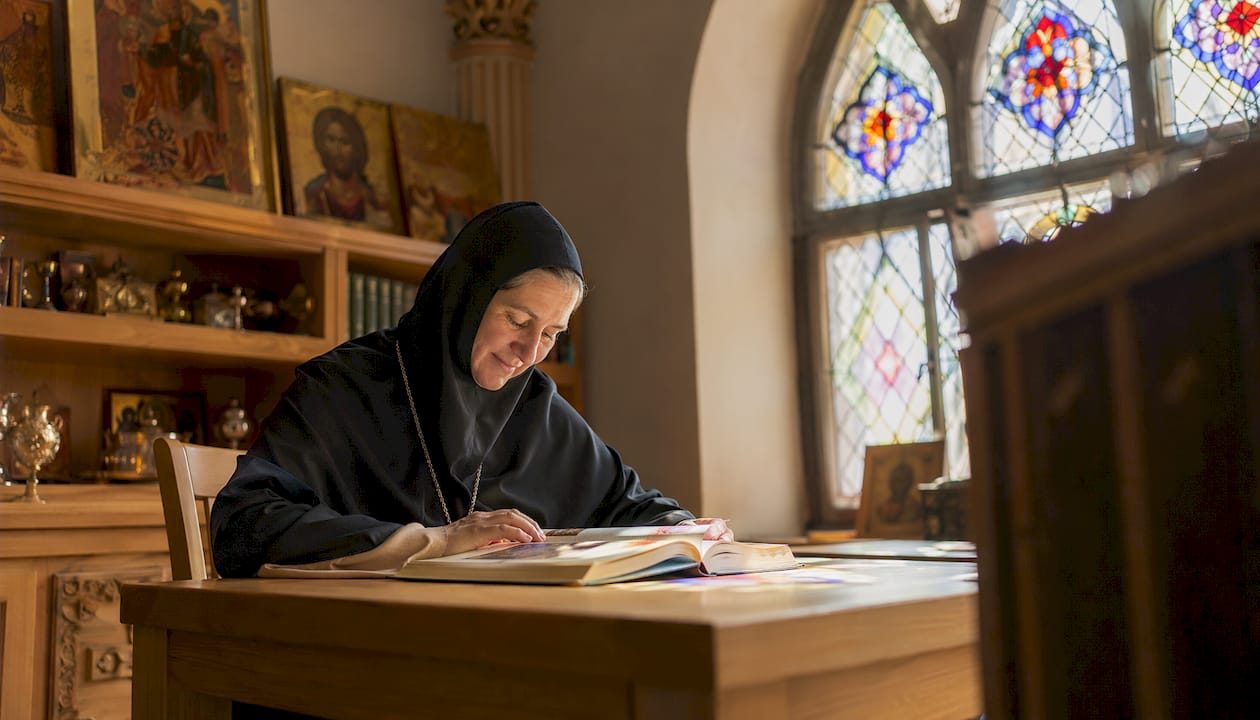
Her biography is preserved primarily through hagiographic texts, which describe visions, miraculous healings, and a life of severe ascetic practice. These accounts form the theological foundation for the icon’s imagery. The Church canonized her as a saint, and her feast day falls on July 28, a date observed annually with liturgical celebrations across Greek Orthodox communities in Greece, Cyprus, and the United States.
The most significant modern center of her veneration is the monastery in Koropi, Greece, built and expanded almost entirely through the personal labor of its monastic community rather than outside funding. That story of sacrifice mirrors the saint’s own life and gives the monastery a spiritual weight that pilgrims feel immediately upon arrival. Her global reach is also evident in North America: the St. Irene Chrysovalantou Greek Orthodox Church in Toronto reflects her worldwide devotional appeal among diaspora communities.
Key historical facts about Saint Irene Chrysovalantou:
- Era: Ninth-century Byzantine Empire
- Role: Abbess of the Chrysovalantou Monastery in Constantinople
- Feast day: July 28, observed in Orthodox and some Catholic Eastern Rite communities
- Primary pilgrimage site: Monastery of Saint Irene Chrysovalantou in Koropi, Greece
- North American presence: Dedicated parishes in cities including Toronto and New York
What symbolism is in the Saint Irene Chrysovalantou icon?
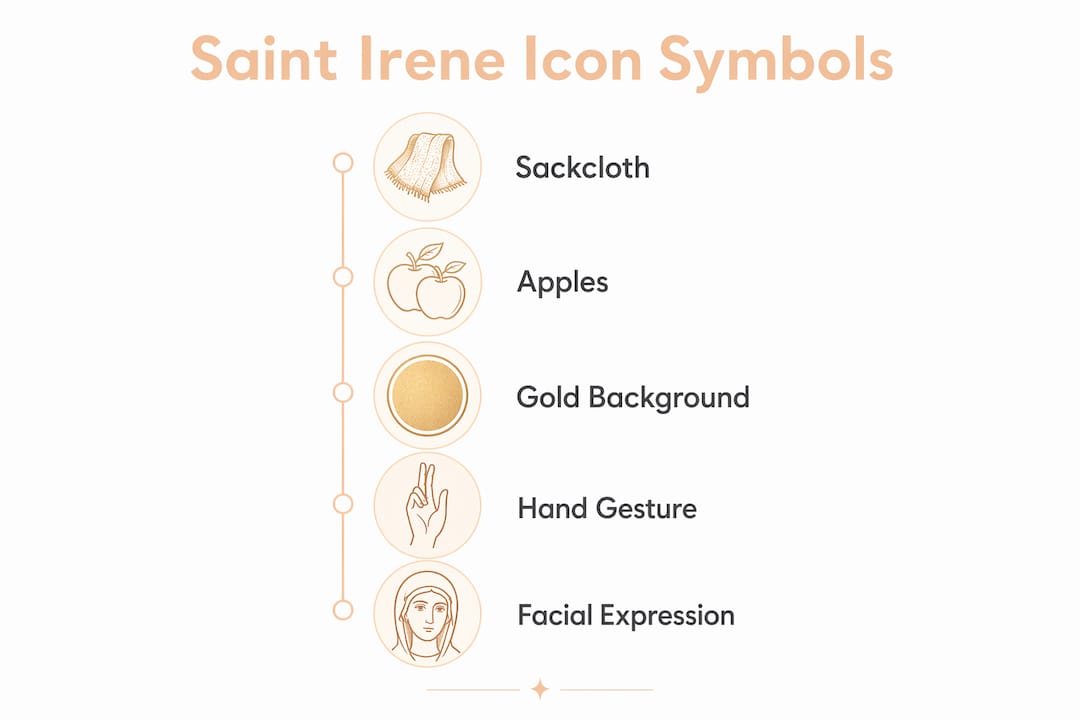
The icon of Saint Irene Chrysovalantou carries a precise visual vocabulary. Every element is intentional, rooted in Orthodox iconographic tradition, and chosen to communicate theological truth rather than artistic preference.
The sackcloth habit and what it means
Icons of Saint Irene commonly depict her wearing a rough sackcloth habit rather than the more ornate monastic vestments seen in icons of bishop saints. Sackcloth signals voluntary poverty and penitential humility. It tells the viewer that this saint chose discomfort as a spiritual discipline, not as a punishment. That choice is the theological core of her witness.
The apples: intercession and blessing
The most distinctive element in her iconography is the apples she often holds or that appear near her figure. Apples in Orthodox iconographic tradition carry associations with blessing, abundance, and answered prayer. For Saint Irene specifically, the apples connect directly to her intercession for fertility, a tradition rooted in documented miracles across Cyprus and Greece. Couples who receive apples blessed at her shrine believe they carry her intercession for conception.
Color and gesture in Orthodox iconography
Orthodox icon painters follow the Hermeneia, a traditional manual of iconographic technique. Gold backgrounds represent divine light and eternity, not a decorative choice. Deep reds and blues in a saint’s garments signal martyrdom and heavenly wisdom respectively. Saint Irene’s icons typically use muted earth tones for her habit, reinforcing the humility theme, while gold halos mark her glorified status in heaven.
The table below compares key iconographic elements across several well-known Orthodox saints’ icons to show what makes the Saint Irene icon distinctive.
| Iconographic element | Saint Irene Chrysovalantou | Saint Mary of Egypt | Saint Macrina the Elder |
|---|---|---|---|
| Garment | Sackcloth monastic habit | Rough desert robe | Simple monastic veil |
| Held object | Apples (blessing/intercession) | Three loaves of bread | Scroll or Gospel book |
| Background | Gold (divine light) | Gold (divine light) | Gold (divine light) |
| Primary theme | Humility and fertility intercession | Repentance and desert asceticism | Teaching and family sanctity |
Pro Tip: When selecting an icon for your prayer space, look for gold leaf or gold-toned backgrounds rather than plain yellow paint. Gold leaf reflects light differently throughout the day, creating a living quality that deepens the devotional experience.
How do Christians use the Saint Irene Chrysovalantou icon in devotion?
The icon functions as a focal point for prayer, not merely a decorative object. Orthodox theology teaches that venerating an icon directs honor to the saint depicted, not to the physical object itself. That distinction matters for Catholic and Protestant Christians who may be newer to icon use.
Practical devotional uses of the icon include:
- Personal prayer corner: Place the icon at eye level in a dedicated home space, ideally with a candle or oil lamp. Pray before it daily, naming specific petitions aloud or silently.
- Fertility and pregnancy intercession: Couples facing fertility challenges bring the icon into their prayer practice, following a tradition documented in Cyprus where a chapel was built after a couple conceived following 12 years of infertility.
- Parish and communal veneration: Many Greek Orthodox parishes in the United States display her icon prominently on her feast day, july 28, with a special liturgy and blessing of apples.
- Pilgrimage preparation: Believers traveling to the Koropi monastery often bring a personal icon to have it blessed at the shrine before returning home.
- Gifting for life milestones: The icon serves as a meaningful gift for baptisms, weddings, and Confirmation, particularly for recipients facing personal hardship.
The 30-year search for water at the Koropi monastery is one of the most cited examples of the saint’s legacy of perseverance. The monastic community drilled for water for three decades before finding it. That story has become a devotional touchstone for believers who feel their own prayers go unanswered for years.
Pro Tip: If you are new to praying with icons, start with a short, fixed prayer said at the same time each day. Consistency builds the habit of attention that makes icon prayer meaningful over time.
What formats and prices are available for Saint Irene icons today?
Devotional icons of Saint Irene Chrysovalantou are available in several formats, each suited to different uses and budgets. Common formats include wood-mounted prints, hand-painted icons on gessoed board, and marble plaque versions that combine durability with visual weight.
| Format | Typical price range | Best use |
|---|---|---|
| Wood-mounted print | $20–$45 | Home prayer corner, gifting |
| Hand-painted icon | $80 and above | Serious devotional use, parish gifts |
| Marble plaque | $30–$60 | Outdoor shrines, durable home display |
Prices for standard sizes run $20–$45 for printed formats. That range makes the icon accessible for first-time buyers and for those purchasing multiple copies as gifts.
When evaluating quality, look for these features:
- Accurate iconographic detail: The sackcloth habit and apples should be clearly rendered, not simplified or omitted.
- Stable substrate: Wood panels should be sealed to prevent warping. Marble plaques should have smooth, chip-free edges.
- Authentic style: Icons painted in the Byzantine flat-figure style carry more theological integrity than photorealistic portraits, which are not part of the Orthodox iconographic tradition.
- Artist or workshop attribution: Reputable sellers identify the icon painter or workshop. Anonymous mass-produced prints offer less assurance of iconographic accuracy.
Buyers in the United States can find authentic options through Greek Orthodox parish gift shops, specialty religious art retailers, and vetted online sellers. Purchasing from sources connected to Orthodox communities gives you the best chance of receiving an icon that follows traditional iconographic standards.
Key Takeaways
The Saint Irene Chrysovalantou icon is a theologically precise devotional image whose symbols of humility, intercession, and perseverance make it one of the most sought-after Orthodox saints’ icons for personal and communal prayer.
| Point | Details |
|---|---|
| Feast day is July 28 | Mark this date for liturgical celebration and special icon veneration in your parish or home. |
| Apples signal fertility intercession | The apples in her icon are not decorative; they represent her documented role as intercessor for couples seeking children. |
| Sackcloth communicates humility | Her rough habit is a deliberate iconographic choice that defines her spiritual identity as a saint of voluntary poverty. |
| Prices start at $20 | Wood-mounted prints offer an accessible entry point for devotees purchasing their first icon of Saint Irene. |
| Perseverance is her defining legacy | The 30-year water search at Koropi monastery makes her a patron for believers enduring long seasons of unanswered prayer. |
Why the Saint Irene Chrysovalantou icon deserves a permanent place in your prayer space
I have spent years studying how Christians in the United States engage with religious art, and one pattern stands out clearly. People tend to underestimate the difference between a decorative religious print and a theologically grounded icon. The Saint Irene Chrysovalantou icon sits firmly in the second category, and that distinction changes how you pray with it.
What strikes me most about this icon is the specificity of its intercession. Most saints are venerated broadly, for general protection or guidance. Saint Irene carries a very particular tradition around fertility and perseverance in long-suffering prayer. That specificity is rare, and it gives the icon a focused devotional power that generalist religious art simply cannot replicate. When a couple places her icon in their home after years of trying to conceive, they are not just decorating a wall. They are entering a tradition of petition that stretches back to ninth-century Byzantium.
The Koropi monastery’s story also changed how I think about patience in faith. Three decades of searching for water is not a footnote. It is the entire point. The devotion to Saint Irene is built on the idea that persistence in prayer is itself a form of holiness, not a sign that God has not heard you. That reframing is something I think American Christians, who often expect quick answers, genuinely need. Displaying her icon where you see it daily is a quiet, constant reminder that endurance is not failure. It is faithfulness.
If you are considering adding a saint’s icon to your home or prayer space, I would encourage you to start with one that carries a specific meaning for your current season of life. For anyone in a season of waiting, whether for a child, healing, or a long-deferred hope, Saint Irene Chrysovalantou is the right choice.
— Griffin
Bring faith-centered art into your home with Divineprints
Divineprints offers a growing collection of saint wall art prints designed for Christian and Catholic homes, prayer spaces, and parish settings. Each piece combines devotional meaning with quality materials, so the art you hang serves both as beautiful decor and a daily reminder of the faith that shapes your life.

Whether you are looking for a meaningful Confirmation gift, a print for a home prayer corner, or artwork that honors a beloved patron saint, Divineprints has options across a range of styles and price points. The collection includes sacred heart prints, biblical scenes, and saint portraits that reflect the same reverence and iconographic care you find in the best devotional art. Visit Divineprints to find the piece that fits your space and your faith.
FAQ
What does the Saint Irene Chrysovalantou icon depict?
The icon depicts Saint Irene in a sackcloth monastic habit, often holding apples that symbolize her intercession for fertility and blessing. Gold backgrounds and Byzantine flat-figure style are standard iconographic features.
When is Saint Irene Chrysovalantou’s feast day?
Her feast day is July 28, observed with special liturgies and the blessing of apples in Greek Orthodox parishes worldwide.
Why do people pray to Saint Irene Chrysovalantou for fertility?
Her intercession for fertility is rooted in documented miracles, including a chapel built in Mathiatis, Cyprus, after a couple conceived following 12 years of infertility through prayer to the saint.
How much does a Saint Irene Chrysovalantou icon cost?
Standard wood-mounted prints typically range from $20 to $45. Hand-painted icons on wood panels cost more, depending on size and the painter’s workshop.
Is the Saint Irene Chrysovalantou icon used in Catholic devotion?
The icon originates in Eastern Orthodox tradition, but Eastern Rite Catholic communities and many Latin Rite Catholics also use it for personal devotion, particularly for fertility and perseverance in prayer.