

St. Cecilia is venerated as the patron saint of music and musicians. That designation rests mainly on a single hagiographic detail: at her wedding, while secular musicians played, Cecilia reportedly “sang in her heart to the Lord” instead of joining the celebration. It’s a devotional tradition, not a documented biography. The Acts of St. Cecilia, the Liber Usualis, and centuries of practice at the Accademia Nazionale di Santa Cecilia all support the association, but historians generally treat her connection to actual musicianship as legend, not fact.
Key Takeaways
St. Cecilia’s status as patron saint of musicians comes from one interpretive line in the Acts of St. Cecilia, reinforced by centuries of liturgy, art, and institutions like the Accademia Nazionale di Santa Cecilia.
| Point | Details |
|---|---|
| Patronage source | The “sang in her heart” wedding scene in the Acts of St. Cecilia is the primary textual basis for her musical association. |
| Historical caution | Scholars find little direct evidence Cecilia actually played instruments; the link grew through medieval interpretation, not a documented biography. |
| Iconography to know | Look for the organ, roses, and songbird together in art for the fullest symbolic depiction. |
| Feast day observance | November 22 carries centuries of liturgical antiphons and concert traditions tied to her name. |
| Devotional art option | Divineprints offers durable St. Cecilia and saint prints suited to rehearsal rooms and home prayer corners. |
Table of Contents
- Who Was Cecilia of Rome?
- Where Does St Cecilia Patronage Actually Come From?
- How Is St. Cecilia Depicted in Art?
- What Feast Day Traditions Are Tied to Her Music Patronage?
- What Musical Works and Institutions Honor St. Cecilia?
- Where Is St. Cecilia Venerated Today?
- How Do Musicians Honor St. Cecilia Today?
- Why Cecilia’s Patronage Still Matters
- Bring St. Cecilia’s Story Into Your Prayer Space
- Sources
Who Was Cecilia of Rome?
Cecilia is traditionally placed in Rome around the early centuries of the Christian era, though scholars can’t pin down exact dates with confidence. Her feast falls on November 22, and the story built around her name is one of the most widely retold in Christian hagiography.
The narrative follows a fairly consistent arc across manuscripts and later retellings:
- Cecilia took a private vow of virginity as a young Christian noblewoman.
- Her family arranged her marriage to a Roman patrician named Valerian.
- On her wedding night, she told Valerian of her vow, and he converted to Christianity.
- Valerian’s brother, Tiburtius, also converted after Valerian shared his experience.
- Roman authorities arrested and executed both brothers; Cecilia was later condemned as well, reportedly surviving an initial execution attempt before dying at the hands of an executioner sometimes named Maximus.
- She was buried in the Roman catacombs, and her cult grew from that burial site.
The Acts of St. Cecilia is the primary textual source for this chronology, and it reads more like a theological narrative than a historical record. Britannica and other reference sources note that her martyrdom story, not a musical career, is what anchored her early cult. The music association came later.
Where Does St Cecilia Patronage Actually Come From?
The patronage traces back to one moment in the Acts: the Latin phrase often rendered as “cantantibus organis,” describing instruments playing at Cecilia’s wedding while she, internally, sang only to God. Medieval readers took that line and ran with it, gradually reshaping a passage about spiritual detachment into an image of Cecilia as a musician herself.
Medieval interpreters read “cantantibus organis” as evidence that Cecilia herself played the organ, when the original passage more plausibly described her resisting the secular music around her rather than performing it.
That single interpretive leap did a lot of work over the centuries. Here’s roughly how the chain unfolded:
- The Acts of St. Cecilia describes the wedding scene and her internal devotion during the music.
- Medieval artists and writers began depicting her holding or playing an organ, treating the phrase almost literally.
- Liturgical antiphons built around her feast reinforced the musical imagery in Catholic worship.
- The Accademia Nazionale di Santa Cecilia, founded with papal backing in the late 16th century, formally adopted her as patroness, cementing the association in an institutional way that outlasted any theological subtlety.
Scholarly treatments are candid about the gap here. Britannica frames her patronage as rooted in martyrdom and devotional reading, not verified musical practice, and a Project MUSE analysis traces how legend, liturgy, art, and institutional adoption layered on top of each other over centuries to produce something that functions like historical fact even though it started as an interpretive stretch. The Aleteia explanation calls it plainly: the organ association likely grew from a misreading, and the patronage survived anyway because it served a devotional purpose people needed.
How Is St. Cecilia Depicted in Art?
Once artists accepted Cecilia as a musician, they needed a visual vocabulary for her, and a fairly standard set of attributes emerged across centuries of painting and sculpture.
- Organ or portable organ: the signature attribute, tied directly to the “cantantibus organis” line.
- Harp, lute, or violin: variations that appear depending on the era and regional artistic style.
- Songbird: symbolizes her voice and her devotion rising toward heaven.
- Roses: reference the crown of roses she’s said to have received from an angel, tied to her purity.
- Palm branch or sword: martyrdom symbols marking her death for the faith.
Raphael’s Ecstasy of Saint Cecilia is probably the most famous example, showing her surrounded by broken instruments while she gazes upward, which art historians read as a statement that earthly music yields to heavenly music, not a literal performance scene. Stefano Maderno’s sculpture at Santa Cecilia in Trastevere takes a different, starker approach, depicting her body as it was reportedly found rather than emphasizing instruments at all.
Pro Tip: When choosing devotional art of St. Cecilia for a prayer corner or rehearsal space, look for pieces that include at least one instrument and the rose motif together. It signals the full symbolic story, not just a generic musician figure.

What Feast Day Traditions Are Tied to Her Music Patronage?
St. Cecilia’s feast day, November 22, has functioned as an informal music holiday within Catholic parishes for centuries. Historical liturgical material, including antiphons preserved in the Liber Usualis, ties her feast directly to musical themes in the Mass and Divine Office, reinforcing the connection every year the feast is observed.
Over time, the day evolved beyond strictly liturgical observance into a broader occasion for musical celebration:
- Parish choirs often schedule special anthems or a small concert around November 22.
- Music schools and conservatories in several countries hold commemorative recitals near her feast.
- Some dioceses incorporate a blessing of instruments into the day’s liturgy.
- Composers historically wrote commemorative odes specifically timed to her feast, a tradition that shaped some of the works discussed below.
Parishes without an elaborate program can still mark the day meaningfully with something as simple as a choir prayer intention or a bulletin note explaining her patronage to the congregation.
What Musical Works and Institutions Honor St. Cecilia?
St. Cecilia’s patronage didn’t stay confined to churches. It became a recurring subject for composers across several centuries, generating some genuinely significant works in the Western classical tradition.
- Henry Purcell, Ode for St. Cecilia’s Day (1692): one of several odes English composers wrote specifically for annual Cecilia celebrations in London.
- George Frideric Handel, Ode for St. Cecilia’s Day and Alexander’s Feast: both draw on the same English tradition of commissioned Cecilian odes, with texts by John Dryden.
- Charles Gounod, St. Cecilia Mass (Messe solennelle de Sainte Cécile): a full liturgical Mass setting dedicated to her.
- Benjamin Britten, Hymn to St Cecilia: notable partly because Britten was born on November 22, her feast day, which he treated as a personal connection to the saint.
Institutionally, the Accademia Nazionale di Santa Cecilia in Rome carries her name as one of the oldest musical institutions in the world, with papal ties dating to the late 16th century.
The layering of legend, liturgy, art, and formal institutions over centuries is exactly how a few lines in a hagiographic text became a durable, functioning patronage that still shapes concert programming today.
Modern orchestras and choirs continue the tradition loosely, scheduling commemorative concerts near November 22, a practice that traces back to those original Cecilian odes commissioned for annual musical societies.
Where Is St. Cecilia Venerated Today?
The center of Cecilia’s cult has always been Rome. Santa Cecilia in Trastevere, built over what tradition holds was her family home, houses her relics and Maderno’s sculpture, and it remains the primary pilgrimage site tied to her story.
Beyond that shrine, her patronage extends into a fairly wide network of dedications and devotional patterns:
- Church music ministries and choirs frequently take her name for their programs.
- Organ builders and luthiers in several traditions claim her as a trade patroness.
- Poets and, in some traditions, the blind also invoke her patronage.
- Parishes with a Cecilia dedication often organize their patronal feast around a concert or sung Mass.
If you’re researching relic claims or shrine details beyond the well-documented Trastevere site, stick to diocesan or parish sources rather than unverified claims circulating online. Basic facts about her cult are well established; specific relic provenance claims vary in reliability.
How Do Musicians Honor St. Cecilia Today?
Devotion to Cecilia among working musicians tends to be practical rather than elaborate. The Marians of the Immaculate Conception frame her patronage as a reminder that sacred music should form the will toward God, not just produce an emotional effect on a listener, and that framing shapes how many church musicians approach her feast.
Common devotional practices include:
- Reciting a short prayer of invocation before rehearsals or performances on or near her feast.
- Having a priest bless instruments as part of a patronal Mass.
- Naming a choir, music ministry, or ensemble after her.
- Displaying a print or icon of St. Cecilia in a rehearsal room or home prayer space as a visual reminder of purpose.
Pro Tip: A simple patronal blessing doesn’t need vestments or ceremony. Gather the ensemble, read a short prayer invoking Cecilia’s intercession, and ask for the grace to make music that serves worship rather than performance alone. It takes five minutes and reframes the whole rehearsal.
Why Cecilia’s Patronage Still Matters
Music can slide into pure performance, something aimed at an audience rather than at God. Cecilia’s legend, however historically thin, pushes back against that drift by insisting the interior offering matters more than the external sound. For musicians and worship leaders, her example is worth revisiting whenever a rehearsal starts to feel more like a show than a prayer.
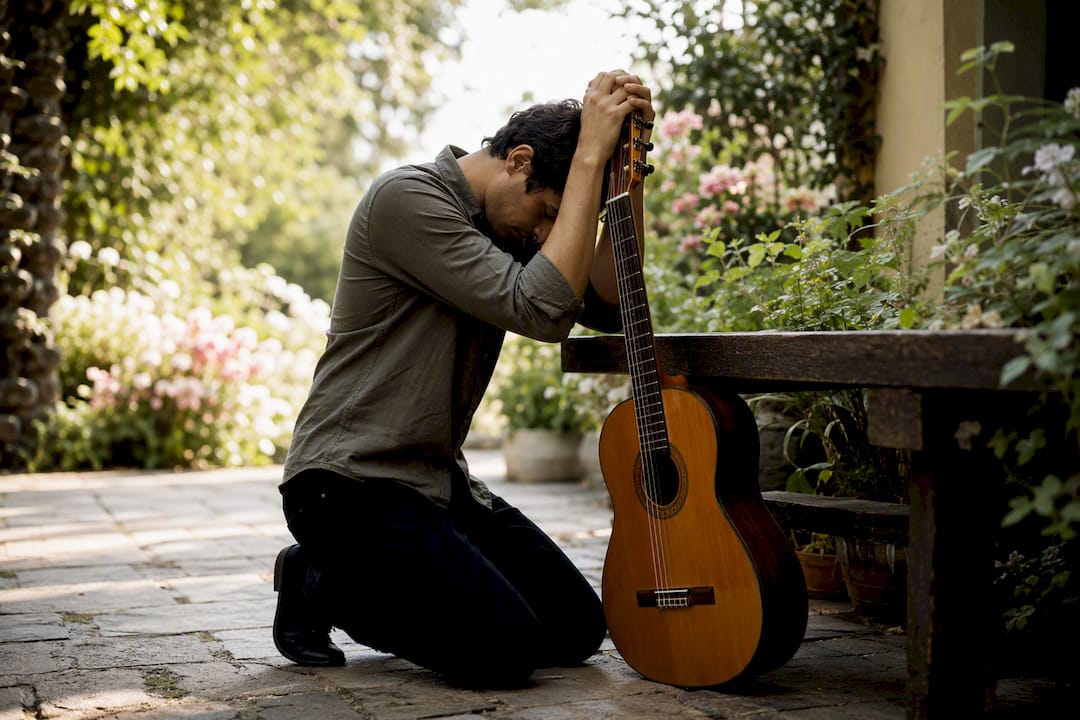
Bring St. Cecilia’s Story Into Your Prayer Space
If Cecilia’s story has you thinking about how music and prayer intersect in your own life, a well-chosen print can keep that reflection visible long after you close this page. Divineprints offers museum-grade saint art printed on demand, so a rehearsal room, choir loft, or home prayer corner gets a devotional piece built to last rather than a flimsy poster.

A few things worth considering when picking a St. Cecilia piece or any saint print for a music space:
- Choose an image that shows a recognizable attribute, like the organ or roses, so the symbolism reads clearly at a glance.
- Pick a durable, larger-format canvas for a rehearsal room where the piece will get more wear and viewing distance than a bedroom print.
- Pair a saint print with a small prayer card near the same wall for a quick devotional moment before practice starts.
Browse the full saint prints collection to see current options, including pieces suited to choir rooms, parish offices, and home prayer corners. If you’re shopping for a Confirmation or graduation gift for a musician in your life, a framed saint print pairs naturally with that occasion and holds up as a lasting devotional keepsake.
Sources
- Cecilia of Rome
- Saint Cecilia (Britannica)
- A Harmonious Heart: St. Cecilia, Patroness of Music (Marians of the Immaculate Conception)
- Project MUSE: scholarly article summary on Cecilia’s patronage
- Accademia Nazionale di Santa Cecilia (Turismo Roma)