

The fastest way to build a Christian home office is to pair one focal devotional piece, scripture art or a framed saint print, with a small prayer nook and layered lighting that supports both focus and reflection. You can start with a single wall and build from there using ready-to-hang devotional prints and saint art designed for this kind of setup.
TL;DR:
- Use a large scripture print of at least 18x24 inches placed two-thirds of the wall width behind the desk for clear visibility during video calls.
- Position crosses at eye level near devotional art to reinforce visual focus and avoid hiding them among clutter, enhancing their impact.
- Incorporate tunable lighting with adjustable cool and warm tones to support both concentration during work and reflection during prayer.
- Arrange a dedicated prayer nook with a focal devotional image, an LED candle, and a prayer journal, facing natural light when possible for a distinct spiritual space.
- Keep devotional art simple and intentional in the background for virtual meetings, avoiding clutter and using a single clear image for a strong, focused impression.
Table of Contents
- Faith-centered decor items and how to place them
- How do you arrange and light a Christian home office?
- Desktop accents and small faith-based gifts for your desk
- How do you build a prayer corner in a home office?
- Choosing furniture styles that complement Christian themes
- Incorporating symbols like crosses and doves effectively
- Selecting organizational tools that align with Christian values
- Balancing modern office functionality with faith-based aesthetics
- Creating a welcoming atmosphere for faith-centered virtual meetings
- Why we focus on saint and devotional art for home offices
- Where to find faith-centered wall art for your office
- FAQ
- Sources
Faith-centered decor items and how to place them
A faith-filled office starts with a handful of decor categories, each doing a different job in the room.
Scripture wall art works best as the anchor behind your desk, sized to fill roughly two-thirds of the available wall space so it reads clearly on video calls and in person. A single large print, 18x24 inches or larger, tends to outperform a cluster of small ones in a home office because it gives the eye one place to rest.
Saint prints and images of Jesus pair naturally with scripture art when you vary scale and frame finish. A smaller framed saint print beside a larger scripture piece creates depth without competing for attention, and matching wood or black frames keep a mixed grouping looking intentional rather than cluttered. Our own Christian wall art guide walks through framing and placement choices in more detail.
Crosses and crucifixes belong at eye level, not tucked above a bookshelf or lost among other wall items. A cross mounted near the devotional art, rather than isolated on its own wall, reinforces the same visual anchor instead of splitting attention across the room.
Tapestries and fabric hangings do double duty: they soften echo in a small office and create a textured backdrop that reads almost like an altar cloth behind a desk or prayer chair.
LED scripture lamps and small desk plaques round out the space with low-profile devotional cues that do not require wall mounting.
- Scripture wall art anchors the main wall behind or beside the desk.
- Saint and Jesus prints add devotional variety when scaled and framed thoughtfully.
- Crosses sit at eye level near the main art, never hidden in clutter.
- Tapestries soften sound and build a prayerful backdrop.
- Desk plaques and LED lamps add quiet reminders without taking wall space.
Pro Tip: Order your focal print first and let its frame finish and color palette guide every smaller piece you add afterward.
Buying tips matter as much as placement. Look for high-quality materials, personalization options such as name or date additions for gifts, and a clear turnaround estimate before you order for a specific occasion.
How do you arrange and light a Christian home office?
Composition and lighting decide whether devotional decor actually supports your workday or just sits there.
- Hang the main devotional piece at eye level directly behind your desk chair, or slightly off-center if you take frequent video calls, so it frames naturally without sitting dead-center behind your head.
- Use the two-thirds wall rule: measure your wall width and choose art that fills about 60 to 70% of it, then stand at your normal seated distance to confirm the piece reads clearly from there.
- Combine an adjustable task lamp with a secondary wall light rather than relying on a single overhead fixture.
- Choose a tunable lamp when possible, shifting toward cooler, neutral white light for focused tasks and warmer tones for prayer or reading.
- Angle any light source away from glossy prints or glass frames to avoid glare that washes out the image on camera or in person.
Vertical, wall-mounted light often does a better job of reaching both eye level and your work surface than a single ceiling fixture, according to lighting simulation research, though getting the spectrum and intensity right takes some adjustment. That is worth knowing before you assume a bright overhead light is doing enough work on its own.
Tunable lighting that shifts between cool and warm tones supports both concentration and relaxation, and is preferred by over half of surveyed home-office users for exactly that flexibility. Neutral-cool light around 4500K tends to aid analytical work, while warmer tones in the evening support the slower pace of prayer or journaling.
Keep wall colors neutral and pair them with warm wood tones and muted textiles. A quiet palette lets the devotional art carry the visual weight of the room instead of competing with busy wallpaper or bright accent walls.
Desktop accents and small faith-based gifts for your desk
Not every devotional item needs wall space. Compact scripture plaques, miniature framed saints, and small prayer journals fit on a shelf or desk corner and still deliver a daily reminder every time you sit down to work.

A rosary bowl or small dish near your keyboard keeps a rosary or prayer cards within reach without cluttering your workspace, and an LED devotional candle offers the same calming glow as a real flame without the fire risk in a paper-filled office.
Several everyday desk items double as decor when you choose the faith-themed version: a pen holder etched with a verse, a devotional desk calendar, or a small tray holding scripture bookmarks. None of these take up real estate, but each one adds a visual and spiritual cue throughout the day.
- Scripture plaques and miniature saint frames fit a shelf or desk corner.
- Rosary bowls keep prayer cards or beads within reach.
- LED devotional lamps add warm light without an open flame.
- Pen holders, desk calendars, and bookmark trays double as daily reminders.
These pieces also make simple, affordable gifts for Confirmation, graduation, or a new job, especially when wrapped with a handwritten verse card rather than elaborate packaging. A small, well-chosen print often means more than a large, generic one.
How do you build a prayer corner in a home office?
A prayer nook does not need its own room, just a few square feet set apart from your work surface.
- Choose a small table or shelf and place one focal devotional image or a crucifix directly above or behind it, following the same single-anchor principle as your main office wall.
- Add an LED candle or a safe flame alternative alongside a prayer journal or a short set of prayer cards you can reach without standing.
- Position the nook to face a window when your layout allows it, since natural light makes a short prayer break feel distinct from screen time.
- Choose a chair or cushion that is comfortable but unobtrusive, so the space invites a quick pause without becoming a second desk.
- Mark the nook as visually separate from your workspace using a small rug, a plant, or even a different wall color on that one section.
Small, deliberate choices, a single piece of art or one dedicated chair, are enough to anchor a sacred space at home, according to guidance on creating a home prayer space; a dedicated room is not necessary. The same source notes that short, repeatable practices tied to a specific object, a lamp you switch on each morning or a print you glance at between calls, make brief devotional moments easier to sustain during a workday.
Pro Tip: Try a two-minute breath prayer each morning before opening email, using the same lamp or candle as a consistent signal that the moment has started.
For more layout ideas, our guide to prayer corner ideas covers several small-space setups in more depth.
Choosing furniture styles that complement Christian themes
Furniture sets the tone before any art goes on the wall. A warm wood desk, whether oak, walnut, or a simpler pine, pairs naturally with devotional prints because it echoes the materials used in traditional church furnishings like pews and altar rails. Dark metal and glass desks can work too, but they read more clinical and may need a warmer rug or textile nearby to soften the effect.
Simple lines generally suit a devotional office better than heavily carved or ornate pieces, which can compete visually with framed art rather than support it. A clean-profile bookshelf, a solid wood desk, and one upholstered chair in a muted tone give the room enough structure without distracting from the wall art itself.
If your office doubles as a prayer space, consider a small cabinet or shelf unit built specifically to hold devotional items such as a journal, rosary, or prayer cards, separate from your work supplies; practical built-in shelving and storage solutions can help keep your prayer nook tidy and inviting as seen in Classy Closets. Built-in shelving or a custom storage wall can also keep both the desk area and the prayer nook tidy, which matters more in a small home office where every surface is visible on camera.
Avoid mixing too many wood tones or finishes in one small room. Two complementary tones, one for the desk and one for a shelf or frame, usually read as more intentional than three or four competing finishes.

Incorporating symbols like crosses and doves effectively
Crosses and doves carry centuries of meaning, but they lose impact when scattered across a room without a clear hierarchy. A single cross, mounted at eye level near your main devotional print, works harder than three small crosses spread across different walls.
Doves, often used to represent peace or the Holy Spirit, tend to work best as a secondary accent rather than a focal piece: a small framed print, a carved figure on a shelf, or a subtle motif within a larger scripture print. Pairing a dove image with a cross in the same sightline can reinforce a theme (peace alongside faith) without requiring extra wall space.
Metal wall crosses in a finish that matches your other hardware, brass, matte black, or brushed nickel, tend to look more deliberate than a mismatched piece picked up separately. The same goes for doves rendered in the same material as your other accents.
Keep symbols out of high-traffic visual clutter, such as above a crowded bookshelf or beside a cluttered cork board. A cross or dove placed with some breathing room around it reads as a meaningful choice rather than an afterthought, and that distinction shows up clearly on a video call where every object in frame gets noticed.
Selecting organizational tools that align with Christian values
Desk organization does not have to be purely functional. A devotional desk calendar that follows the church year can replace a generic planner and serve as a daily or weekly touchpoint for reflection alongside your task list.
Scripture bookmarks tucked into a desk tray, a small prayer card holder near your inbox tray, or a notebook cover printed with a verse turn ordinary organizational tools into quiet reminders throughout the workday. None of these require extra space: they simply swap a generic version of something you already use for one with devotional meaning.
Filing systems and storage benefit from the same approach. A labeled box for church volunteer paperwork, a shelf dedicated to devotional reading, or a small tray for prayer requests from coworkers keeps faith-related tasks as organized as work tasks, rather than scattered loosely around the desk.
When choosing between organizational products, prioritize function first. A beautifully designed planner that does not fit your actual workflow will not get used, no matter how meaningful its cover art is. The goal is a system you will actually keep up with, with faith-centered design as the finish, not the foundation.
Balancing modern office functionality with faith-based aesthetics
A productive home office still needs cable management, decent monitor height, and enough desk surface for your actual work, and devotional decor should fit around those needs rather than compete with them.
Mount your monitor or laptop stand first, then choose where devotional art goes relative to your sightline so it never blocks your view of the screen or forces an awkward camera angle. A print placed slightly above and behind your monitor, rather than directly beside it, usually solves this without any compromise.
Keep surfaces that need to stay clear, your main desk, a keyboard tray, actually clear. Devotional accents belong on secondary surfaces: a shelf, a side table, or wall space that is not part of your active work area. This keeps the room functional on a busy day while still surrounding you with meaningful art.
Technology and faith-based decor can share a room without clashing in style. A simple wood desk, a tidy cable setup, and one well-chosen print often look more intentional together than a room packed with gadgets or one overloaded with decor. The goal is a space that works as an office first and feels like yours, spiritually, every time you sit down in it.
Creating a welcoming atmosphere for faith-centered virtual meetings
Your camera frame is a small but important part of a faith-centered office, since it is often the only part of the room anyone else sees. Center a single scripture print or saint image slightly above your eye level in the background, rather than directly behind your head, so it reads clearly without appearing to float oddly in the frame.
Soft, frontal light works better on camera than a bright window or lamp behind you, which can silhouette your face and wash out the art altogether. A small lamp placed to the side, angled to avoid glare on glass or glossy frames, usually gives the clearest result for both you and the art behind you.
Keep the background simple during calls: one devotional piece reads as intentional, while a wall crowded with multiple frames, cords, and clutter can distract from the conversation itself. If your prayer nook sits within camera range, consider a small screen or angle your desk so that space stays private rather than on display during work meetings.
A tidy, well-lit background with one clear devotional image tends to leave a stronger impression than a cluttered one, simply because it gives viewers something specific to notice rather than visual noise to sort through.
Why we focus on saint and devotional art for home offices
Devotional art in the home reminds people to pray and can teach faith simply by staying in daily sight, according to commentary on art and Christian life, which is exactly why we build our catalog around saints, Jesus, and biblical scenes rather than generic inspirational prints. A larger biblical event print works well as a main focal piece, while a smaller saint print suits a desk shelf or side wall.
— Griffin
Where to find faith-centered wall art for your office
Our Saint Prints collection gives you patron saints and historical figures for a focal wall, while Jesus Prints offer a Christ-centered anchor for behind your desk. Biblical Event Prints suit larger walls or grouped arrangements, and Angel Prints work well as softer accent pieces near a prayer nook.
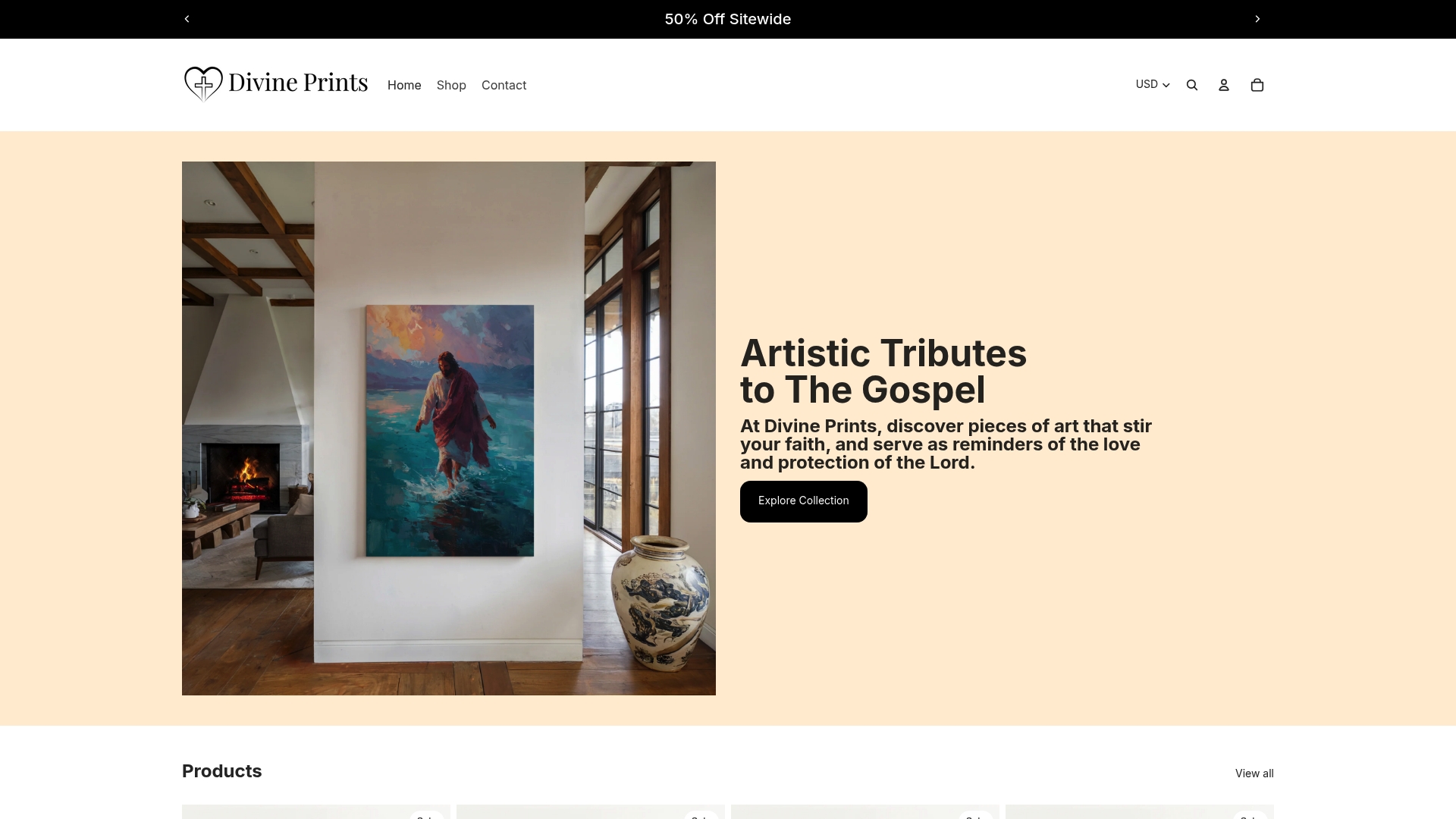
Every print is made to order on museum-quality paper or canvas, with framed and unframed options and free worldwide shipping. Browse the full catalog at Divine Prints and find the piece that anchors your space.
FAQ
What is the best size for a scripture print above a desk?
A print that fills about two-thirds of the wall width behind your desk usually reads best, which for most home offices means 18x24 inches or larger. Measure your seated viewing distance before ordering to confirm the text or image stays legible.
How do I set up a prayer corner in a small home office?
Use a small table or shelf with one focal devotional image, an LED candle, and a prayer journal or prayer cards within reach, placed apart from your main desk area. Facing a window and marking the space with a rug or plant helps it feel distinct even in a tight room, as guidance on home prayer spaces suggests.
What lighting works best for a Christian home office?
A combination of an adjustable task lamp and a secondary wall light tends to outperform a single overhead fixture for both focus and mood. Tunable lighting that shifts between cool and warm tones is preferred by many home-office users for exactly that flexibility between work and reflection.
Should I choose framed or unframed devotional prints?
Framed prints suit a focal wall where you want a finished look right out of the box, while unframed canvas or paper prints offer more flexibility if you plan to mix frame finishes yourself. Our own collections offer both options with personalization available depending on the piece.
How do I avoid glare on glossy religious prints near windows or lamps?
Angle any lamp or overhead light away from the print’s surface rather than directly at it, and avoid placing glossy frames directly across from a bright window. A matte finish print or canvas also reduces glare significantly compared to glass-covered frames.
Sources
- Creating a sacred space: how to set up a prayer space in your home
- Integrating color theory into a smart desk lighting system for enhanced productivity and cognitive function in work environments
- Art & the Christian life