

For gallery-quality, scripture-inspired wall art that holds up as real decor, Divineprints is the specialist source worth bookmarking first. The shop focuses exclusively on faith-based imagery — saints, Jesus, biblical scenes, and scripture typography — printed to museum-grade standards on archival paper and canvas. Whether you’re decorating a prayer corner, a living room, or shopping for a Confirmation gift, the selection is curated for devotional intent, not just aesthetics.
Before you click “add to cart” anywhere, run through these four checks:
- Size: Measure your wall space and compare to the listed print dimensions — not the frame dimensions.
- Material: Look for archival paper or canvas with pigment-based inks, not standard inkjet.
- Framing: Decide upfront whether you want ready-to-hang or unframed; framed pieces ship differently and cost more.
- Shipping timeline: Made-to-order prints typically take longer than stock items — confirm production time before checkout.
Table of Contents
- What should you verify before buying a Christian art print?
- Which styles of Christian art prints work best for each space?
- What does “gallery-quality” or “archival” actually mean for print materials?
- How do you choose the right size and placement for Christian art?
- What are the best occasions for gifting Christian art prints?
- What should you expect for pricing, shipping, and returns?
- Why is Divineprints a strong choice for modern Christian art?
- Key Takeaways
- Why a faith-specialist shop changes the buying experience
- Useful sources and further reading
- Divineprints: faith-centered wall art, ready to order
What should you verify before buying a Christian art print?
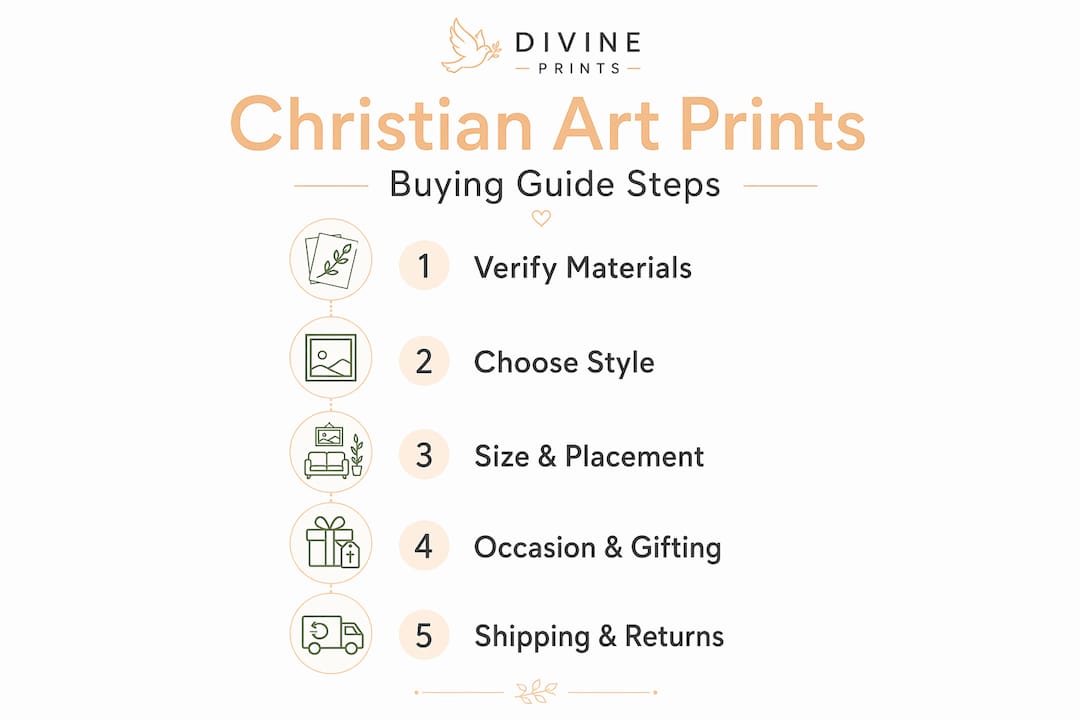
A fast checklist saves regret. Run through these before purchasing:
- Print material: Archival fine-art paper or canvas with pigment inks outlasts standard inkjet prints by decades. Look for “acid-free” and “giclée” in the product description.
- Frame options: Confirm whether framing is included, optional, or unavailable. Framed pieces require sturdier packaging and often cost more to ship.
- Exact dimensions: Product pages sometimes list frame size, not print size. Clarify which measurement you’re looking at.
- Verse or image attribution: For scripture prints, confirm the translation used (NIV, ESV, KJV) and whether the artwork is original or licensed.
- Production and shipping time: Made-to-order pieces can take 5–14 business days before they even ship. Factor that in for gifts.
- Return and exchange policy: Check whether the return window covers damage in transit and whether custom or personalized prints are excluded.
Pro Tip: When reading product specs, focus on three numbers: paper weight (heavier is generally better, with 300 gsm being a strong benchmark for fine-art paper), ink type (pigment inks resist fading far longer than dye-based inks), and UV resistance. A product page that skips all three is a yellow flag.
One hard red flag: no return policy listed at all, or a product page with no material specifications. Reputable specialty shops publish both.
Which styles of Christian art prints work best for each space?
The style you choose shapes how a room feels, not just how it looks. Here are the major categories and where each lands best:
- Scripture typography / minimalist: Clean layouts, single verses, neutral palettes. Works beautifully in bedrooms, home offices, and prayer corners where the goal is quiet reflection. Think white space, elegant serif fonts, and a single passage from Psalms or the Gospels.
- Modern devotional (soft palettes, light washes): Loose brushwork, muted golds, and soft blues. These feel contemporary without losing reverence. Strong choice for living rooms where you want faith-based decor that reads as art first. Modern Christian wall art in this style has grown significantly in home-decor interest over the past few years.
- Traditional figurative (Jesus, saints, biblical scenes): The lineage here runs from the earliest Christian imagery — the 3rd-century Dura-Europos house church paintings — through the High Renaissance and into contemporary devotional art. Figurative prints of Jesus or the saints work as living-room focal pieces and as gifts for sacramental occasions. Leonardo da Vinci’s The Last Supper) is the classic example of why narrative figurative art commands attention in a shared space.
- Iconographic: Gold leaf tones, flat perspective, formal poses. Suited to prayer rooms, chapels, and church offices. Buyers who want this style should look for prints that credit the iconographic tradition or artist.
- Nature and landscape spiritual art: Crosses in open fields, light breaking through trees, water imagery tied to baptism. Versatile enough for nurseries, hallways, and guest rooms.
- Abstract / sacred geometry: Geometric crosses, layered color fields, non-representational forms. Appeals to buyers who want faith present but understated. Good for contemporary home offices or shared living spaces.
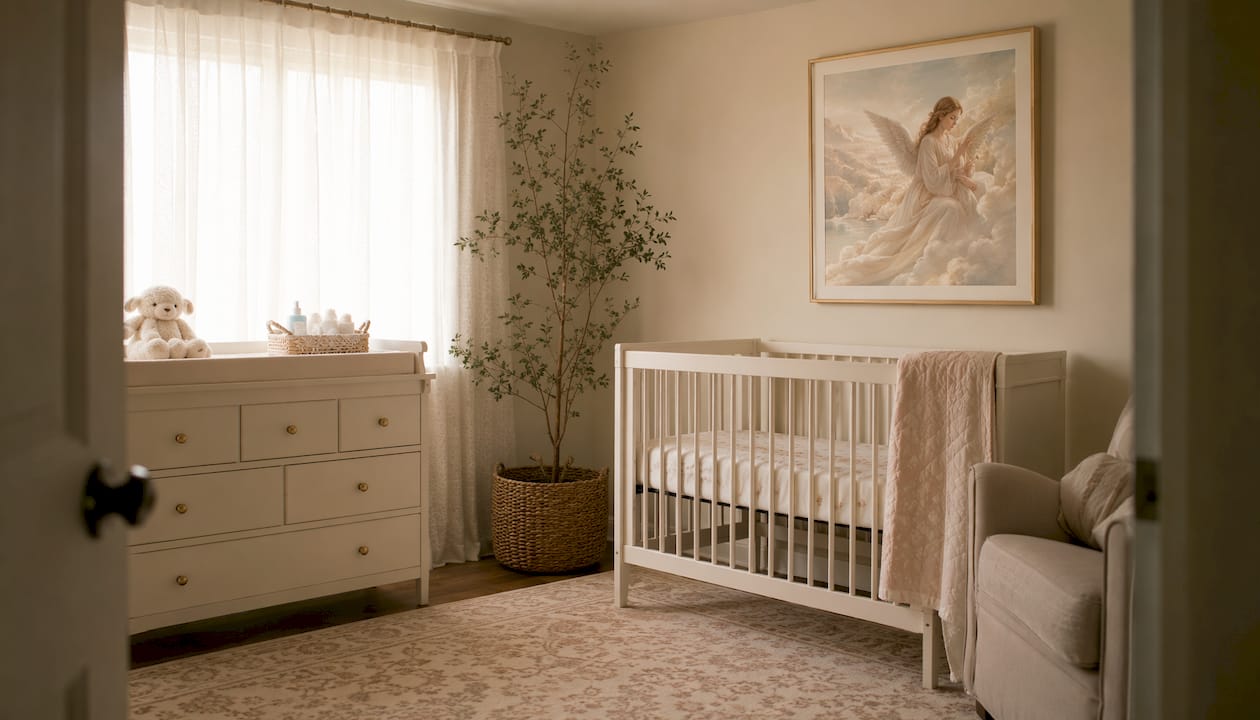
For nurseries and children’s rooms, soft figurative prints of guardian angels or gentle Gospel scenes tend to work better than dense scripture typography.
What does “gallery-quality” or “archival” actually mean for print materials?
These terms get used loosely, so it’s worth knowing what they actually describe.
Giclée printing uses pigment-based inks sprayed at high resolution onto archival paper or canvas. The pigment inks bond differently than dye-based inks, resisting fading significantly longer. “Archival” paper means acid-free, lignin-free stock that won’t yellow or become brittle over time. Together, these two qualities are what separate a print that looks good in ten years from one that doesn’t.
| Material | Expected durability | Common framing options |
|---|---|---|
| Archival fine-art paper (giclée) | Decades with proper care | Float frame, standard mat frame, unframed |
| Heavyweight matte paper | Several years to a decade | Standard frame, unframed |
| Stretched canvas | Long-lasting; no glass needed | Gallery wrap (frameless), floating frame |
| Rolled canvas | Varies by ink type | Requires stretching before framing |
When evaluating a product page, look for these specs:
- Paper weight (gsm) or canvas weight (oz)
- Ink type: pigment vs. dye
- UV-resistant coating or UV-resistant inks
- Acid-free claim
- Whether the canvas is hand-stretched or machine-stretched
Customer reviews that mention color accuracy after months of display, or photos showing the print in a real home, add more confidence than marketing copy alone. A Christian canvas wall art guide can help you compare canvas specs side by side if you’re unsure which format suits your space.
How do you choose the right size and placement for Christian art?
Sizing is where most buyers go wrong. A print that looks large on a product page can disappear on a tall wall.
Practical measurement rules:
- Single statement piece: Aim for artwork that spans roughly 60–75% of the width of the furniture below it (a sofa, a console table, a headboard). A 24×36-inch print above a standard 84-inch sofa will feel proportional; an 11×14 will look lost.
- Gallery wall: Mix two or three sizes. A large anchor piece (18×24 or bigger) surrounded by smaller prints (5×7 or 8×10) creates visual rhythm. Scripture prints, saint portraits, and botanical or photographic pieces can coexist when they share a color palette.
- Ideal hanging height: Center the artwork at roughly 57–60 inches from the floor — the standard gallery hang height — unless you’re placing it above furniture, in which case leave 6–8 inches of clearance between the top of the furniture and the bottom of the frame.
For large wall art, the scale shift from a product thumbnail to a real wall is dramatic. Order a size up from your instinct.
Pro Tip: Before ordering, tape together sheets of newspaper or kraft paper to the exact print dimensions and pin them to the wall. Live with the mock-up for a day. It costs nothing and prevents a size mistake that costs $80.

The Smithsonian Museum Conservation Institute notes that even UV-resistant prints can fade with prolonged direct sunlight. Hang archival prints away from south-facing windows or use UV-filtering glass when framing.
What are the best occasions for gifting Christian art prints?
Faith-based wall art is one of the few gifts that works across nearly every milestone in a Christian life. The key is matching the imagery to the occasion.
- Baptism: Soft angel prints, Good Shepherd imagery, or a print of the recipient’s patron saint. Keep the palette gentle; this is a nursery or child’s room piece.
- First Communion: A Sacred Heart print, a Eucharistic scene, or a scripture verse from John 6. Framed and ready to hang is the right call here.
- Confirmation: Saint prints of the confirmand’s chosen patron saint are the most personal gift possible. A print of St. Michael, St. Therese, or St. Francis lands differently than a generic religious gift card.
- Wedding / housewarming: A scripture verse print from Ruth, Song of Solomon, or 1 Corinthians 13 suits a new home. Larger sizes (16×20 or 18×24) work well as statement pieces for a shared living space.
- Sympathy: Prints of Our Lady of Sorrows, a comforting Psalm verse, or a guardian angel image offer quiet consolation. Unframed and shipped flat is often safer for mailing.
- Ordination / ministry gifts: A print of the recipient’s patron saint or a significant biblical scene. Church offices and sacristies call for more formal, traditional imagery.
For gifting, check whether the shop offers gift wrapping or ready-to-gift framing. Also confirm the customization turnaround time — personalized prints often add 3–5 business days to production. Saint prints as meaningful gifts are worth reading before you choose a patron saint piece for someone you know well.
What should you expect for pricing, shipping, and returns?
Pricing for faith-based wall art follows the same logic as any specialty print market: material and size drive cost, and framing adds a meaningful premium.
- Small unframed prints (5×7 to 8×10): Generally the most accessible price point, suitable for gift enclosures or smaller prayer spaces.
- Medium framed prints (11×14 to 16×20): Mid-range pricing; the most popular gift size because they’re substantial without being difficult to ship.
- Large canvases or museum-grade framed pieces (18×24 and up): Premium pricing, reflecting both material cost and production complexity.
Made-to-order production typically runs 3–10 business days, with standard shipping adding another 3–7 days depending on carrier and destination. Expedited options exist at most specialty shops but carry a surcharge.
One thing worth knowing: the U.S. Christian gift market is mature and competitive, with both boutique studios and larger publishers like TAN Books serving the devotional space. Specialty shops that focus exclusively on wall art tend to offer better print quality and more curated selection than general marketplaces.
Why is Divineprints a strong choice for modern Christian art?
Divineprints operates as a direct-to-consumer faith-specialist shop, which means the entire catalog is built around devotional intent. That focus shows up in the product range and the buying experience.
Key reasons to consider it:
- Faith-focused curation: Every print in the catalog — saints, Jesus, biblical scenes, angels, scripture typography — is selected for devotional and aesthetic fit, not general popularity.
- Museum-grade print options: Archival fine-art paper and canvas printing with pigment inks, available in multiple sizes and frame types.
- Saint print depth: The saints collection covers patron saints, historical Christian figures, and lesser-known holy men and women — a range that general marketplaces rarely match.
- Educational resources: The Divineprints blog publishes practical guides on selecting Christian artwork for your home, sizing, and care — useful before and after purchase.
- Trust signals to verify: Product pages list material specs, customer reviews are visible, and the return and shipping policies are published clearly.
For a devotional print that works as both home decor and a meaningful gift, the Sacred Heart of Jesus is a strong starting point.
Key Takeaways
Choosing the right Christian art print comes down to matching style to space, verifying material quality, and buying from a seller whose catalog is built for devotional intent.
| Point | Details |
|---|---|
| Verify print materials first | Look for archival paper, pigment inks, and an acid-free claim before purchasing any faith-based print. |
| Match style to the room | Minimalist scripture typography suits meditative spaces; figurative prints of Jesus or saints work as living-room focal pieces. |
| Size to your wall, not your instinct | Aim for artwork spanning 60–75% of the furniture width below it; use paper templates to test scale before ordering. |
| Protect prints from direct sunlight | Even UV-resistant prints fade with prolonged sun exposure; hang away from south-facing windows or use UV-filtering glass. |
| Divineprints for specialist selection | Divineprints offers museum-grade Christian and saint prints with curated devotional focus, framing options, and gift-ready sizing. |
Why a faith-specialist shop changes the buying experience
There’s a real difference between browsing a general marketplace for religious artwork and shopping a store built entirely around Christian and Catholic devotional art. On a general platform, you’re filtering through thousands of loosely tagged results, hoping the seller understood what “scripture print” actually means to someone who cares about the translation, the imagery, and the theology behind it. A boutique faith-specialist shop starts from a different premise: every piece in the catalog was chosen because it belongs there.
For buyers who want scripture accuracy, saint attribution, and imagery that reflects genuine Christian tradition rather than vague “inspirational” aesthetics, that curation matters. It’s the difference between a print of St. Therese of Lisieux that captures her actual iconographic identity and a generic floral print with a quote loosely attributed to her. The devotional weight of the artwork depends on getting those details right.
Useful sources and further reading
A short list of sources used in this article, with a note on what each is most useful for:
- Smithsonian Museum Conservation Institute — Conservation and care guidance for prints and works on art; the authoritative source for UV and handling best practices.
- Yale University Art Gallery — Houses the Dura-Europos baptistery paintings, among the earliest surviving Christian images; useful for art-history context.
- Wikipedia — The Last Supper (Leonardo da Vinci)) — Background on narrative figurative Christian art and its role as a living-room focal piece.
- Vatican — Primary source for Michelangelo’s Pietà and the broader Christian visual heritage tradition.
- CBN News — Megiddo Mosaic — Context on early Christian worship art and the 3rd-century Megiddo Mosaic now displayed at the Museum of the Bible in Washington, D.C.
- TAN Books — American Catholic publisher; useful background on the U.S. devotional publishing and gift market.
- Divineprints — Christian artwork for your home (blog) — Practical selection and staging guide from the publisher of this article.
Divineprints: faith-centered wall art, ready to order
If you’ve read this far, you know what separates a quality Christian art print from a generic one: the right materials, a seller who understands the devotional context, and a catalog that was built with faith buyers in mind. Divineprints delivers all three. The shop carries museum-grade prints of saints, Jesus, biblical scenes, and scripture typography, available framed or unframed, in sizes that work for a nursery shelf or a living-room statement wall.
It’s the right fit for gift buyers shopping for Confirmation, baptism, or First Communion, and equally strong for anyone decorating a prayer corner or a family room with art that means something. Browse the full collection at divineprints.co and find the print that fits your space and your faith.