

The four changes that make the biggest visible difference in any church are a cohesive color palette, one strong focal piece of art or a backdrop, layered lighting, and seasonal florals tied to the liturgical calendar. These work whether you’re refreshing a sanctuary for Sunday services, dressing the stage for Easter, or setting up for a wedding. Start with the shortlist below, then adapt it to your space and season.
TL;DR:
- A cohesive color palette and layered lighting significantly enhance a church’s visual impact and should be tailored to each liturgical season.
- Using modular, rented, or volunteer-built decor keeps costs manageable while allowing for frequent updates and seasonal flexibility.
- Sightlines and safety checks are crucial when placing altar and sanctuary decor, ensuring visibility and accessibility from all angles.
- Decor scale and style must match the church’s architecture and size, with traditional spaces favoring subtle touches and larger venues accommodating bold statements.
- Incorporating cultural, traditional, and historical elements strengthens the church’s identity and creates authentic visual connections for members and visitors.
Table of Contents
- 10 Church Decor Ideas You Can Start This Week
- Altar and Sanctuary Decor That Respects Sightlines
- Stage and Backdrop Ideas That Work With Your Lighting
- Floral Arrangements: Color, Scale, and Care
- Foyer and Lobby Decor That Welcomes Without Blocking Flow
- Seasonal and Event Decor: Christmas, Easter, Weddings, and Funerals
- How to Actually Install It: Paint, Decals, Rentals, and Volunteers
- Accessibility and Safety Checklist Before You Finalize Anything
- How Devotional Wall Art Anchors a Sacred Space
- Signage and Wayfinding That Actually Helps Visitors
- Bringing Technology Into Worship Space Decor
- Sustainable and Eco-Friendly Decor Choices
- Matching Decor to Your Church’s Size and Architecture
- Honoring Cultural and Traditional Elements in Your Congregation
- A Few Honest Notes From Someone Who’s Looked at a Lot of Church Decor
- Divine Prints: Focal Wall Art Made for Worship Spaces
- Sources
10 Church Decor Ideas You Can Start This Week
Not every idea below costs the same or takes the same effort. Some are a Saturday afternoon project; others need a committee vote and a rental quote.
- Accent paint on one focal wall. A single fresh coat behind the altar or in the lobby is the cheapest way to change how a room feels, and design writers consistently rank it as the top budget-friendly church lobby update. Best for: any budget. Cost: low.
- Framed devotional art as a focal point. One well-placed print of a saint or a Gospel scene often reads as more intentional than a cluster of small decorations. Best for: sanctuaries, side chapels, prayer corners. Cost: low to moderate.
- Fabric backdrops and modular panels. These roll up, store flat, and change color or texture without repainting anything. Best for: multipurpose stages. Cost: moderate.
- Layered lighting. Ambient, accent, and wash lighting together do more than any single fixture. Best for: sanctuaries with screens or projection. Cost: moderate to high.
- Seasonal florals. Purple for Advent, white and gold for Christmas, deep greens for Easter. Best for: altar and entryway. Cost: varies.
- Aisle markers and pew accents. Ribbon, greenery clusters, or simple bows mark special services without permanent installation. Best for: weddings, holidays. Cost: low.
- A welcome station in the lobby. A small table with a devotional display and a friendly face does more for hospitality than an empty foyer. Cost: low.
- Vinyl scripture decals. Removable, professional looking, and reusable if you plan the wall right. Cost: low to moderate.
- Rent large pieces instead of buying. Big drapery, arches, or staging elements used once a year rarely justify storage space. Cost: saves money long term.
- Volunteer-built accents. Wreaths, banners, and painted signage give your decorating team ownership and keep costs near zero.
Altar and Sanctuary Decor That Respects Sightlines
The altar is the visual anchor of the room, so every piece placed near it has to answer one question first: does it block anything the congregation needs to see? Crosses, baptismal fonts, and communion elements should stay visible from every seating angle, which means checking sightlines from the back row and the side sections, not just center stage.
Framed religious prints and banners work well when mounted at a height that complements rather than competes with existing fixtures. Laser-cut wood or acrylic focal pieces have become a popular modern option because they scale to both a large sanctuary and a small devotional alcove without looking out of place in either.
Color should follow the liturgical calendar: violet for Lent, white for Easter, red for Pentecost. Stability matters as much as style.
- Weight any freestanding piece with a secured base so it can’t tip during a service.
- Mount banners and fabric on brackets rated for indoor wall use, not adhesive hooks alone.
- Check that nothing sways into a walking path near the altar rail.
Pro Tip: Stand in the back pew before finalizing any altar decor. If you can’t see the cross or the font clearly from there, it’s too tall, too wide, or too close to the center.
Stage and Backdrop Ideas That Work With Your Lighting
Modern church design leans hard toward flexibility, and fabric backdrops, movable panels, and greenery walls explain why. None of them require permanent construction, and all three can be swapped out in under an hour by a small volunteer team using modular stage design as the model.
Lighting makes or breaks a backdrop. Three layers cover most situations:
- Ambient light fills the room evenly so cameras and eyes don’t strain.
- Accent light highlights the cross, the podium, or a floral arrangement.
- Wash light colors the backdrop itself, but keep it off any projection screen or it will wash out text and video.
Rent oversized elements like drapery arches or large greenery walls if you’ll use them once a season. Buy anything you’ll reuse monthly. Label every storage bin by season and event so the next volunteer team doesn’t have to guess what’s inside.
Floral Arrangements: Color, Scale, and Care
Liturgical color guides floral choice more than personal preference does. Advent calls for purple and blue tones, Christmas leans white and gold, Lent stays muted in violet, Easter opens up to white and green, and Pentecost brings in red. Matching arrangements to the church calendar keeps the sanctuary visually connected to what’s being preached that week.
Scale matters as much as color. A cathedral with 30-foot ceilings needs tall, vertical arrangements near the altar to register at all, while a small chapel gets overwhelmed by anything larger than a modest centerpiece.
Fresh flowers look best but need weekly upkeep and can trigger allergies in a packed room. Preserved florals split the difference: real texture, far less maintenance. Artificial arrangements cost more upfront but never wilt before a big event.
- Use weighted, non-slip bases for any freestanding arrangement.
- Keep live flowers away from processional paths where they could tip.
- Choose non-flammable materials for anything placed near candles.
Foyer and Lobby Decor That Welcomes Without Blocking Flow
Your lobby is the first thing visitors judge, and it doesn’t need a large budget to make a strong impression. A single accent wall with fresh paint, paired with one meaningful piece of framed art, changes the entire feel of an entryway more than a handful of scattered decorations ever will.
Seating clusters work best in small nodes near the edges of the room, not in the center of foot traffic. Designers specifically recommend keeping main pathways clear for wheelchair access and stroller traffic.
- Add a small devotional display table near the entrance, not blocking the doors.
- Use simple directional signage so newcomers know where to go without asking.
- Keep hospitality stations along the walls, never in the middle of the flow.
Seasonal and Event Decor: Christmas, Easter, Weddings, and Funerals
Christmas rewards layering: string lights, greenery garlands, and one focal tree or nativity display near the altar work better together than a dozen unrelated decorations. Keep the color palette to two or three tones so the space doesn’t feel cluttered.
Easter calls for freshness. Lilies and bright greens signal renewal, and altar accents should stay light enough that they don’t compete with the morning’s biggest crowd of the year.
Weddings and funerals both demand restraint. Family preferences should guide color choices, and any arrangement or drapery needs a hard check against sightlines and walking paths.
- Christmas: greenery, warm white lights, one focal display.
- Easter: lilies, pastels, unobtrusive altar pieces.
- Weddings: aisle markers, family color palette, no obstruction of the altar.
- Funerals: muted tones, simple florals, clear space for the casket or urn table.
How to Actually Install It: Paint, Decals, Rentals, and Volunteers
Getting from idea to installed decor comes down to sequencing. Skip a step and you’ll repaint a wall twice or discover your decals won’t stick.
- Test paint swatches on the actual wall under your sanctuary’s lighting before committing to a full gallon. Colors shift dramatically under fluorescent versus warm bulbs.
- Prep surfaces properly. Vinyl decals need a smooth, sealed, painted surface. On cinder block, that means multiple coats of quality paint before the decal goes anywhere near it.
- Decide rent versus buy for large drapery or panels. If it’s used once a year, renting almost always beats storage costs.
- Build a volunteer checklist covering setup order, tools needed, and where everything lives in storage. Labeled bins by season save real time.
Pro Tip: Run a full setup rehearsal the week before any major seasonal change. Facility teams consistently find that a practice run catches sightline problems and loose cords before they become a Sunday morning scramble.
Accessibility and Safety Checklist Before You Finalize Anything
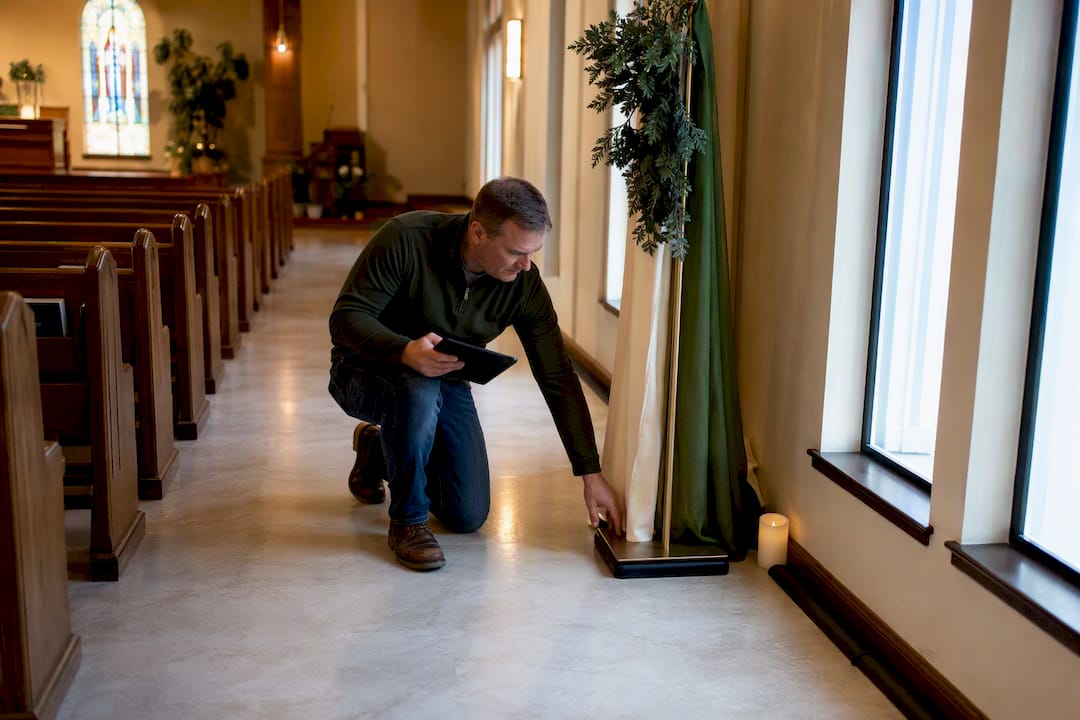
Every decor choice needs a safety pass before the first service. Keep ADA turning space and all egress paths completely clear of stands, cords, or floral displays. Secure any cords with tape or covers, and use weighted, non-slip bases on freestanding pieces. Test candle alternatives like flameless LEDs near any flammable fabric. Finally, walk the whole space at the time of day the service happens to check sightlines and timing before the congregation sees it.
How Devotional Wall Art Anchors a Sacred Space
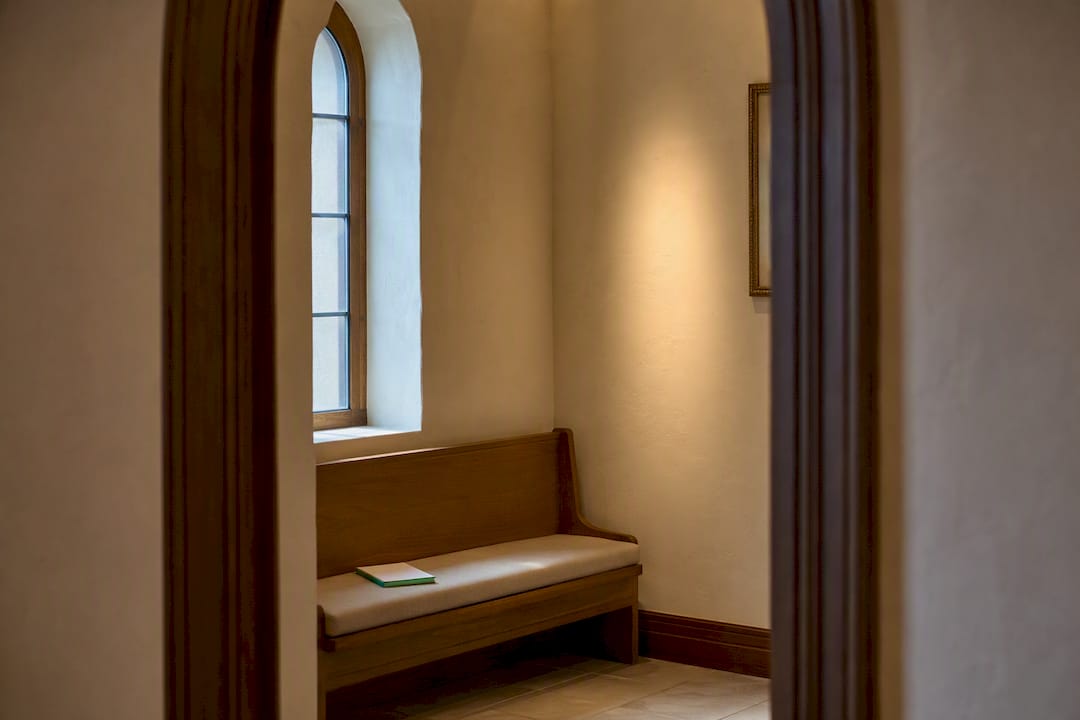
Framed saint prints and Jesus canvases work best in side chapels, prayer nooks, and lobby devotional corners, places where the congregation pauses rather than passes through quickly. Match scale to the architecture: a large canvas suits a vaulted sanctuary, while a smaller framed print fits an intimate prayer corner better. For more placement ideas, see how to decorate a prayer room or explore prayer corner setups for smaller spaces.
Signage and Wayfinding That Actually Helps Visitors
A first-time visitor’s biggest source of anxiety walking into an unfamiliar church isn’t the theology. It’s not knowing where the restroom, nursery, or sanctuary entrance is. Good wayfinding decor solves that quietly, without making the building feel like an airport terminal.
Start at the parking lot. A simple directional sign pointing toward the main entrance saves confused newcomers from wandering. Inside, hanging signs above hallway intersections work better than floor decals, which get scuffed and hard to read within a few months.
Keep signage consistent in font, color, and material throughout the building. Mismatched styles, one hand-lettered chalkboard here, a printed banner there, read as disorganized even when the content is clear. Pick one visual language and stick with it: maybe a warm wood-tone background with simple sans-serif lettering, or a palette that matches your existing color scheme.
Devotional touches can double as wayfinding. A small framed print near the nursery door or a scripture verse above the fellowship hall entrance gives visitors a moment of reflection while they orient themselves. This does double duty: function and atmosphere in the same piece.
Don’t overlook accessibility symbols. Clearly marked accessible entrances, elevators, and restrooms aren’t just a legal courtesy; they tell every visitor, including regular members with mobility needs, that they were thought of in the planning. Place these signs at a consistent height and in a location the eye naturally travels to when entering a hallway junction.
Review your signage twice a year. Ministries change locations, room numbers shift, and outdated signs erode trust in small but real ways.
Bringing Technology Into Worship Space Decor
Digital displays have moved from novelty to expectation in many congregations, and they can support the decor rather than clash with it. The key is treating a screen as part of the room’s design, not an appliance bolted onto it.
Lobby digital displays work well for rotating announcements, event calendars, and sermon series artwork, replacing a wall of printed flyers that always looks a little behind. Frame the screen itself in a material that matches nearby woodwork or trim so it doesn’t read as a foreign object in an otherwise warm space.
In the sanctuary, screens used for lyrics or scripture need lighting coordination above almost everything else. A wash light aimed even slightly toward a screen kills contrast and makes text hard to read from the back rows. Position accent and wash lighting to illuminate the backdrop and altar area while keeping direct light off the screen surface.
Some churches now use digital candle walls, small screens showing flickering flame graphics, as a safer alternative to banks of real votive candles near flammable drapery. They’re not a replacement for the symbolism of real fire for every congregation, but they solve a genuine safety problem in spaces with tight seating or heavy fabric backdrops.
Consider a small digital kiosk in the lobby for visitor check in or ministry sign ups. It reduces the paper clutter on welcome tables and gives your hospitality volunteers one less thing to manage during a busy Sunday morning rush.
Whatever technology you add, keep cords managed and hidden. A beautiful screen surrounded by visible cable clutter undercuts the whole effort.
Sustainable and Eco-Friendly Decor Choices
Church budgets and environmental stewardship tend to point in the same direction: reusable, durable materials beat disposable ones almost every time. That alignment makes sustainable decor an easy sell even to committees that aren’t thinking about it in environmental terms first.
Preserved and artificial florals cut down on the weekly waste stream that fresh arrangements generate, particularly for large seasonal displays that would otherwise be composted within a week. When fresh flowers matter for a specific occasion, ask a local florist about arrangements that can be repurposed, moved from the altar to the lobby, then to a hospital or shut-in visit, rather than discarded after a single Sunday.
LED lighting draws a fraction of the electricity that older incandescent stage and accent lighting uses, and the bulbs last years longer, which matters in a building running lights for services, rehearsals, and events most days of the week.
Fabric backdrops and modular panels are inherently more sustainable than one-time paper or foam board builds for seasonal stages, since they store flat and get reused year after year instead of ending up in a dumpster after Easter.
For paint, look for low-VOC options, especially in spaces used by children’s ministries or during extended worship gatherings where air quality matters more over several hours. Many major paint brands now offer low-VOC lines at the same price point as standard formulas, so sustainability doesn’t have to mean a higher bill.
Donating retired decor, banners, pew cushions, old furniture, to smaller congregations or community organizations keeps usable materials out of landfills and often blesses a church with a smaller budget in the process.
Matching Decor to Your Church’s Size and Architecture
A decor idea that transforms a modern 2,000 seat auditorium can look lost or oversized in a historic stone chapel seating 80, and the reverse is just as true. Scale and architectural style should drive every decision before color or theme enters the conversation.
Large contemporary sanctuaries with high ceilings and stage setups benefit from bold, oversized focal pieces, large canvases, tall floral arrangements, wide fabric backdrops, because anything smaller disappears in the volume of the room. Layered lighting matters even more here since these spaces often double as event venues with screens and projection needs.
Traditional stone or brick churches with stained glass and existing ornamentation need a lighter touch. Adding too much new decor competes with architectural details that already carry visual weight. A single well-placed framed print or a modest floral arrangement often works better than a full seasonal overhaul in these buildings.
Mid-size churches, the most common category, have the most flexibility. They can borrow ideas from both ends: a modular fabric backdrop for the stage area, paired with more traditional framed art near a side chapel or prayer corner.
Storefront and converted-space churches, common in urban church plants, face a different challenge entirely. These spaces often lack traditional sanctuary architecture altogether, which makes portable, modular decor, banners, movable panels, freestanding art, essential rather than optional. Everything needs to set up and break down if the space serves other purposes during the week.
Whatever the architecture, match new decor’s scale to existing sightlines and don’t fight the building’s natural character.
Honoring Cultural and Traditional Elements in Your Congregation
A congregation’s cultural identity often shows up most clearly in its decor choices, and ignoring that history in favor of generic decorating trends leaves a real opportunity on the table. Decor is one of the most visible ways a church can say “this is who we are” to both members and visitors.
Many congregations incorporate colors, patterns, or symbols tied to their cultural heritage into banners, altar cloths, or seasonal displays. A Filipino congregation might feature parol star lanterns during Advent alongside traditional purple. A Latino parish might incorporate papel picado banners for certain feast days. These aren’t replacements for liturgical color guidance; they layer alongside it.
Historical and denominational traditions deserve the same consideration. A congregation with strong roots in a particular immigrant community often has decades of decor customs, specific icon styles, particular saints honored, traditional textile patterns, that a generic decorating approach would erase without meaning to.
Talk to longtime members and church elders before planning any major decor overhaul. They often know which visual traditions carry real meaning for the congregation and which are simply habit. That conversation alone can surface ideas no design blog would ever suggest, and it builds buy-in from the people who’ve been decorating that sanctuary for decades.
A Few Honest Notes From Someone Who’s Looked at a Lot of Church Decor
Most churches over-plan the big renovation and under-plan the small test. Pick one visible change, an accent wall or a single framed print near the altar, and live with it for a few weeks before committing further. Walk your volunteer team through a full setup rehearsal before any major seasonal shift; that fifteen-minute walkthrough catches more problems than another committee meeting ever will. Measure twice, mock it up with painter’s tape or a printed template, and only then order the real thing.
— Griffin
Divine Prints: Focal Wall Art Made for Worship Spaces
There are providers of museum-grade framed prints of saints, Jesus, and Gospel scenes sized and styled for sacred spaces, not generic living rooms. Instead of commissioning custom artwork or settling for a mass-market print that doesn’t fit the wall, one can pick a piece already made for devotional settings and order it framed to size.

Measure your wall first, then match scale to the room, a side chapel wants something smaller and intimate, while a lobby wall or fellowship hall entrance can carry a larger canvas as a genuine focal point. The Saint Prints collection covers patron saints and historical Christian figures well suited to prayer corners and devotional displays. For a sanctuary or main gathering space, pieces like The Sacred Heart of Jesus or The Transfiguration of Jesus work as anchor art near an altar or prayer nook. Browse the collection, measure your space, and order the size that fits.
Sources
For deeper reading on the ideas covered here: Outreach Magazine’s lobby design roundup covers budget-friendly foyer updates, Bertolini Direct’s welcome guide tackles circulation and accessibility, Lifeway Research covers facility zoning, and Spes Infinita breaks down liturgical floral symbolism in more detail. For scripture-based devotional resources to pair with a prayer corner display, this counseling worksheet organizes verses by topic.
- 8 budget-friendly church lobby design ideas | Outreach Magazine
- Church office design is not a one-size-fits-all proposition | Lifeway Research
- Church floral arrangements: sanctuary decor ideas for worship | Spes Infinita