

A giclée (pronounced zhee-KLAY) is an archival, high-resolution fine-art print made with pigment-based inks on museum-grade substrates like cotton rag paper or archival canvas. The word alone doesn’t guarantee quality, but the standard behind it does: pigment inks, an archival substrate, and a resolution of 300 DPI or higher. Any inkjet print that skips one of these isn’t a true giclée, regardless of what the listing calls it.
What that standard buys you:
- Color accuracy that holds up next to the original artwork
- Longevity measured in decades, not years
- Detail sharp enough for close inspection, not just a glance across a room
Key Takeaways
A genuine giclée print requires pigment-based inks, an archival substrate, and a resolution of 300 DPI or higher, and skipping any one of those three disqualifies the label.
| Point | Details |
|---|---|
| Definition and pronunciation | Zhee-KLAY refers to archival inkjet prints meeting pigment ink, archival substrate, and 300 DPI standards. |
| Origin matters | Jack Duganne coined the term around 1991 using the French word for “to spray,” referencing Iris printer technology. |
| Materials define quality | Look for named pigment systems like Epson Ultrachrome and archival papers like Hahnemühle Photo Rag or Canson Infinity. |
| Longevity depends on care | UV-filtering glazing and acid-free mounting protect pigment stability against fading for decades. |
| Divineprints applies the standard | Divineprints uses archival substrates and museum-grade finishing for framed devotional and gallery-quality prints. |
Table of Contents
- What Does “Giclée” Mean, and Where Did the Word Come From?
- What Makes a Giclée Print High Quality?
- What Materials Go Into a Giclée Print?
- How Is a Giclée Different from a Regular Print?
- How Long Do Giclée Prints Last, and How Should You Store Them?
- What Should You Ask Before Buying or Commissioning a Giclée?
- What Does the Research Actually Say About Giclée Longevity?
- Why Museum-Grade Giclée Standards Matter for Devotional Art
- Get a Museum-Grade Giclée for Your Home or Parish
- Frequently Asked Questions
- Sources
What Does “Giclée” Mean, and Where Did the Word Come From?
The term traces back to a specific person and a specific machine. Printmaker Jack Duganne coined “giclée” around 1991 while working at Nash Editions in Los Angeles, one of the first studios producing fine-art reproductions on repurposed Iris printers, machines originally built for commercial color proofing.
He borrowed from the French verb gicler, meaning “to spray” or “to squirt,” a nod to how the Iris printer’s nozzles sprayed a fine mist of ink onto paper. The name stuck.
A few things worth knowing about how the word evolved:
- It started as a marketing term for Iris-printer output specifically, not a technical standard.
- Over time it broadened to cover any archival inkjet reproduction meeting the pigment ink, archival substrate, and resolution criteria.
- The Iris printer itself is largely obsolete now; the word outlived the machine that inspired it.
What Makes a Giclée Print High Quality?
Not every print calling itself a giclée earns the label. The core checklist printmakers and galleries actually use comes down to five things: pigment-based inks, a professional wide-format inkjet printer, an archival substrate, calibrated color management from digital file to finished print, and a resolution of 300 DPI or better.
Each one earns its place on the list for a reason:
- Pigment inks resist fading far longer than dye-based inks, which break down faster under light exposure.
- Wide-format professional printers hold far more ink channels than a desktop model, which widens the color gamut and produces smoother gradients.
- Archival substrates (cotton rag, archival canvas) resist yellowing and physical degradation over time.
- Color management ensures what you see on screen matches what comes off the printer, rather than a rough approximation.
- Resolution at or above 300 DPI preserves fine detail, whereas anything closer to 72 DPI (standard web resolution) looks soft or pixelated once enlarged.
Sellers sometimes stretch the term. Watch for red flags: dye-based ink with no mention of pigment chemistry, a print run through a consumer desktop printer, or a listing that never names the paper or color profile used.
Pro Tip: Before you buy, ask the seller three direct questions: what ink chemistry do you use, what’s the exact paper brand and type, and can you provide a sample swatch or printed proof? A seller who can’t answer any of those isn’t producing true giclées.
What Materials Go Into a Giclée Print?
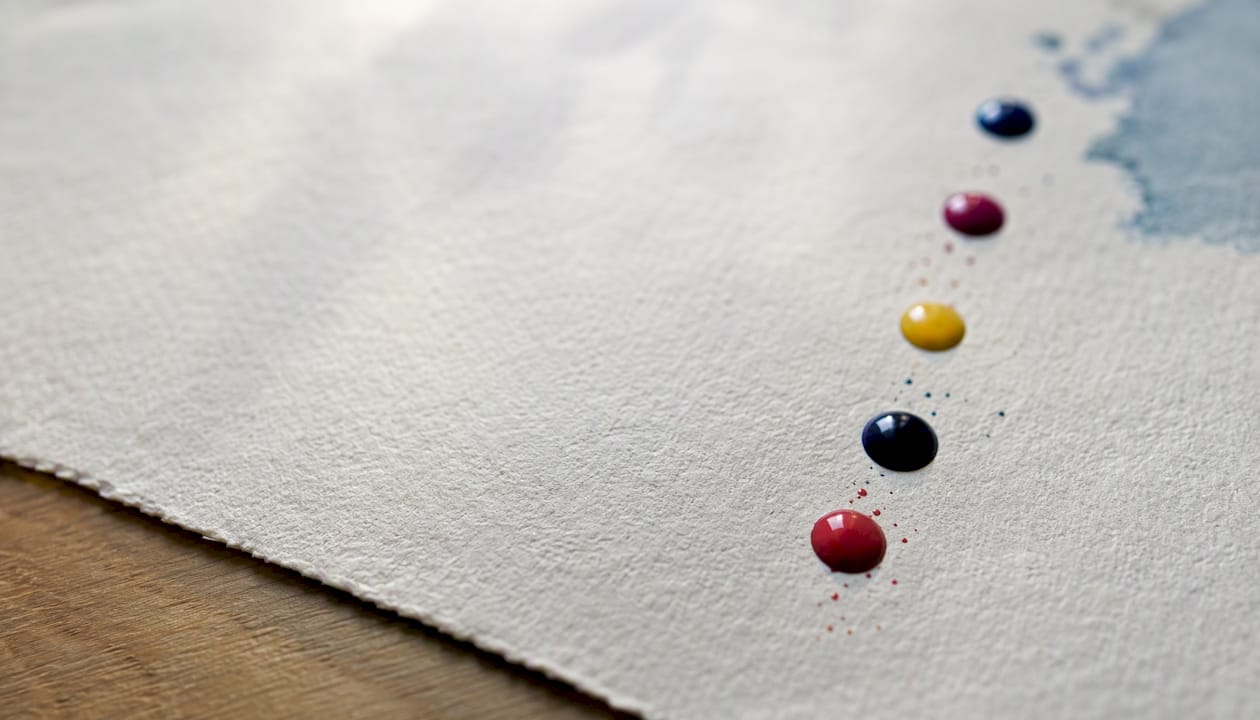
The ink and paper matter as much as the printer itself. Epson’s Ultrachrome pigment ink system is one of the most widely used in fine-art reproduction, and printers with additional ink cartridges beyond the standard four colors extend the color gamut noticeably, capturing subtler shifts in tone that a basic setup would flatten.
Substrate choice matters just as much. Two names come up constantly in fine-art printing circles: Hahnemühle Photo Rag, a 100% cotton rag paper prized for its texture and neutral white base, and Canson Infinity, known for both matte cotton papers and archival canvas options. Cotton rag behaves differently from canvas: rag paper delivers crisper detail and a more traditional print feel, while canvas gives depth and a gallery painting look, though it can soften fine detail slightly.
Finish adds another layer of choice. Matte reduces glare and suits devotional or gallery display; luster and gloss punch up contrast and color saturation, which some collectors prefer for vivid scenes.
To confirm materials before buying, ask for the paper manufacturer’s name, any archival certification, and a technical data sheet if one exists.
How Is a Giclée Different from a Regular Print?
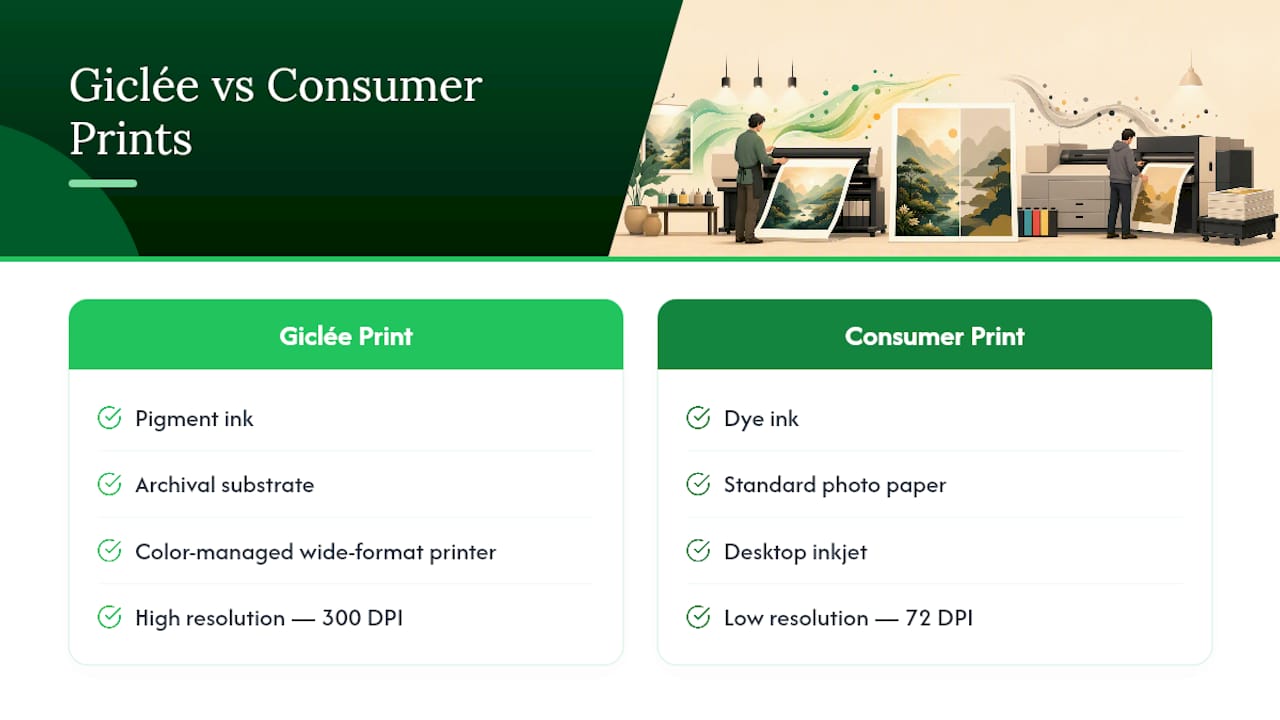
The gap between giclée and a standard consumer print comes down to four contrasts: pigment ink versus dye ink, archival substrate versus standard photo paper, a color-managed wide-format printer versus a desktop inkjet, and 300 DPI versus the 72 DPI typical of web images.
Giclée also differs from traditional printmaking in a more fundamental way. A giclée is digitally originated and mechanically produced, whereas lithography and etching are hand-pulled, meaning the artist physically presses each impression through a plate or stone. Neither method is inherently better. They’re just different categories of “original.”
One common misconception: that giclée automatically means museum-quality. It doesn’t. The word only means something when the pigment ink, archival substrate, and resolution standards are actually met, so check for those specifics rather than trusting the label alone.
How Long Do Giclée Prints Last, and How Should You Store Them?
Produced correctly, a giclée print can remain stable for decades, sometimes over a century, under proper display and storage conditions. That longevity depends almost entirely on pigment stability and how well the print is protected afterward. Light exposure, not the ink chemistry itself, is usually what shortens a print’s life.
For framing, UV-filtering glazing, whether glass or acrylic, blocks the wavelengths that cause fading, paired with acid-free mats that won’t leach acids into the print over time. Keep framed pieces out of direct sunlight and away from high-humidity rooms like bathrooms.
Unframed prints need their own care: store them flat in acid-free folders in a climate-controlled space, and skip PVC sleeves, which can react with the print surface over years of contact.
Pigment inks paired with archival mounting can extend usable print life well beyond what dye-based consumer prints achieve.
Pro Tip: Ask your framer three specific things: the UV rating of the glazing, whether any non-reflective coating is archival-safe, and whether they recommend a spacer or float mount to keep the print from touching the glass.
What Should You Ask Before Buying or Commissioning a Giclée?
Buying a giclée sight unseen means trusting a seller’s word unless you know what to ask. Run through this checklist before you commit:
- Confirm the ink type. Ask directly whether it’s pigment or dye. Pigment is the standard for archival quality.
- Get the paper specs. Request the brand name and weight (GSM). Vague answers are a warning sign.
- Ask about the color profile used. A printer who can’t name their color management process likely isn’t running a calibrated workflow.
- Request a sample or proof. Especially for larger commissions, a printed swatch shows you the actual color and texture.
- Ask whether the print is signed or numbered. This matters if you’re buying into a limited edition rather than an open, print-on-demand run.
Edition models vary. Because giclée printing skips the heavy startup costs of plate-based printmaking, studios can offer everything from single custom prints to small numbered editions without the economics of traditional lithography forcing large print runs. Price depends on size, substrate, ink set, and whether framing is included; expect meaningful variation by region and studio, so treat any quoted range as approximate.
What Does the Research Actually Say About Giclée Longevity?
The evidence is consistent, if not exhaustive: pigment-based inks resist light-induced fading far better than dye inks, and archival substrates slow physical degradation over time. Framing professionals recommend UV-filtering glazing and acid-free mounting as standard practice, not an upsell, because sunlight remains the single biggest threat to a print’s lifespan.
That guidance comes from framing and materials specialists rather than large-scale scientific studies, so treat it as strong industry consensus rather than clinical proof, though the underlying chemistry (light breaks down pigment molecules over time) backs it up.
Why Museum-Grade Giclée Standards Matter for Devotional Art
Devotional art asks a lot of a print: it hangs in the same spot for years, often near a window, and it’s meant to be looked at daily, not once. That’s exactly the situation where cutting corners on ink or paper shows up fastest, in faded halos and dulled color within a couple of years.
At Divineprints, that’s why materials matter as much as the image itself. A framed Sacred Heart print in a living room or a small Transfiguration piece gifted for a Confirmation both needs to hold their color for decades, not just look good on day one. That’s the standard worth insisting on for any print meant to last in a home, office, or parish setting.
Get a Museum-Grade Giclée for Your Home or Parish
Divineprints builds every print around the same standard covered above: pigment-based inks, archival substrates, and resolution that holds up under close inspection, not just from across the room. That’s the difference between a print that fades in a sunny hallway within a year and one that still looks sharp a decade later.
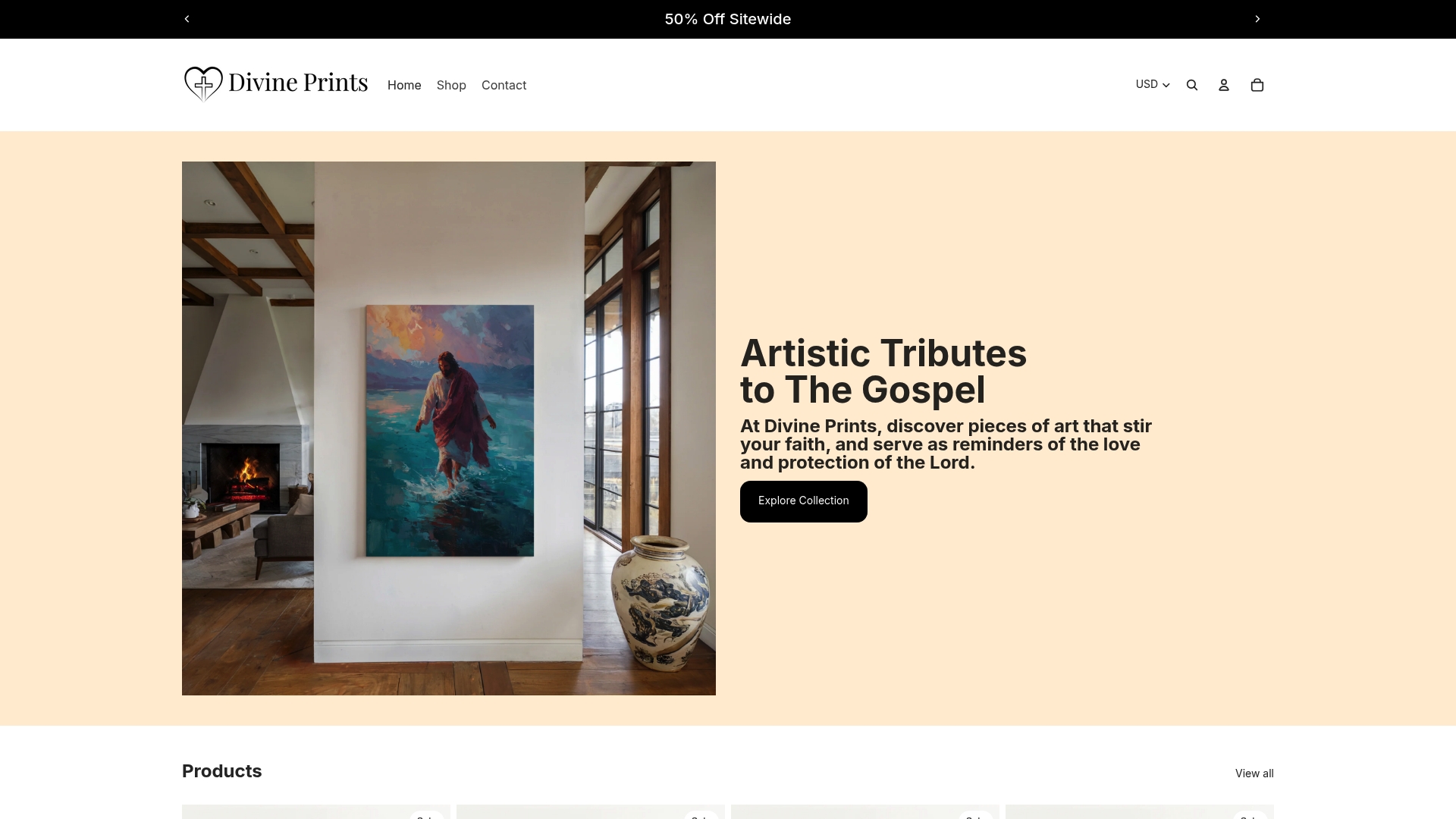
Whether you’re framing a Sacred Heart for a prayer corner or choosing a Confirmation gift that will outlast the occasion, the details matter: paper weight, ink chemistry, and framing options that protect the print long term. Browse the Saint Prints collection to see the range of devotional pieces available, or reach out to request a proof before committing to a larger framed piece. Either way, you’ll know exactly what you’re getting before it hangs on your wall.
Frequently Asked Questions
How do you pronounce “giclée”? It’s pronounced zhee-KLAY, borrowed from the French verb meaning “to spray.”
What’s the difference between a giclée and a standard print? A giclée uses pigment inks, archival substrates, and resolution of 300 DPI or higher; a standard print typically uses dye inks, ordinary paper, and lower resolution meant for screens rather than close inspection.
Do giclée prints need to be framed under glass? Framing under UV-filtering glazing extends a print’s life significantly by blocking the light that causes pigment fading, though canvas giclées are sometimes displayed unframed with a protective varnish instead.
How long do giclée prints actually last? Under proper display and storage, with UV protection and away from direct sunlight, a well-made giclée can remain stable for decades, and sometimes over a century.
Is every inkjet print a giclée? No. The term only applies when pigment inks, archival substrates, and adequate resolution are all present; a print lacking any of those is simply a standard inkjet print, regardless of how it’s marketed.
Sources
- Giclée — Wikipedia
- Giclée printing: Process, materials & history explained | World of Printmaking
- What is a giclée print? | Printful
- Everything you need to know about giclée prints | Artwork Archive