

A Lent home altar is a small, visible prayer space set apart for the season, usually anchored by a cross or crucifix, a lit candle, and a purple cloth or runner. Start with just those three items on a table your family already passes every day, then add layers as Lent goes on. Divine Prints can help fill out the space once the basics are in place.
TL;DR:
- A simple Lent altar can be created with a crucifix, candle, purple cloth, and a Bible or devotional, with additional symbols like an empty bowl or alms jar for deeper meaning.
- Position the altar on an everyday family surface, like a dining or entry table, to encourage daily prayer habits and ensure regular use.
- Cost-effective setups can be assembled for around $10 using items from dollar stores and natural elements already in your yard, with options to DIY for texture and personalization.
- Adjust the altar’s focus based on family practice, choosing themes like penance, reflection, or preparation, and add or remove elements to suit your spiritual focus.
- Incorporate scripture and family participation through short daily prayers, rotating devotional images, or kid-led activities to make the altar a meaningful part of family life.
Table of Contents
- What to Include on Your Lent Home Altar
- Where to Put the Altar So You Actually Use It
- Why Purple, Candles, and Empty Bowls Matter
- Affordable DIY Ideas for Every Budget
- Making the Altar Part of Daily Family Life
- Choosing a Theme: Penance, Reflection, or Preparation
- Using Scripture and Daily Devotionals at the Altar
- Bringing the Stations of the Cross Into the Home
- Adjusting the Altar as Kids Grow Older
- Moving the Altar Through Holy Week and Easter
- Symbols of Fasting and Abstinence Worth Including
- A Family’s Lent Table, Five Years Running
- Finishing Your Altar With Devotional Art From Divine Prints
- Helpful Resources for Building Your Altar
- Sources
- FAQ
What to Include on Your Lent Home Altar
The strongest altars stay small and sensory rather than crowded. A minimalist setup that engages sight, touch, and a bit of quiet tends to hold a family’s attention better than a table stacked with objects nobody notices after week one.
Start with three anchor pieces: a crucifix or cross as the visual center, a candle to light at prayer time, and a Bible or short devotional to read from. From there, add pieces that make the season concrete rather than decorative.
- Crucifix or cross: the focal point everything else arranges around
- Candle: lit briefly during prayer, unlit the rest of the day for safety
- Bible or Lenten devotional: open to the day’s reading when possible
- Empty bowl: a visual reminder of fasting and what’s being given up
- Alms jar or coin jar: for spare change headed toward almsgiving
- Prayer-intention jar: slips of paper with names or requests
- Rosary, saint prints, or scripture cards: rotate these as the weeks pass
- Natural elements: a few rocks, twigs, or dried branches for texture
Pro Tip: Keep a small basket of “extra” items nearby, like a saint print or a new prayer card, so you can swap one thing weekly without rebuilding the whole altar.
Where to Put the Altar So You Actually Use It
Skip the guest room. A dining table, entry table, or living room shelf works better because it’s a surface your family already looks at daily. Placing prayer on a table you already use for meals is what turns a nice idea into an actual habit.
A few practical notes on setup:
- Keep candles on a stable, heat-safe surface, away from curtains and out of reach of toddlers.
- Choose a shelf or table height where the smallest family member can still see the crucifix.
- Layer the cloth first, then set the cross slightly behind the candle so nothing blocks the flame.
- Leave prayer cards and the intention jar within easy reach, not tucked behind glass or frames.
Building the arrangement itself can double as a short act of prayer. Smoothing the cloth, setting the cross, and lighting the candle for the first time is worth doing slowly, together, rather than rushing through it like a chore.
Why Purple, Candles, and Empty Bowls Matter
Purple is the liturgical color of Lent, marking a season of penance ahead of Easter’s white and gold. A purple runner, ribbon, or single length of cloth does the job on its own. You don’t need to repaint a room or buy a full tablecloth.
Each object on the altar carries its own meaning. The candle stands for Christ as light entering darkness. The empty bowl represents fasting, an intentional absence rather than clutter. The alms jar points outward, toward giving rather than keeping. Branches, rocks, or sand nod to the desert Jesus entered before His temptation, and they cost nothing if you already have a yard.
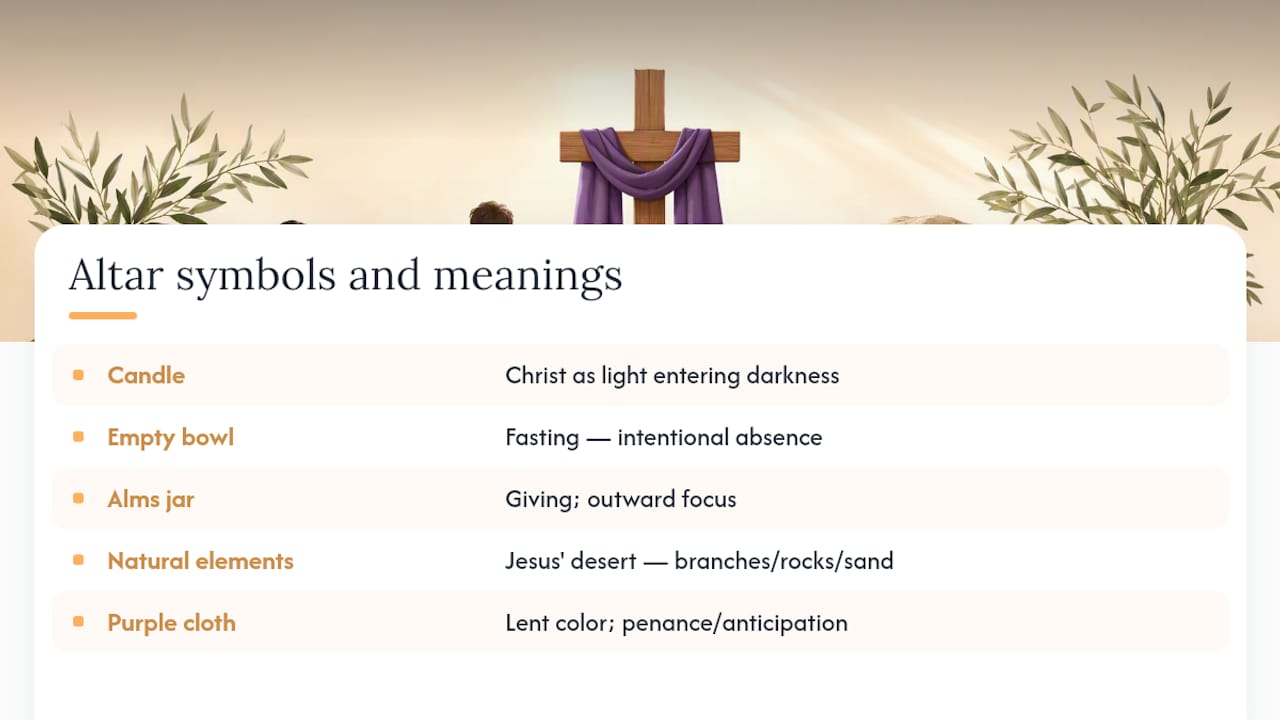
Some families also veil crucifixes, statues, or framed art in purple cloth starting on the fifth Sunday of Lent, an older custom meant to heighten anticipation for Easter. It’s optional, but if your family already has a few devotional prints displayed, this is a simple way to mark the shift into Holy Week without buying anything new.
Affordable DIY Ideas for Every Budget
Cost is rarely the real barrier. A full altar display can come together for around $10 using items most dollar stores already carry.
A sample $10 build:
- A yard of purple felt or fabric ($1 to $3) as your runner
- A basic wooden or metal cross ($2 to $4)
- A single unscented candle in a small holder ($1 to $2)
- A handful of found sticks or small rocks from your yard (free)
- A small glass jar or bowl you already own for fasting or alms (free)
Beyond the basics, a few weekend projects give the altar more texture. A stick cross lashed together with twine from yard clippings has a rougher, more fitting look than anything store-bought. Vines twisted into a small crown of thorns work the same way, and a shallow tray filled with dried beans or sand makes a simple base for standing a candle upright.
Pro Tip: Keep a “Lent box” in a closet year-round. Store the cloth, cross, and any candle holders in it after Easter, and you’ll have next year’s altar half-built before Ash Wednesday even arrives. This also keeps found natural elements reusable rather than tossed each spring.
Watch small parts around young children, vine crowns and loose beans included, and never leave a lit candle unattended on a table kids can reach.
Making the Altar Part of Daily Family Life
An altar only matters if people actually stop at it. The practices that stick are short, not elaborate: lighting the candle for thirty seconds before dinner, a one-minute prayer at a child’s bedside, or a quick “where did I see God today” question borrowed from the Ignatian examen.
Kids engage better with something to touch or hold rather than something to only watch.
- Write a “Lent goal” on a slip of paper and drop it into the empty bowl during the first week.
- Rotate a new prayer card or scripture verse printable into the display each Sunday.
- Let kids decorate paper eggs with symbols from the Stations of the Cross as a craft.
- Add a coin to the alms jar after each meal, then decide together where the total goes at Easter.
- Take turns reading the day’s short devotional line aloud before the candle gets blown out.
None of these take more than a couple of minutes, which is exactly the point. A family that manages ninety seconds at the table every night for six weeks builds a stronger habit than one that plans a thirty-minute devotion and does it twice. If you want more short daily practice ideas beyond the altar itself, a faith-centered lifestyle guide covers habits that pair well with this kind of routine.
Choosing a Theme: Penance, Reflection, or Preparation
Not every Lent altar needs to say the same thing. Some families lean into penance, using the empty bowl and purple cloth to keep fasting and sacrifice front and center. Others build around reflection, favoring the Bible, a devotional, and a quiet corner for the daily examen. A third approach leans toward preparation, treating the whole season as a runway into Holy Week and Easter, with the altar slowly filling with Passion imagery as the weeks progress.
There’s no wrong choice here, but picking one focus, even loosely, helps you decide what to add and what to leave off. A penance-focused altar might skip decorative saint prints in favor of stark, plain materials. A reflection-focused altar might add a journal or a stack of prayer intention cards nobody has to explain out loud. A preparation-focused altar naturally builds toward something, adding a small Resurrection-themed piece near the very end that stays covered until Easter morning.
Families with young children often do best mixing penance and preparation lightly. A visibly empty bowl teaches the idea of fasting without a lecture, while a countdown of some kind, paper chain links removed daily, works toward the anticipation of Easter without over-explaining doctrine kids aren’t ready for yet.
Using Scripture and Daily Devotionals at the Altar
The altar works best as a place you go to, not just a shelf you look at. Keeping a Bible open to the day’s Lenten reading, rather than closed and decorative, signals that the space is functional.
Most parishes and Catholic publishers put out daily Lenten devotional booklets built around the Sunday and weekday Mass readings. Keeping one next to the Bible means anyone in the family can pick it up and read the short reflection without hunting for it. If daily readings feel like too much at first, start with just the Sunday Gospel and build from there.
A simple rhythm that works for most households: read one short passage or devotional entry at the altar, sit with it for a minute in silence, then light the candle before saying a short closing prayer. It doesn’t need commentary or explanation every time. Some days the reading itself is enough. Keeping a small notepad nearby for a single line that stood out gives older kids and adults something to return to later in the week.
Bringing the Stations of the Cross Into the Home
The Stations of the Cross don’t require a church building. A set of small printed images, even simple line drawings, arranged in sequence near the altar gives families a way to walk through Christ’s Passion without leaving the living room.
Some households place all fourteen stations around a room and physically move from one to the next on Fridays during Lent, pausing briefly at each with a short prayer. Others keep it simpler: a single station image rotated on the altar each week, with a short reflection read aloud before moving to the next stop the following Friday. Either version works, and the second is far more realistic for families with young children or packed schedules.
Devotional prints depicting individual stations or the broader Passion narrative give this practice a visual anchor kids can actually recognize and ask about, which often opens the door to conversation more naturally than a straight reading does.
Adjusting the Altar as Kids Grow Older
A toddler and a teenager need different things from the same table. For younger children, keep the visual elements simple and tactile: a cross they can touch, a bowl they can drop a paper slip into, a candle they watch but don’t handle. Short, concrete rituals land better than explanations of doctrine at this age.
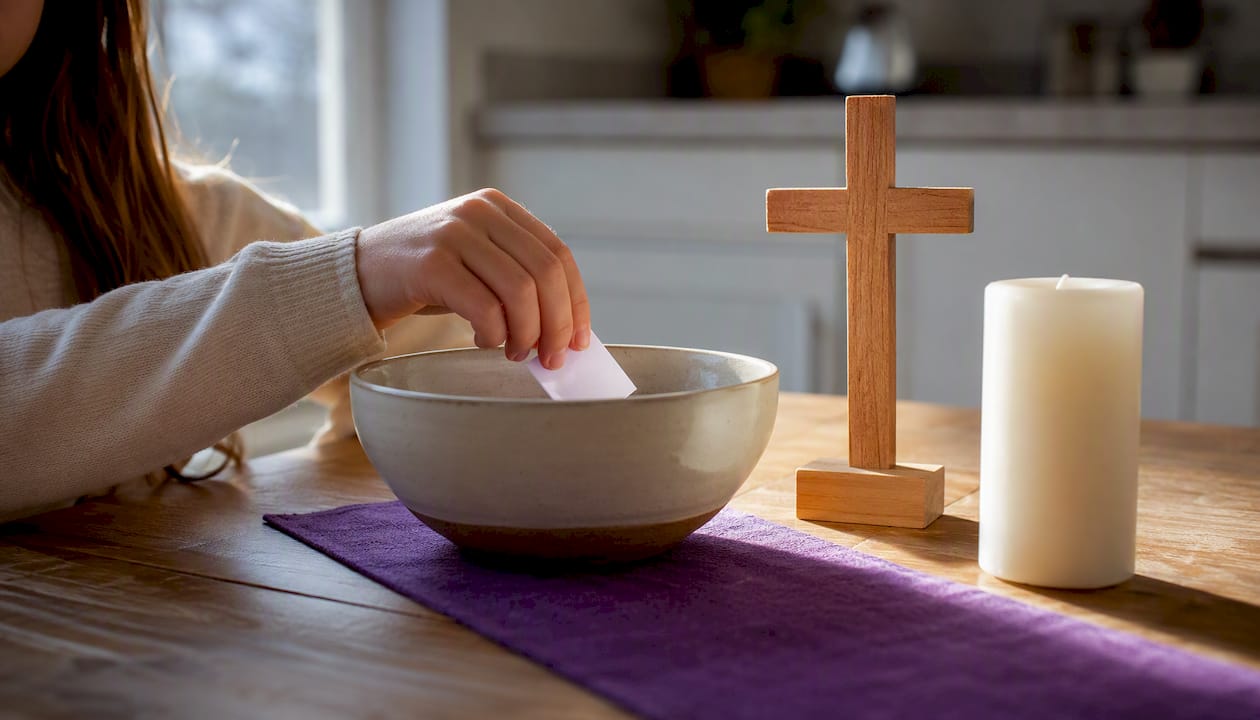
School-age kids can start taking on small responsibilities, lighting the candle themselves with supervision, choosing the day’s scripture card, or picking what goes into the alms jar that week. This is also the age where a Stations of the Cross rotation or a simple Lenten calendar starts to make sense as an activity they can lead.
Teenagers and adults benefit from more silence and less structure. A daily devotional, a journal for the examen, or a single scripture verse to sit with for the full week gives older family members room to engage at their own pace rather than following a script built for younger siblings. The altar doesn’t need separate stations for each age group. It just needs enough flexibility that a five-year-old and a fifteen-year-old can both find something to do at it.
Moving the Altar Through Holy Week and Easter
The altar shouldn’t stay static for forty days and then vanish. As Holy Week approaches, many families shift the display to match the liturgical mood: palm branches added on Palm Sunday, a plainer or barer table on Good Friday, and a veiled cross that stays covered until Easter morning.
Good Friday is a natural point to strip the altar down further, removing the candle or dimming it, leaving just the cross and perhaps a single dark cloth. It’s a stark contrast to the fuller table you’ve built over six weeks, and that contrast is part of the point.
Easter morning is the payoff. Swap the purple cloth for white or gold, uncover anything that was veiled, and bring out brighter devotional art, a Resurrection scene or an image of the Risen Christ makes a natural centerpiece. Keep the empty bowl and alms jar around for a few more days if your family’s Lenten giving commitment runs past Easter itself, but the overall tone should shift from penance to celebration fairly quickly.
Symbols of Fasting and Abstinence Worth Including
Fasting and abstinence are two of the more concrete practices of Lent, and the altar can reflect both without turning preachy. The empty bowl remains the simplest symbol: visibly empty, sitting where food would normally go, as a quiet stand-in for a meal skipped or a favorite food set aside.
A small basket or jar labeled for a specific sacrifice, no sweets, less screen time, works the same way for kids who need something more concrete than an abstract idea. Writing the sacrifice on a slip of paper and placing it in the bowl at the start of Lent, then reading it back on Easter, gives the practice a beginning and an end kids can actually track.
For families observing meatless Fridays, a small fish symbol or a simple card noting “abstinence today” near the altar can serve as a gentle reminder without turning the whole table into a rulebook. The goal isn’t decoration for its own sake. It’s a physical nudge toward practices that are otherwise easy to forget by Wednesday afternoon.
A Family’s Lent Table, Five Years Running
The altar that stuck for our family wasn’t the fullest one. It was the smallest, a cross, a candle, and a purple runner on the corner of the dining table nobody had to clear off first. A flexible, unintimidating setup beats an elaborate one that gets skipped by week two.
The real lesson: consistency comes from friction, not ambition. Put the altar somewhere you already sit, keep the ritual under two minutes, and let it survive a busy Wednesday. For more setups and photographed examples, Divine Prints’ home altar ideas and prayer corner ideas are worth a look.
— Griffin
Finishing Your Altar With Devotional Art From Divine Prints
Once the cross, candle, and cloth are in place, a single piece of devotional art gives the altar a focal point that a bare crucifix alone doesn’t provide. Passion-themed prints work well during the fasting weeks of Lent, while saint prints add a personal touch if your family wishes to honor a particular figure.

Size and framing depend on where the altar lives. A small, unframed print suits a shelf or side table where space is tight, while a framed canvas holds up better as a standing centerpiece on a dining table others will see daily. Many families rotate art seasonally, keeping a Passion-focused piece like The Sacred Heart of Jesus up through Lent, then swapping in something like The Transfiguration of Jesus as Easter nears.
If your family has a devotion to a particular saint, browsing the saint print collection is a good place to start. Pick one piece, order it in the size that fits your table or shelf, and let it anchor the altar for the rest of the season.
Helpful Resources for Building Your Altar
- How to Set Up a Lent Table: budget checklist and printable ideas
- Build a Sacred Space in Your Home This Lent: placement and habit-building advice
- Creating a Lenten Prayer Space at Home: family and children’s rituals
- Lent Decor: Beautiful. Simple. Meaningful: minimalist and natural-element styling
- Home Altar Ideas for Catholics: photographed setups from Divine Prints
Sources
- How To Set Up A Lent Table- Lent Home Altar Ideas
- Build a Sacred Space in Your Home This Lent
- Creating a Lenten Prayer Space at Home
- Lent Decor: Beautiful. Simple. Meaningful
FAQ
What Should You Put on a Lent Home Altar?
A cross or crucifix, a candle, a purple cloth, and a Bible or devotional cover the basics. Many families add an empty bowl for fasting and an alms jar for giving once the core pieces are in place.
Where Should You Place a Home Altar?
Put it somewhere you already pass daily, a dining table, entry table, or living room shelf works better than a spare room. High-traffic surfaces build the habit of stopping to pray far more reliably than out-of-the-way spots.
What Do You Need for a Catholic Home Altar?
At minimum, a crucifix, a candle, and a purple runner or cloth. Beyond that, a Bible, rosary, prayer cards, and devotional art like a saint print round out the space without requiring much money.
How Do You Set Up an Altar in Your House?
Lay a purple cloth on a table you already use daily, set a cross or crucifix as the focal point, add a candle in front of it, and place an open Bible or devotional nearby. A full setup can cost as little as $10 using dollar store materials and items already at home.
How Often Should You Change What’s on the Altar?
Weekly is a good rhythm for most families, swapping a prayer card, scripture verse, or devotional image so the space stays noticeable rather than fading into the background.