

What are the top Saint Dymphna Orthodox icons available in the U.S.?
Finding a genuine Saint Dymphna Orthodox icon in the United States means choosing between hand-painted Byzantine originals, artisan-attributed works, and high-quality devotional prints. Each option serves a different buyer, and the differences in technique, material, and price are real.
| Icon | Iconographic Style | Material and Craftsmanship | Size and Format | Best For |
|---|---|---|---|---|
| Legacy Icons Saint Dymphna Orthodox Icon | Byzantine with Celtic accents | Hand-painted, museum-standard | Wood plaque, multiple sizes | Collectors and serious devotees |
| Agiografia Icons Saint Dymphna Icon | Traditional Byzantine | Egg tempera and gold leaf on wood | Wood plaque | Orthodox practitioners |
| Uncut Mountain Supply Saint Dymphna Icon | Byzantine reproduction | High-quality print | Print, multiple sizes | Budget-conscious buyers |
| Saint Dymphna Orthodox Icon by Brian Matthew Whirledge | Byzantine with Irish Celtic motifs | Hand-painted, egg tempera, gold leaf | Wood plaque | Devotees seeking cultural authenticity |
Legacy Icons Saint Dymphna Orthodox Icon is the strongest pick for collectors who want artisan attribution and museum-grade craftsmanship. The iconographer’s permission is documented, and the Byzantine style is executed with the kind of care that holds up under close inspection.
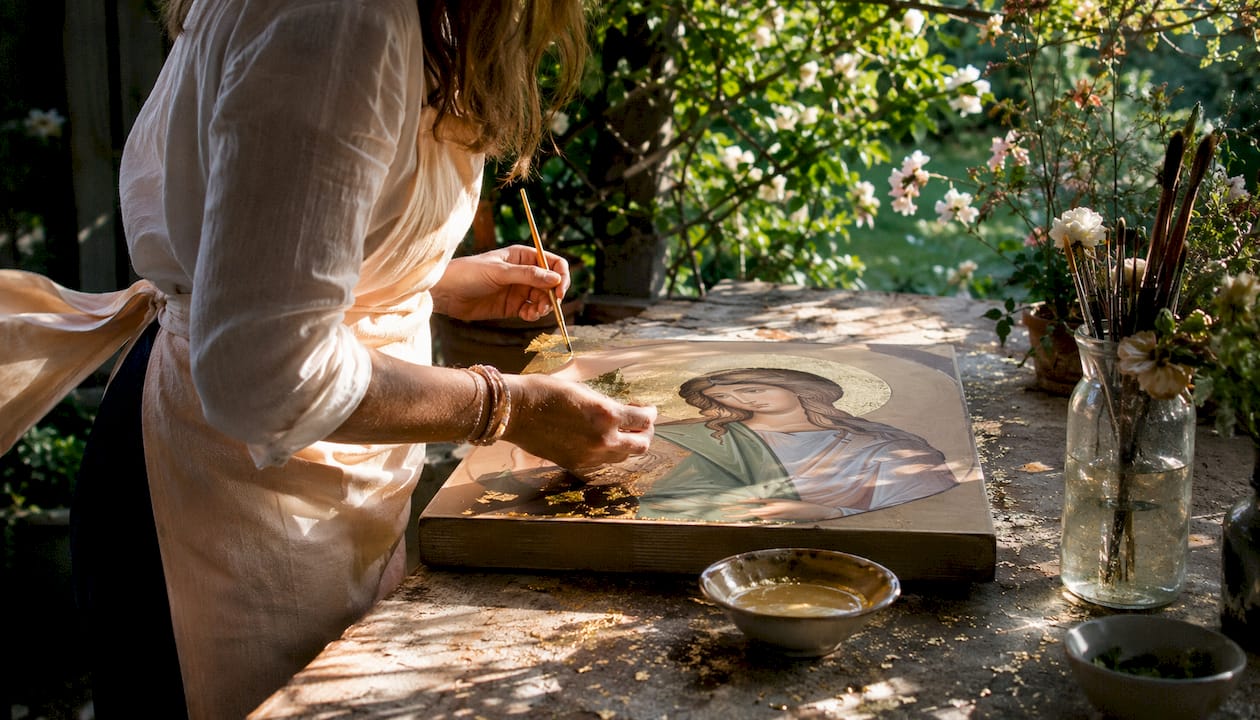
Agiografia Icons takes a strictly canonical approach. Egg tempera on a gessoed wood plaque, gold leaf applied by hand, no shortcuts. If your priority is theological fidelity over cultural flourish, this is the one to consider.
Uncut Mountain Supply fills a real gap. Not everyone needs a hand-painted original, and for prayer corners, classrooms, or gifts, a faithfully reproduced print with vibrant color reproduction gets the job done at a fraction of the cost.
The Brian Matthew Whirledge icon stands apart from all three. Celtic motifs in brocade and Irish uncial script are woven into the design without breaking Byzantine canon. It is the only option that honors Saint Dymphna’s Irish identity at the level of the iconographic program itself, not just as decoration.
What symbols appear in Saint Dymphna iconography?
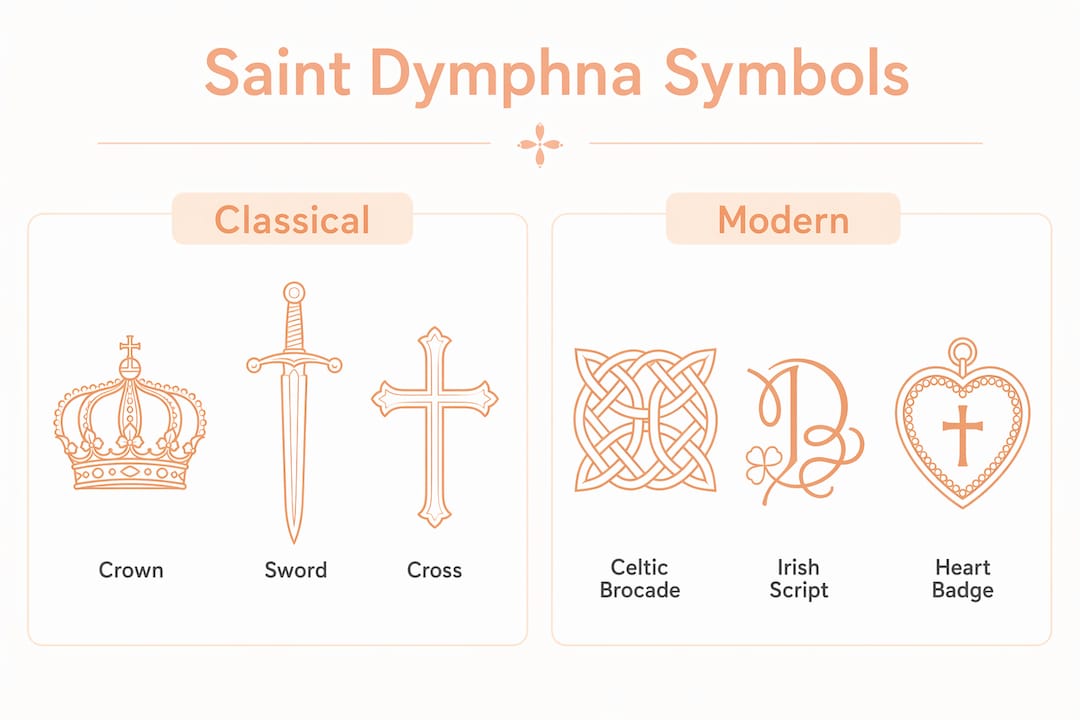
Saint Dymphna’s iconographic program is unusually layered for a Western saint rendered in Byzantine style. The core symbols include a crown, sword, and lilies, each carrying specific theological weight.
- Crown: Royal heritage. She was an Irish princess, and the crown signals that status within the sacred narrative.
- Sword: Martyrdom. In older Western depictions, the sword pierces a demon at her feet. Orthodox icons typically omit the demonic imagery, focusing instead on her identity as a virgin martyr.
- Lilies: Virginity and purity. She is sometimes called the Lily of Éire.
- Green: Her Irish homeland. Brian Matthew Whirledge uses green deliberately in his brocade work to anchor the icon to her origins.
- White: Purity, and also the “white martyrdom” of leaving Ireland in self-imposed exile.
- Lamp: A less common attribute, but present in some traditions, representing her role as a light to those in darkness.
The 16th-century Dymphna Altarpiece by Goossen van der Weyden shows how iconography adapts across centuries, dressing the saint in the fashions of contemporary Habsburg princesses to communicate status and power to period viewers. Orthodox icons take a different path, stripping away temporal fashion in favor of eternal theological statement. The result is an image that speaks across time rather than to a specific moment.
How are authentic Saint Dymphna icons made?
The gap between a hand-painted Byzantine icon and a printed reproduction is not just aesthetic. It is technical, theological, and material.
- Egg tempera: The traditional medium for Byzantine iconography. Pigments are mixed with egg yolk, applied in thin, translucent layers over a gessoed wood surface. The result is luminous and durable.
- Gold leaf: Applied to halos and backgrounds, gold leaf represents divine light. The application requires skill; poorly applied gold flakes or dulls quickly.
- Wood plaque: Gessoed wood is the canonical support. It breathes with humidity changes, which is why proper storage and care matter.
- Museum-grade prints: High-resolution reproductions on archival paper or canvas. Not hand-painted, but when done well, they preserve color accuracy and iconographic detail faithfully.
- Artisan attribution: When an iconographer like Brian Matthew Whirledge documents his technique and intent, that attribution is a genuine quality signal. It means the icon was created within a recognized iconographic tradition, not assembled from stock imagery.
For care, hand-painted icons on wood should be kept away from direct sunlight and humidity extremes. A stable indoor environment preserves both the gesso ground and the tempera layers. Prints on archival paper benefit from UV-protective glass if framed.
Pro Tip: When evaluating any icon claiming Byzantine technique, ask whether the seller can name the iconographer. Anonymous “hand-painted” claims without attribution are common and hard to verify. Named artisan permission is the clearest authenticity signal available to U.S. buyers.
What does buying a Saint Dymphna icon actually cost?
Pricing for Saint Dymphna Orthodox icons in the U.S. spans a wide range, driven by three factors: medium, size, and artisan attribution.
- Printed reproductions (Uncut Mountain Supply): The most accessible entry point. Suitable for prayer corners, gifts, and devotional use where the image matters more than the medium.
- Hand-painted icons (Legacy Icons, Agiografia Icons, Brian Matthew Whirledge): Substantially higher cost, reflecting the time, materials, and skill involved. Gold leaf and egg tempera work cannot be rushed.
- Custom commissions: Some iconographers accept commissions for specific sizes or patron requests. Brian Matthew Whirledge’s work, for example, is available through his studio. Lead times vary.
Shipping within the U.S. is generally straightforward for all four vendors. Printed icons ship quickly; hand-painted works on wood require careful packaging and may take longer. Return policies vary by seller. For hand-painted originals, most vendors offer authenticity guarantees but may not accept returns on custom work. Verify the policy before ordering, especially for higher-priced pieces. Authenticity certification, when offered, typically comes as a signed letter or certificate from the iconographer.
What do buyers say about Saint Dymphna icons?
Customer feedback on Saint Dymphna icons consistently centers on two things: the quality of the craftsmanship and the devotional impact of having the image present in a prayer space.
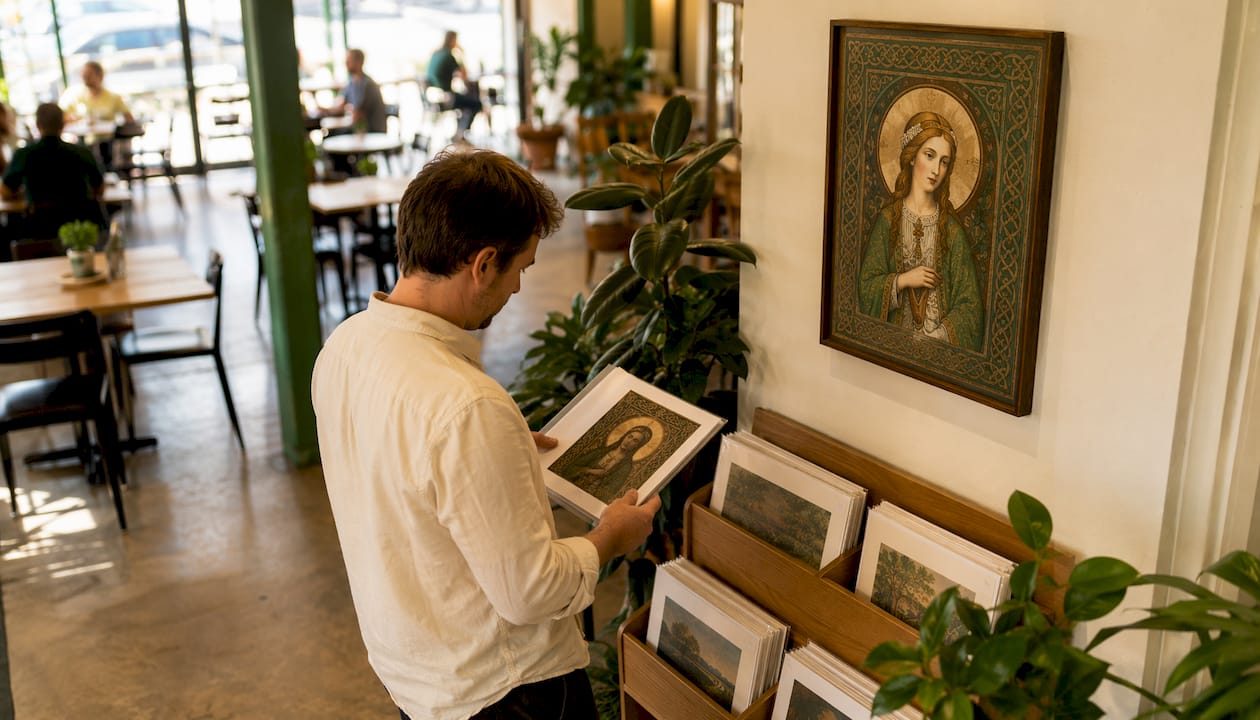
Reviews for Legacy Icons and Agiografia Icons frequently mention the weight and texture of the wood plaque as a signal of quality that photos cannot convey. For Uncut Mountain Supply, buyers note that the print color accuracy is high and that the image holds up well when framed. The Brian Matthew Whirledge icon draws specific praise for the Irish uncial script and Celtic brocade, details that buyers with Irish heritage find personally meaningful.
Museum-standard technique labeling, when present, also registers with buyers as a trust signal. It tells them the icon was not produced in a factory, and that the iconographer followed a recognized tradition rather than improvising.
How to choose the right Saint Dymphna icon for devotional use
The right icon depends on how you plan to use it, what you value in the image, and what you can spend.
- For a prayer corner or home altar: Any of the four options works. If budget allows, a hand-painted original on wood creates a presence that prints cannot fully replicate.
- As a gift: Uncut Mountain Supply’s prints are practical and affordable. For a more significant gift, a Legacy Icons or Agiografia Icons piece carries weight.
- For a collector: The Brian Matthew Whirledge icon is the most distinctive. Its Celtic integration is unique in the U.S. market and unlikely to be replicated by mass production.
- Iconographic fidelity: If Byzantine canon is your priority, Agiografia Icons is the strictest in its adherence to traditional technique and symbolism.
- Verifying authenticity: Look for named iconographer attribution, a description of the technique used, and a return or authenticity policy. A seller who cannot name the artist or describe the medium should prompt caution.
Selecting devotional Christian artwork is ultimately a personal decision shaped by spiritual intent. The icon you pray before daily does not need to be the most expensive one. It needs to be the one that draws your attention toward the saint and, through her, toward God.
Why do Saint Dymphna icons matter spiritually?
Orthodox theology describes icons as “windows into heaven,” not decorations. They function as points of contact between the person praying and the saint depicted, making the invisible communion of the Church visible in a physical space.
Saint Dymphna’s role as patroness of mental health gives her icon particular weight for anyone navigating anxiety, depression, or emotional suffering. The town of Geel, Belgium, where she was martyred, developed the oldest community mental health program in the Western world, a tradition rooted directly in her cult. That history is not incidental to the icon. It is part of what the image carries.
- Placing her icon in a prayer space creates a consistent visual anchor for intercession.
- Her feast day, May 30, is a natural occasion for intentional prayer before her image.
- For those who deepen their prayer life through physical focal points, the icon serves as a daily reminder that healing is a spiritual as well as medical concern.
- The saint prints tradition in Christian homes reflects this same instinct: keeping holy figures visible keeps faith active.
Divineprints offers a different path to saint wall art
If the hand-painted originals from Legacy Icons or Agiografia Icons are beyond your current budget, or if you want to build out a broader prayer space with multiple saints, Divineprints offers a practical alternative worth knowing about.
Divineprints is a U.S.-based e-commerce store specializing in faith-centered Christian and Catholic saint wall art, including museum-grade fine art prints and canvases in multiple sizes and frame types. The focus is on making devotional imagery accessible without sacrificing quality. Where the vendors compared above each specialize in a single icon or a narrow catalog, Divineprints carries a broader collection of saint prints suited to prayer spaces, bedrooms, offices, and parish settings. For Confirmation gifts, baptism gifts, or simply furnishing a home with meaningful Christian imagery, it is a straightforward option that does not require commissioning a custom piece or navigating international shipping.
Key Takeaways
The most authentic Saint Dymphna Orthodox icons in the U.S. combine Byzantine egg tempera technique, named artisan attribution, and iconographic symbolism rooted in her Irish martyr identity.
| Point | Details |
|---|---|
| Top U.S. vendors | Legacy Icons, Agiografia Icons, Uncut Mountain Supply, and Brian Matthew Whirledge each serve distinct buyer needs. |
| Authenticity signal | Named iconographer attribution and documented technique are the clearest markers of a genuine Orthodox icon. |
| Celtic integration | Brian Matthew Whirledge’s icon uniquely incorporates Irish uncial script and Celtic brocade within Byzantine canon. |
| Spiritual purpose | Saint Dymphna icons serve as prayer focal points, especially for those seeking intercession for mental health. |
| Divineprints option | Divineprints offers accessible museum-grade saint prints for buyers building broader devotional spaces or seeking gifts. |