

“Michael” means “Who is like God?” — a rhetorical challenge, not a question, thrown at every power that dares rival heaven. Saint Michael is the archangel Scripture and Catholic tradition present as God’s chief warrior, the leader of the heavenly army who casts down Satan in Revelation 12. Christians have long turned to him as defender, judge of souls, and guide for the dying.
TL;DR:
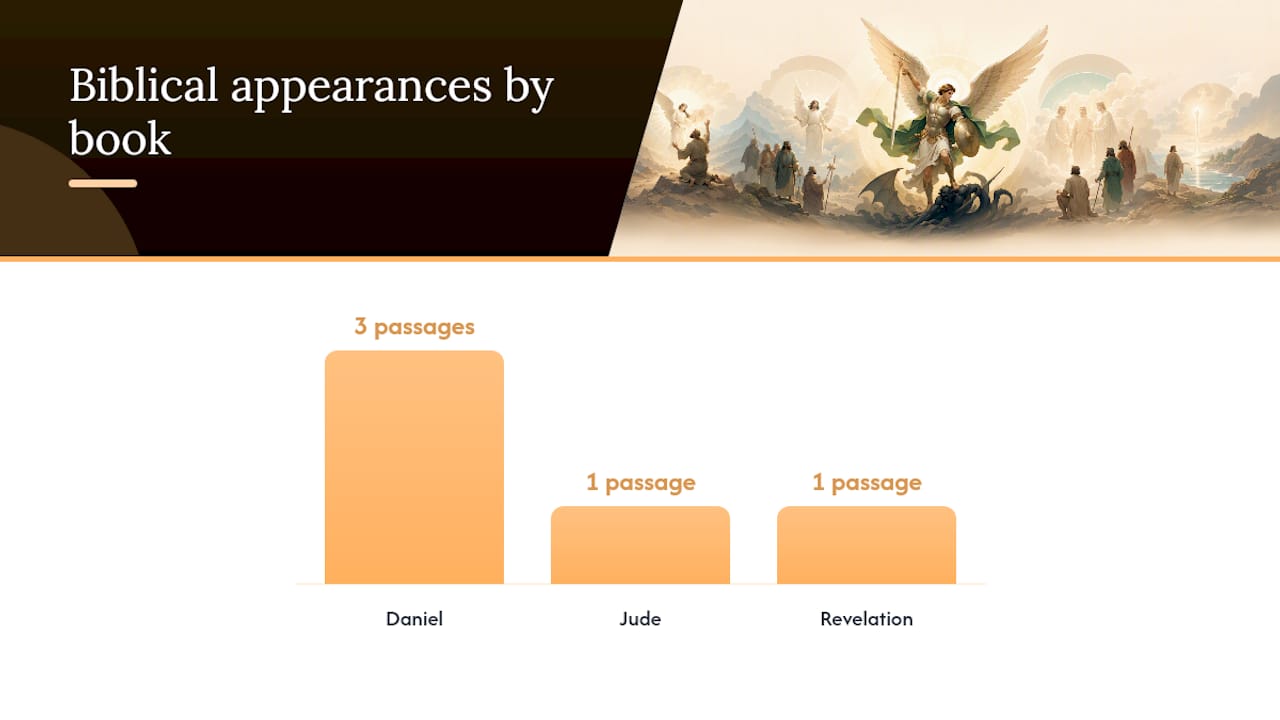
- Michael appears explicitly in only a few biblical passages, primarily as Israel’s protector in Daniel, a dispute with Satan in Jude, and leading heavenly armies in Revelation, highlighting his cosmic and national roles.
- His four traditional offices are commanding God’s army, escorting souls at death, weighing souls during judgment, and protecting the Church, each rooted in biblical references and liturgical tradition.
- Artistic depictions typically show Michael with a sword or spear, scales, and armor, often battling a dragon or demon, with imagery developed from the fourth century and spread through European art history.
- The prayer to Saint Michael, composed after Pope Leo XIII’s 1884 vision, is a wartime plea asking for divine protection against evil, especially recited during spiritual struggles or at death.
- The name “Who is like God?” emphasizes humility over power, serving as a theological reminder that even the archangel’s authority is subordinate to God’s supremacy.
Table of Contents
- Saint Michael Name Meaning and Where He Appears in Scripture
- The Four Traditional Offices of Saint Michael
- How Saint Michael Is Depicted in Art
- The Prayer to Saint Michael and His Feast Day
- What Saint Michael’s Example Means for Believers Today
- Saint Michael’s Presence in Shrines, Art, and Popular Culture
- Keeping Saint Michael’s Image Close in Daily Devotion
- Why Michael’s Name Still Carries Weight
- Sources
Saint Michael Name Meaning and Where He Appears in Scripture
The name breaks down from the Hebrew phrase “Mi-ka-el,” which literally asks “Who is like God?” It isn’t really a question at all. It’s a statement dressed as one, meant to shut down any comparison between the Creator and anything or anyone else, including the proudest of fallen angels. Names in the Hebrew Bible often work this way, carrying an argument inside a label, and Michael’s name is one of the sharpest examples of that pattern.
Michael appears by name in only a handful of biblical passages, which surprises a lot of readers who assume he shows up constantly given how central he is to Christian art and devotion. The name’s Hebrew etymology) traces back to a construction that theologians read as a battle cry against pride itself, since the sin that undid Lucifer was precisely the delusion of being God’s equal.
Here’s where he actually turns up in the biblical text:
- Daniel 10:13, 10:21, and 12:1 — Michael is called “one of the chief princes” who fights on behalf of Israel and is described as the guardian who “stands up” for God’s people during a time of trouble unlike any before it.
- Jude 1:9 — Michael the archangel disputes with the devil over the body of Moses, a brief but striking scene that shows him acting as a kind of legal advocate, not just a soldier.
- Revelation 12:7–12 — Michael leads the angels in war against the dragon, “that ancient serpent called the devil, or Satan,” and throws him down from heaven.
Daniel’s visions place Michael in the role of national guardian, the angel assigned specifically to defend Israel against hostile powers, both earthly and spiritual. Revelation expands that role to cosmic scale. The battle stops being about one nation and becomes about the entire created order, with Michael leading the decisive strike that ends Satan’s access to heaven. Michael the archangel is traditionally identified as the leader of the heavenly hosts who battles Satan, a role that later Christian writers would treat as the defining image of who he is.
Jude’s account is easy to skip past, but it matters more than its length suggests. Michael doesn’t simply overpower the devil in that verse. He argues with him, which tells you something about how early Christians understood angelic authority: it operates through both strength and rightful claim, not brute force alone.
Early Jewish tradition, including texts outside the standard biblical canon, expanded Michael’s portfolio well beyond these three passages. Writings like the Book of Enoch and various apocryphal texts describe him as Israel’s designated protector among the archangels, a role the biblical Daniel passages already hint at but don’t fully spell out. Church Fathers picked up this thread and ran with it, frequently crediting Michael with angelic interventions in Scripture where his name never actually appears. The Catholic Encyclopedia notes this pattern of retroactively identifying Michael as the unnamed angel behind various protective acts throughout salvation history, a habit that reflects how thoroughly early Christians associated any decisive angelic rescue with him specifically.
The Four Traditional Offices of Saint Michael
Catholic tradition doesn’t leave Michael’s job description vague. It assigns him four distinct offices, each backed by centuries of theological writing and liturgical use. Understanding these roles is the fastest way to grasp why his image shows up in so many different contexts, from military chapels to hospital chaplaincies.
- Leader of God’s army. This is the role most people know. Michael commands the loyal angels against Satan and his followers, a position that gives spiritual warfare its most vivid biblical picture. For believers, this office translates less into literal combat and more into the daily discipline of resisting temptation, doubt, and despair.
- Angel of death, or psychopomp. Catholic tradition holds that Michael escorts souls at the moment of death, presenting them before God. This is why his image appears so often near hospital beds, in funeral prayers, and in the traditional commendation of a dying person’s soul.
- Weigher of souls. Michael is pictured holding scales at the final judgment, a role tied to the Greek concept of psychostasy, or “soul weighing.” It’s a striking image precisely because it turns an abstract idea, moral accountability, into something visual and immediate.
- Guardian of the Church. Beyond individual souls, Michael is understood as the protector of the Church as a whole, standing watch over the community of believers the way he once stood watch over Israel.
Catholic tradition assigns Michael these four offices as a coherent set, not a random collection of legends. Each one grew out of biblical seeds and was elaborated by liturgy and popular devotion over centuries. The Church’s official prayers for the dying, for instance, explicitly invoke Michael by name, asking him to receive the departing soul, a practice that has continued largely unchanged for generations.
Vatican News describes Michael as the Church’s “standard-bearer,” a term borrowed from military tradition that means the one who carries the flag into battle first. Liturgical sources present him this way partly because it ties together his warrior identity with his protective role over the Church, the two functions reinforcing each other rather than competing.
Pro Tip: If you’re trying to remember which office applies to which situation, think of Michael’s roles in terms of timing: warrior during life’s spiritual struggles, psychopomp at the moment of death, weigher at final judgment, and guardian across the whole span of the Church’s history. Each office has its own moment.
Patron saint traditions follow directly from these offices. Soldiers claim Michael as their patron because of his warrior role. Police officers do the same, and Divine Prints has covered why Michael is the patron saint for police in more depth elsewhere. The dying and those who care for them invoke him because of his psychopomp function. None of these patronages are arbitrary. Each one traces back to a specific theological office that the Church has taught for centuries.
How Saint Michael Is Depicted in Art
Walk into almost any church with a Michael statue or painting and you’ll see the same handful of symbols repeated, because Christian iconography developed a visual shorthand for Michael centuries ago and mostly stuck with it. Common attributes include a sword or spear, scales, and armor, with the archangel almost always shown standing over or striking down a dragon or fallen demon.
Each symbol carries specific theological weight:
- Sword or spear — signals spiritual victory over Satan, the weapon that enacts the judgment Revelation describes.
- Scales — represent psychostasy, the weighing of souls, turning an invisible moral reality into something a viewer can actually see.
- Armor and military dress — communicate protection, both of individual souls and of the Church as an institution.
- Dragon or serpent underfoot — a direct visual reference to Revelation 12’s depiction of Satan as “that ancient serpent.”
Art historians trace the sword-and-serpent motif back to the fourth century, a period when imperial patronage under Constantine helped shape and spread the image across the Christian world. Byzantine artists frequently dressed Michael in court-robe attire befitting an imperial officer, since the culture’s visual language for authority ran through the emperor’s court. Western European art later shifted toward full knightly armor, reflecting medieval chivalric ideals more than Byzantine court hierarchy, which is one reason a Michael painting from Constantinople and one from Renaissance Florence can look strikingly different while depicting the same theological content.
The scales deserve a closer look because the symbolism runs deeper than a simple balance. Devotional art sometimes shows a small demon gripping one pan of the scale, pulling it downward, dramatizing the idea that the outcome of judgment is genuinely contested rather than automatic. This detail functions as a teaching device, a visual reminder that spiritual accountability involves real stakes and that intercession matters.
One detail worth sitting with: the warrior image dominates popular devotion far more than the other three offices combined, even though Catholic teaching treats all four as equally legitimate. Artists and devotional traditions gravitate toward the sword and dragon motif because it compresses an enormous theological claim, the defeat of evil, into a single, instantly readable image. A weighing scale asks the viewer to think. A sword through a dragon’s throat doesn’t.
Some of the most influential Michael imagery survives in major shrines and museum collections across Europe, and Divine Prints has put together a broader look at archangels in art for readers who want to trace how these visual conventions developed across different periods and regions.
The Prayer to Saint Michael and His Feast Day
The most widely recited Michael prayer in Catholic practice today has a fairly specific origin story, and it isn’t ancient. It comes from the late 19th century, tied directly to one pope’s reported vision.
Tradition holds that Pope Leo XIII composed the Prayer to Saint Michael the Archangel after experiencing a vision in 1884 in which he perceived the intensity of Satan’s assault against the Church in the years ahead. The prayer that resulted asks Michael directly to “defend us in battle” and to “be our protection against the wickedness and snares of the devil,” language that reads less like a general blessing and more like an urgent, specific request for wartime cover. The vision is what turned Michael’s ancient warrior symbolism into a living, repeatable devotional formula rather than just an image on a church wall.
The prayer was originally mandated to be recited after Low Mass throughout the Catholic Church, a practice that fell out of common use after the Second Vatican Council but has seen a notable revival in recent decades, with many parishes and individual Catholics returning to it as a regular devotional habit.
The Church marks Michael’s feast on September 29, the Feast of the Holy Archangels Michael, Gabriel, and Raphael, a date that groups all three named archangels together rather than isolating Michael on his own. Other traditions and regional calendars have historically observed separate Michael feasts, but the September 29 date is the one most widely kept today.
Devotional practice around Michael tends to cluster around a few consistent uses:
- Reciting the Leo XIII prayer during times of personal spiritual struggle, temptation, or anxiety about evil influence.
- Invoking Michael’s intercession at the bedside of someone near death, tying into his traditional role as psychopomp.
- Wearing or displaying Michael medals and images as reminders of protection, particularly among those in law enforcement, the military, and emergency services.
- Praying to Michael communally, especially in parishes reviving the post Mass recitation tradition.
If you’re new to this prayer, the most respectful approach is simple: use it as intended, as a plea for protection rather than a magic formula. Michael’s role is always presented in Scripture and tradition as subordinate to God, never as an independent power center. The prayer itself makes that clear in its very first line, which addresses God before ever naming the archangel.
For readers who want to go deeper into the biblical theme of divine protection that undergirds this devotion, this collection of Bible verses about protection draws together the scriptural foundation that makes prayers like Leo XIII’s theologically coherent rather than a standalone invention.
What Saint Michael’s Example Means for Believers Today
Michael’s name is the whole lesson in miniature. “Who is like God?” isn’t a boast about Michael’s own power. It’s the opposite: a declaration that nothing, including the archangel making the declaration, compares to God. That’s worth sitting with, because it means the most powerful angel in Christian tradition is defined by a name about humility, not strength. Courage and submission aren’t opposites in Michael’s story. They’re the same virtue viewed from two angles.
That pairing gives contemporary believers a genuinely useful model. Spiritual courage without humility curdles into pride, the exact sin that started the whole conflict Michael is famous for winning. Humility without courage collapses into passivity. Michael’s example refuses to let you pick just one.
Christians apply this in a few concrete ways:
- Invoking Michael during personal temptation or fear, treating him as an intercessor whose role is precisely to strengthen resolve against evil influence, not to replace one’s own reliance on Christ.
- Using the examen prayer practice to reflect daily on where courage or humility was tested, a discipline that pairs naturally with Michael’s dual symbolism.
- Adopting Michael as a patron for specific vocations, particularly those in dangerous or protective work, where his warrior image speaks directly to daily risk.
- Praying for the dying, calling on Michael’s traditional psychopomp role during hospice visits or at a deathbed.
Denominational emphasis varies more than people expect. Catholic and Orthodox traditions both maintain robust liturgical recognition of Michael, with feast days, specific prayers, and detailed theological writing about his offices. Protestant traditions generally affirm Michael’s biblical appearances but tend to be far more cautious about devotional practices built around him, preferring to keep the focus tightly on Christ rather than developing prayers, feast observances, or patronage systems around any created being, angelic or otherwise.
Pro Tip: If you come from a tradition wary of “excessive” angel devotion, you can still honor Michael’s biblical role without adopting practices that make you uncomfortable. Reading Daniel 10, Jude 1:9, and Revelation 12 slowly and prayerfully accomplishes most of what devotional prayers aim for anyway: a clearer sense of the real spiritual conflict Scripture describes.
That caution points to a real pastoral concern worth naming directly. Michael devotion, like any devotional practice, can drift into superstition if it’s treated as a good luck charm rather than a genuine act of faith pointed toward God. The insight that Michael’s conflict with evil functions as both a cosmic and personal battle is the corrective here. It’s an external, historical reality Scripture describes, and it’s an internal pattern every Christian lives out in smaller form. Keeping both dimensions in view, rather than fixating only on Michael as a protective figure to be invoked for favors, is what keeps the devotion Christ centered rather than superstitious.
Saint Michael’s Presence in Shrines, Art, and Popular Culture
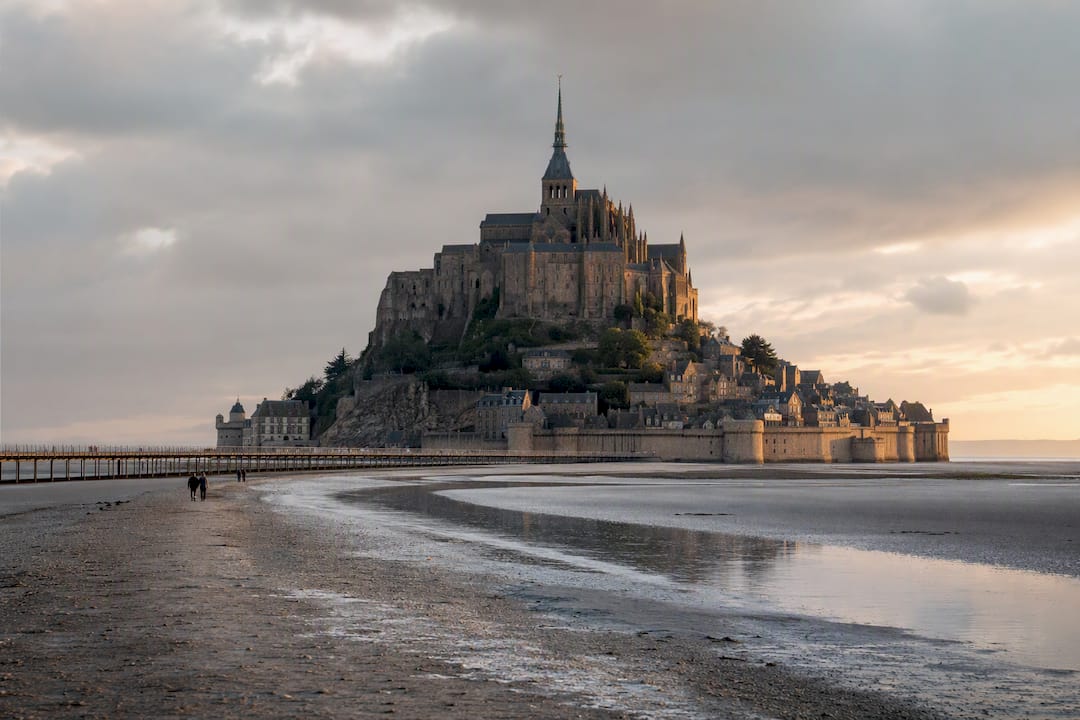
Two geographic sites carry more weight in Michael’s history than any others. Mont Saint Michel, the tidal island off the coast of Normandy, France, became a pilgrimage destination after a bishop reportedly experienced a vision of the archangel in the early 8th century, prompting construction of the abbey that still dominates the island’s silhouette. Mount Gargano in southern Italy holds a similar claim, with a cave shrine tradition dating back centuries and its own apparition legends tied to Michael’s protective role.
Both sites turned an abstract theological figure into a place people could physically travel to, kneel in, and touch, which did more to cement Michael’s popular devotion across medieval Europe than any single piece of theological writing managed on its own.
Major paintings and sculptures reinforced the same effect through a different medium. Renaissance and Baroque artists across Italy, Spain, and Flanders produced Michael imagery that circulated widely through churches, prints, and eventually mass reproduction, standardizing the sword-scales-dragon visual formula into something instantly recognizable across cultures and centuries.
Liturgy and literature kept the momentum going long after the original apparition stories faded from active memory. The feast day on September 29 keeps the archangel in the annual church calendar. Devotional literature, hymnody, and popular Catholic writing have kept his story circulating well outside academic theology. A few threads worth knowing:
- Mont Saint Michel remains one of France’s most visited religious sites, drawing both pilgrims and general tourists.
- Mount Gargano’s shrine tradition predates many of the more famous Marian apparition sites by centuries.
- The sword-and-dragon composition, standardized centuries ago, still shows up in contemporary devotional art with almost no structural change.
Keeping Saint Michael’s Image Close in Daily Devotion
Devotional images work on memory in a way that reading alone often doesn’t. Seeing Michael’s sword raised against the dragon every morning, whether on a bedroom wall or above a desk, functions as a small, repeated cue that pulls the mind back toward the spiritual reality the image represents. That’s not a marketing claim. It’s how visual memory and habit formation actually work, and it’s a large part of why Christian art has never been treated as mere decoration.
If you’re choosing a Saint Michael print for a prayer corner, office, or classroom, a few things are worth checking before you commit to a piece:
- Iconographic accuracy — look for the traditional attributes (sword, armor, the dragon underfoot) rather than a generic angel image with no connection to Michael’s actual symbolism.
- Reverent composition — the best devotional art draws the eye toward Michael’s face or his raised sword, not toward decorative clutter that competes for attention.
- Size and placement fit — a small print suits a personal prayer corner or office desk, while a larger canvas works better in a shared church space, parish hall, or classroom wall.
- Framing that matches the room — a simple frame tends to hold up better in a quiet prayer space than an ornate one that pulls focus from the image itself.
Divine Prints carries a Saint Michael the Archangel print built around these principles, giving families, parishes, and individual believers a straightforward way to keep his image present in daily life rather than tucked away in a book. It fits naturally as a gift for religious occasions or milestones, or simply as a piece for a home prayer space that needs a visual reminder of spiritual courage. For readers building out a broader collection, Divine Prints’ full saint wall art selection covers other figures from Christian tradition whose stories pair naturally with Michael’s own.
Why Michael’s Name Still Carries Weight
The detail that sticks with me most about Michael isn’t the sword or the dragon. It’s the name itself functioning as an argument. Every time someone prays “Saint Michael the Archangel, defend us in battle,” they’re repeating a rhetorical question composed thousands of years before Pope Leo XIII ever had his vision, and the question still does the same job it always did: it puts God’s supremacy ahead of any claim evil tries to make.
That’s the part conventional coverage of Michael tends to underplay. People gravitate toward the warrior imagery because it’s dramatic and visually satisfying, but the name itself is the more radical claim. A being powerful enough to lead heaven’s armies is defined, at the level of identity, by a statement of his own subordination. There’s something genuinely countercultural in that for anyone raised on stories where strength and self assertion go together automatically.
Michael’s example works because it refuses that pairing. Courage that stays humble, protection that stays pointed at God rather than at itself: that’s the pattern worth carrying past the page.
— Griffin
Sources
- Catholic Encyclopedia: St. Michael the Archangel — New Advent
- Vision of Pope Leo — UCatholic
- Christianiconography