

Start with three anchors: one focal wall piece across from your desk, a small scripture or saint item within reach on the desk itself, and a modest prayer shelf nearby for quiet moments. Some retailers carry ready-made options for the first two, and lowering the usual hanging centerline for seated sightlines keeps the whole setup looking intentional rather than accidental.
TL;DR:
- Wall art should be lowered by 2 to 3 inches from the standard 57-inch centerline to align with seated eye level.
- Artwork over furniture should span about two-thirds of the furniture’s width to create a balanced visual proportion.
- For glare reduction, frameless acrylic or matte-finish materials are preferable, especially on walls facing windows or bright lighting.
- Canvas wraps and metal prints are durable options that resist glare and fade better in sunlit office environments.
- When planning your space, measure both desk and wall space, and consider seasonal rotation of art to maintain a fresh and meaningful decor.
Table of Contents
- Christian office decor ideas worth trying first
- Where to hang wall art so it fits a seated workspace
- Materials and frames that hold up in an office setting
- Choosing pieces that fit your space, faith, and budget
- Putting it into practice with Divine Prints collections
- Caring for scripture prints, canvases, and desk items
- Bring the look home with Divine Prints
- What a small prayer corner taught me about office focus
- Sources
- FAQ
Christian office decor ideas worth trying first
The right mix depends on how much wall space you have and how public your office is, but a few categories cover most needs.
- Scripture and verse prints: a 12x16 print suits a narrow wall or hallway nook, while a 24x36 or larger piece works as the room’s focal art.
- Saint prints: choose a patron saint tied to your work or a personal devotion for a corner that invites reflection without dominating the room.
- Gallery layouts: a grid suits a formal office, a salon-style cluster fits a creative space, and a single picture ledge works well when you like to rotate pieces.
- Desk accessories: a small plaque, a pen holder with an engraved verse, or a compact daily calendar adds faith without cluttering a work surface.
- Plants and lighting: a low-care plant like a pothos or snake plant softens a religious display, and a glare-minimizing lamp keeps prints readable after dark.
Keep verses short and legible from a seated position. A line like “Be still and know that I am God” reads clearly across a room, while a longer passage is better saved for a print you view up close. For a deeper look at pairing devotional themes with a room’s overall feel, the faith-centered home decor guide walks through saint and Jesus print pairings in more detail.
Where to hang wall art so it fits a seated workspace
Office art has different rules than a living room wall because most people view it while sitting down.
- Start from the standard 57-inch centerline, then lower it by 2 to 3 inches for desks and conference seating so the art lines up with a seated eye level, as recommended in Frameology’s placement guide.
- Apply the 2/3 rule: a gallery grouping or single piece over furniture should span a majority portion of the furniture’s width, typically around two-thirds to achieve balanced proportion.
- Leave 4 to 8 inches of clearance between the top of a desk and the bottom of a frame, or 6 to 8 inches over larger furniture, a spacing pattern confirmed by Art Academi’s museum rule breakdown.
- Space individual frames in a gallery 2 to 3 inches apart, and treat the whole grouping as one piece: center the group, not each frame, against the wall or furniture below it.
- Run a glare check by sitting at your usual spot during the day and again after dark with the lamps on, since reflections often show up only under certain light.
Reflections ruin more office art than bad framing does. Frameless acrylic or a gloss wood finish cuts glare on walls that face windows or overhead fluorescents, a fix worth considering before you commit to glass.
Materials and frames that hold up in an office setting
Each material trades off differently between appearance, durability, and glare.
- Framed prints under glass look polished but can reflect overhead lighting directly into a seated line of sight.
- Canvas wraps have no glazing to reflect, which makes them a safer pick for a wall opposite a window.
- Metal prints offer a sharp, modern finish but can show glare similarly to glass in bright rooms.
- Frameless acrylic combines a clean look with minimal glare, making it a strong choice for desk-facing walls.
Stick to one frame color and one mat style across a gallery wall so the individual pieces read as a set rather than a mismatched collection. For anything heavier than a standard poster frame, use a rated dual-hook hanger or a track-based system, since Absolute Museum & Gallery Products notes that professional-grade hardware protects both the wall and the artwork on larger or more valuable pieces.
Pro Tip: Test your gallery layout on the floor before drilling a single hole, then use painter’s tape to mark the wall.
Choosing pieces that fit your space, faith, and budget
Measure before you shop. Note both your desk width and the open wall space across from it, then apply the 2/3 rule from the placement section above to settle on an art width before you start browsing.
- Shared or visible offices call for short, positive verses that read well from across the room and don’t require explanation to a colleague.
- Private prayer corners are a better fit for saint imagery or a more contemplative passage, since these pieces get viewed up close and slowly.
- Budget-conscious readers can start with a printable download, add a small desk sign, and treat the wall piece as a later purchase.
- Seasonal rotation keeps a single focal spot meaningful over time instead of adding new pieces to an already full wall.
Denomination matters here too. A saint print suits a Catholic office naturally, while a broader Protestant workspace might lean toward scripture text alone or imagery of Jesus and biblical events rather than individual saints.
Putting it into practice with Divine Prints collections
Divine Prints organizes its catalog around the categories most readers need for an office: Saint Prints for devotional corners, Jesus Prints for a focal wall, Biblical Event Prints for larger narrative pieces, and Angel Prints for smaller desk-sized accents. A practical sequence: pick one focal piece, measure and hang it using the rules above, add a small desk item, then build out a prayer shelf. The large wall art guide covers sizing for bigger focal pieces in more depth.

Caring for scripture prints, canvases, and desk items
Most office decor problems come from sunlight and dust rather than anything more dramatic. Framed prints under glass just need a soft, dry microfiber cloth: avoid glass cleaners with ammonia, which can cloud certain coatings over time. Canvas wraps should be dusted gently with a dry brush or soft cloth, since damp cleaning can warp the fabric or fade the print if it isn’t fully sealed.

Acrylic and frameless prints scratch more easily than glass, so wipe them with a microfiber cloth only, never a paper towel, and avoid spray cleaners that can degrade the surface finish. Metal prints hold up well to occasional dusting and resist fading better than paper-based prints, making them a reasonable choice for a sunlit wall.
For any print, keep it out of direct sunlight where possible, since UV exposure fades color over months even on higher-quality paper. Desk items like pen holders and small plaques mainly need an occasional wipe down, and a felt pad under ceramic or wood pieces prevents scratching on a wood desk surface. Rotating a focal piece seasonally, rather than leaving one print in constant direct light for years, also helps preserve its color.
Bring the look home with Divine Prints
Some retailers print their saint, Jesus, biblical event, and angel prints on museum-quality matte fine art paper or durable canvas, made to order and sometimes backed by warranties. Shipping policies vary, which influences the ease of ordering focal pieces and desk-sized companions.
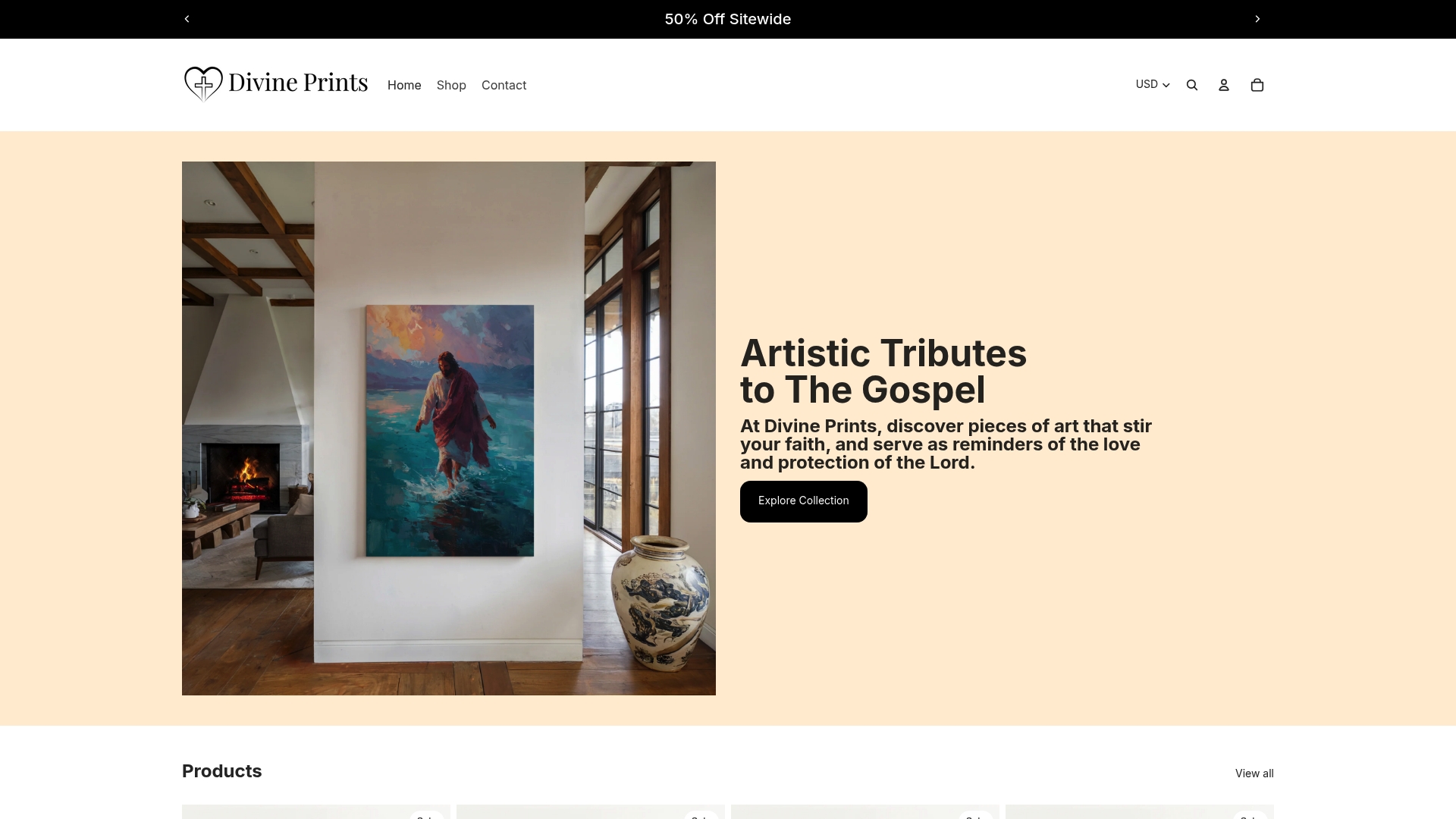
- Browse the full Saint Prints collection for devotional corner pieces.
- Shop Jesus wall art for a focal point across from your desk.
- Explore Biblical Event Prints for larger narrative pieces suited to a bigger office wall.
If you already know which piece fits your space, start with the collection that matches your focal wall and build outward from there.
What a small prayer corner taught me about office focus
Setting up a single anchor piece across from my desk changed how I moved through a work day more than I expected. Choosing one saint print instead of several smaller items made the space feel calmer, and a small prayer shelf nearby gave me a reason to pause between tasks. Workplace research backs this up in a general sense: curated environments and art can influence focus and well-being, and people do notice and react to the furnishings around them.
— Griffin
Sources
- Office wall art placement: the complete guide – Frameology
- How to hang large heavy artworks in your gallery - Absolute Museum & Gallery Products
- Physical workplaces and human well-being (Douglas et al.) - SPARQ / Stanford
FAQ
What are some ideas for Christian-themed decor?
Good starting points include a scripture print as a wall focal piece, a saint or Jesus print for a devotional corner, and smaller desk items like a verse plaque or a prayer card. Pairing one larger piece with a couple of smaller accents tends to look more intentional than scattering many small items around a room.
What are unique office decor ideas?
Beyond standard prints, consider a picture ledge you can rearrange seasonally, a desk mousepad or lamp with a subtle faith motif, or a small biblical event print as a conversation-starting focal piece. Rotating one anchor item every few months keeps a personal office feeling fresh without adding clutter.
What Bible verse would be good to use on my office desk?
Short, steady verses work best on a desk since they need to read clearly at a glance between tasks. Phrases like “Be still and know that I am God” or “I can do all things through Christ who strengthens me” are common choices because they’re brief and legible from a seated position.
What does the Bible say about decorating your house?
Scripture doesn’t give specific decorating instructions, but it consistently frames the home as a place for honoring God and living out faith daily. Many Christians take that as support for visual reminders like scripture art or devotional imagery throughout living and work spaces, rather than as a literal design rule.
How high should I hang Christian wall art in a home office?
The standard art-hanging centerline sits at 57 inches, but for a seated desk or office setting it helps to lower that by about 2 to 3 inches, according to Frameology’s placement guide. This keeps the piece aligned with your eye level while sitting rather than standing.