

Yes, you can build a prayer wall people actually use. Here are practical prayer wall ideas and the simple upkeep system that keeps one going, whether it lives in a church lobby, a family hallway, a youth room, or an online group. Churches, homes, and small groups can all pull from the same core formats and adapt them to fit the space.
TL;DR:
- Seeding the prayer wall with real requests before launch significantly boosts ongoing participation.
- Maintaining accessibility, ownership, visibility, and regular follow-up keeps the wall actively used and meaningful.
- Combining physical and digital formats with moderation and privacy options protects trust and encourages honest sharing.
- Incorporating visual anchors like framed scripture art enhances the space’s focus and prevents cluttered appearances.
- Regular community events and sharing answered prayers externally sustain engagement and deepens the wall’s purpose.
Table of Contents
- Prayer Wall Ideas for Every Space and Budget
- What Actually Makes a Prayer Wall Work
- Materials and Setup Checklist
- How to Launch and Keep People Coming Back
- Pairing Framed Scripture Art With an Interactive Wall
- Handling Privacy and Sensitive Requests
- Getting the Wider Community Involved
- A Few Honest Lessons From Watching Walls Succeed and Fail
- Give Your Prayer Wall a Visual Anchor
- Sources
Prayer Wall Ideas for Every Space and Budget
You don’t need carpentry skills or a design degree to build something people will stop and use. Below are formats that work in churches, homes, and youth spaces, each with a quick note on setup, best-fit location, and what to buy.
1. Sticky note wall. Stick a grid of blank sticky notes on a wall or door, with a marker cup nearby. Best in high-traffic hallways or church lobbies. Refresh weekly so it never looks stale. Materials: sticky notes, fine-tip markers, a small caddy.
2. Chalkboard or whiteboard wall. A framed chalkboard or whiteboard invites open-ended requests without paper waste. Works well in kitchens or classrooms. Wipe clean every one to two weeks and photograph it first if requests matter to someone. Materials: chalkboard paint or a mounted whiteboard, chalk or dry-erase markers.
3. Index card and string display. Clip index cards to twine with mini clothespins, color-coded by category (praise, healing, family). Great for youth rooms where a visual timeline of growth matters. Materials: twine, clothespins, colored index cards.
4. Framed corkboard. A corkboard in a nice frame reads more polished than bare cork and fits living rooms or offices. Set a simple pin etiquette: one request per card, initials only. Materials: framed corkboard, pushpins, cardstock.
5. Prayer request cards and box. Offer cards at the entrance and a locked box for private requests, alongside a public wall for open ones. This gives people a choice between visibility and discretion. Materials: printed cards, a small lockbox.
6. Digital prayer wall. A Google Form routes submissions to a moderation team before they hit a lobby screen or shared feed. This keeps a public digital display free of inappropriate or off-topic posts.
7. Prayer map. Pin a map with photos or flags marking missionaries, neighborhoods, or countries you’re praying for. Works well in a church foyer or a homeschool room studying missions. Materials: a large map, map pins, small photo tags.
8. Prayer chain. Add a paper link to a growing chain each time someone submits a request or shares an answer. The visible length becomes its own encouragement. Materials: colored paper strips, glue sticks or a stapler.
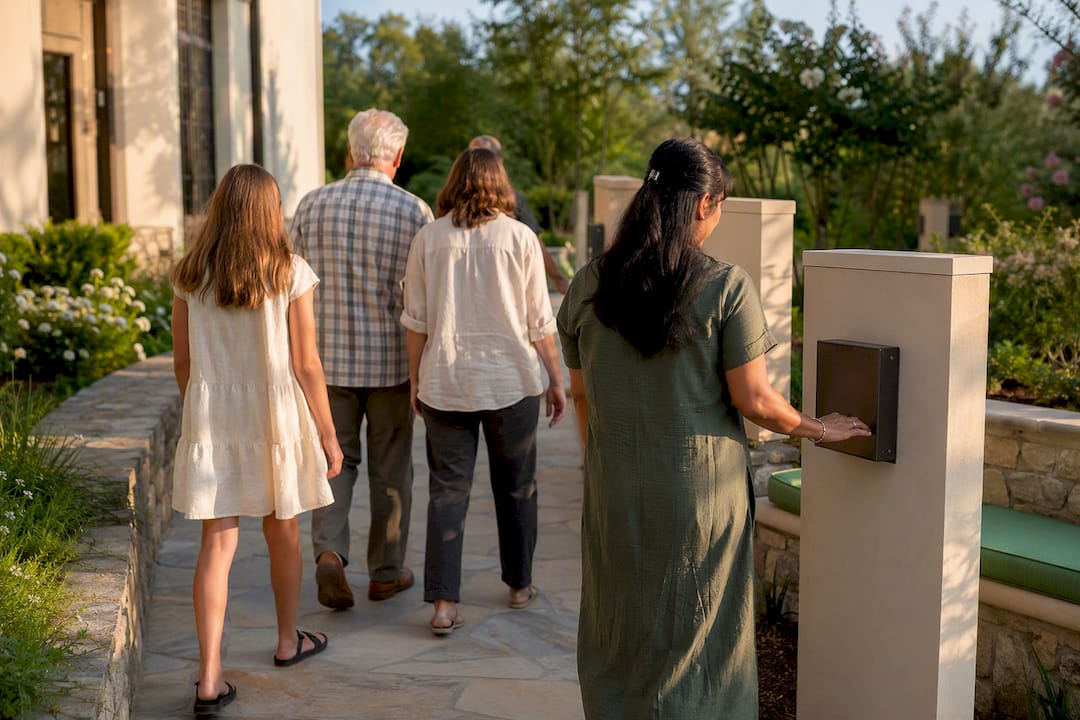
9. Outdoor prayer walk or stations. Set up weatherproof laminated stations along a garden path or church courtyard, each with a short prompt. Materials: laminated cards, weatherproof stands or stakes.
10. Answered-prayer gallery. Move fulfilled requests from the active wall to a dedicated “answered” section instead of discarding them. This is consistently one of the highest-return engagement features a wall can carry, since visible testimony pulls people back to check on old requests.
11. Kids or family corner. A lower, kid-height section with picture prompts (“Pray for someone at school”) lets younger children participate without needing to write full sentences. Materials: laminated prompt cards, crayons, a low corkboard.
12. Themed prayer stations. Rotate stations by topic monthly, praise one week, repentance the next, using the classic Praise, Repentance, Ask, Yield framework. Assign one volunteer per theme so nothing stalls.
What Actually Makes a Prayer Wall Work
A beautiful wall that nobody touches after week one isn’t a prayer wall, it’s decor. The walls that stay alive share four habits.
- Accessibility: keep pens, cards, and instructions within arm’s reach, with a laminated sign explaining exactly how to post.
- Ownership: assign one volunteer or a small team, not “whoever’s around,” and set a review cadence (weekly works for most groups).
- Visibility: place the wall somewhere people naturally pause, a hallway bottleneck, a lobby corner, not a rarely-visited back room.
- Follow-through: archive requests and publicly celebrate answers so the wall’s impact stays visible rather than silently disappearing.
Hybrid setups, a tactile physical wall paired with a moderated digital option, tend to extend access without losing the in-person feel that makes a wall meaningful in the first place.
Pro Tip: Put the volunteer’s first name on the sign (“Maintained by Sarah”) instead of a title. People trust a name more than a role.
Materials and Setup Checklist
You can build most of these in one afternoon with supplies from a craft store.
- Surface: corkboard, chalkboard, whiteboard, or a bare wall with removable adhesive strips.
- Basic supplies: sticky notes, index cards, pushpins, clothespins, twine, and marker pens, plus a small basket for finished cards.
- Digital option: a Google Form linked to a moderation team, displayed on a lobby monitor, or a simple embedded web form with an approve-before-post workflow.
- Accessibility items: large-print cards for older adults, a lower shelf for kids, and thicker pens that are easier to grip.
How to Launch and Keep People Coming Back
An empty wall intimidates people. Solve that before day one.
- Seed it first. Fill the wall with five to ten real requests before you unveil it, so the first visitor sees a living wall, not a blank test.
- Dedicate it publicly. Announce it during a service, small group, or family devotional so people know its purpose and how to use it.
- Run a weekly or monthly ritual. Set a recurring time to archive old cards, move answered ones to the gallery, and refill supplies.
- Post simple rules. A short sign covering how to submit, whether names are optional, and how to opt out of public posting removes hesitation.
Pro Tip: Sync your digital and physical walls with a weekly print run, adding new online submissions to the physical board every Sunday so neither version feels neglected.
Pairing Framed Scripture Art With an Interactive Wall
An interactive wall needs open space to function, so treat framed art as a backdrop rather than filler. A single large scripture print or saint portrait behind a corkboard gives the eye a resting point without crowding the cards people are actually posting.
- Choose one large statement piece, or a balanced three-piece gallery, rather than scattering many small frames.
- Hang art so its visual center lands around 57 to 60 inches from the floor, the standard eye-level height for most viewers.
- Pick bold, high-contrast typography over ornate script, which gets hard to read from across a room.
- Reserve a small gallery moment above the answered-prayer shelf specifically, so visual faith and visible testimony sit together.
For layout examples that combine boards and framed pieces cleanly, a gallery wall layout guide is worth a look before you start hammering nails.
Handling Privacy and Sensitive Requests
Not every prayer request belongs on a public board, and assuming otherwise is how people stop trusting the wall. Someone praying through a divorce, an addiction, or a diagnosis needs a way to be heard without their name and story pinned at eye level for every visitor.
Build in a private option from day one. A locked box alongside the open wall, or a “private” checkbox on a digital form that routes straight to a prayer team instead of a public feed, gives people that choice without singling them out. Make the opt-out obvious on your signage, not buried in fine print.
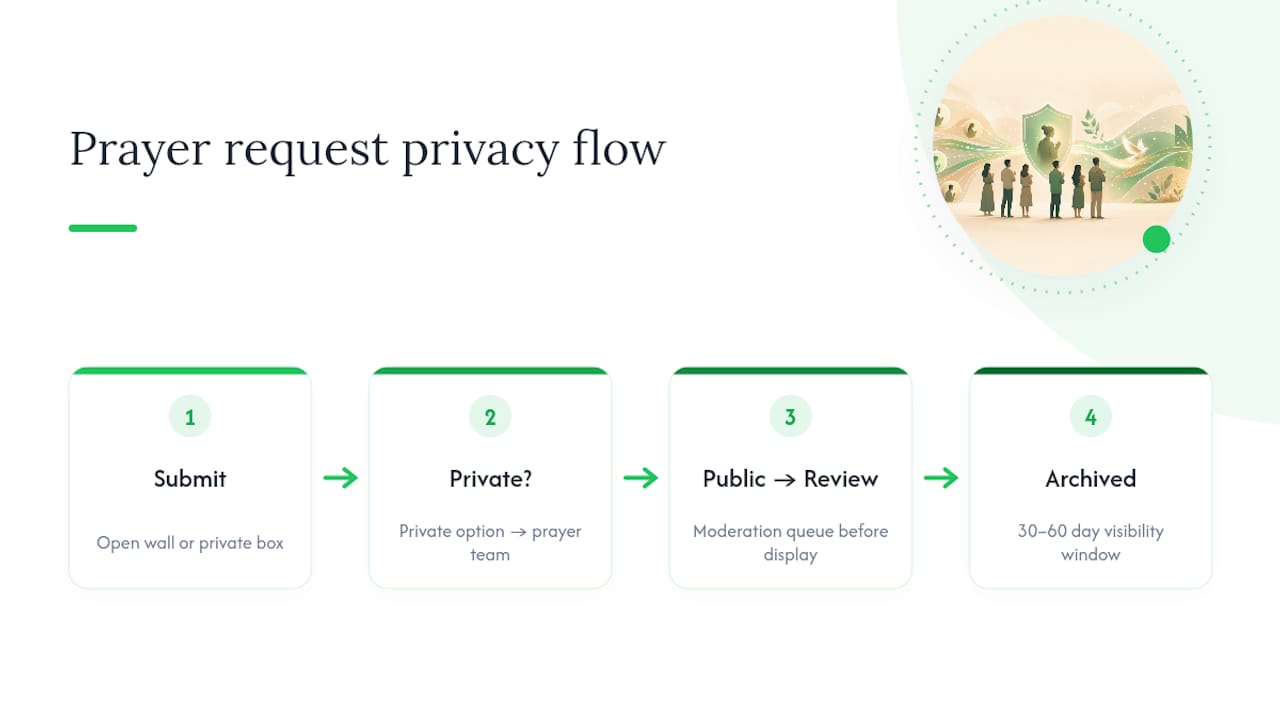
For requests that do go public, encourage initials or first names only, and never post a child’s request with identifying details without a parent’s say. If your church works with minors, treat that boundary as non-negotiable rather than a suggestion.
Digital walls carry extra risk since anyone with the link could theoretically submit something inappropriate or hurtful. A moderation queue, someone reviewing every entry before it displays, solves most of that risk on its own. It also catches spam, which digital prayer boards attract more often than physical ones.
Finally, decide ahead of time how long a request stays visible before it’s archived. A rolling 30 to 60 day window keeps the wall current and prevents old, sensitive requests from lingering long after the person involved would rather move on.
Getting the Wider Community Involved
Posting a card is the easy part. The walls that stay meaningful year after year turn that single action into something communal.
Pair the wall with a recurring event, a monthly “prayer walk” where small groups physically move from station to station, or a quarterly testimony night where people share how a posted request was answered. That gives the wall a reason to be revisited beyond the initial post.
Sharing matters too, in both directions. Encourage people to photograph an answered prayer (with permission) and post it to a church social feed or newsletter, which extends the wall’s reach to people who never walk past it physically. Some churches pair this with a short weekly shout-out during announcements, naming one answered prayer without identifying details.
Small groups and youth ministries can also “adopt” a section of the wall, taking ownership of one themed station for a season. That distributes maintenance across more hands and gives more people a reason to check in regularly. A family prayer corner at home can borrow the same idea on a smaller scale, tying it to a dedicated prayer room or nook where the whole household checks in together.
A Few Honest Lessons From Watching Walls Succeed and Fail
The walls that thrive almost always start seeded, never blank. A youth group that pre-filled its board with ten real requests before the big reveal saw participation triple in the first month compared to one that launched empty and waited for volunteers to “get the ball rolling.”
Three things to do today: seed your wall with real requests before anyone sees it, put one name on the maintenance schedule instead of leaving it to whoever’s available, and build the answered-prayer archive into your plan from week one rather than adding it later as an afterthought.
— Griffin
Give Your Prayer Wall a Visual Anchor
A prayer wall full of sticky notes and index cards is powerful, but it needs a visual center to keep from looking cluttered. That’s where a framed piece pairs naturally with the interactive elements you just built. Divine Prints makes museum-grade prints and canvases sized to anchor exactly this kind of space, whether it’s a backdrop behind a corkboard or a small gallery above your answered-prayer shelf.
A large piece like The Sacred Heart of Jesus works well as a background statement piece for a full prayer wall, while smaller framed prints from the saint prints collection fit nicely in a family prayer corner without crowding the cards and pins. Browse the collection and pick a piece sized for your space, then hang it before you seed your wall so the whole setup comes together at once.
Sources
- Prayer Wall: How to Create One for Your Church or Home - Gospel Mount
- DIY scripture wall art for your home - Members of the Word
- 13 Prayer Wall Ideas for Church, Home & Digital Spaces - Nick Blevins
- Prayer Wall Examples That You’ll Love | ChurchTrac