

Archival paper is paper built to meet chemical stability and physical durability standards so it survives for decades without yellowing, cracking, or breaking down. That’s a higher bar than “acid-free” alone, since acid-free just means the starting pH is neutral or higher. True archival paper passes tested specifications, including standards like ISO 11108, that govern how it ages, handles, and holds up under real-world storage.
TL;DR:
- True archival paper must meet standards like ISO 11108, ensuring both chemical stability and physical durability for long-term preservation.
- Buffering agents like calcium carbonate extend paper lifespan by neutralizing acids, but unbuffered options are better for photographic and protein-based materials.
- Reading product labels for specific ISO standards, PAT test results, pH values, and fiber content is essential to verify actual archival quality.
- Storage environment stability, including humidity, temperature, and protection from light and pollutants, is crucial for maintaining paper longevity.
- Many products labeled “archival” lack verifiable standards, so asking detailed questions about testing and composition is vital for genuine preservation.
Table of Contents
- Archival Paper Meaning: The Chemistry Behind the Claim
- What Physical Traits Make Paper Durable Enough to Last?
- Which Standards Actually Prove a Paper Is Archival?
- Should You Choose Buffered or Unbuffered Paper?
- When Do You Actually Need Archival Paper?
- How to Spot Real Archival Paper When You’re Buying
- How Should You Store Archival Paper to Protect It?
- Why This Matters for Devotional Art and Fine-Art Prints
- The Real Gap Between Archival Marketing and Archival Fact
- Sources
Archival Paper Meaning: The Chemistry Behind the Claim
A neutral or alkaline pH, meaning 7 or higher, keeps paper from breaking down through acid hydrolysis, the slow chemical process that turns cheap newsprint brown and brittle within a few years. But pH alone doesn’t make paper archival. It just means the paper isn’t actively attacking itself yet.
What actually gives paper staying power is alkaline reserve, a buffer of calcium carbonate or magnesium carbonate mixed into the pulp. This reserve neutralizes acids that migrate in from polluted air, adhesives, or even the ink sitting on the sheet, acting as a running defense system rather than a one-time fix.
The fiber source matters just as much as the chemistry:
- Lignin-free stock removes the wood-derived compound that yellows and weakens paper as it oxidizes.
- Alpha cellulose or cotton rag fibers resist the same breakdown far longer than standard wood pulp.
- Combined, these traits are what separates a sheet labeled “acid-free” at the drugstore from one built for permanent retention.
What Physical Traits Make Paper Durable Enough to Last?
Chemistry keeps paper from decaying quietly on a shelf. Physical strength is what keeps it in one piece when someone actually touches it. Tear strength and fold endurance measure how many times a sheet can bend, crease, or get handled before fibers give out, and both depend heavily on fiber length.
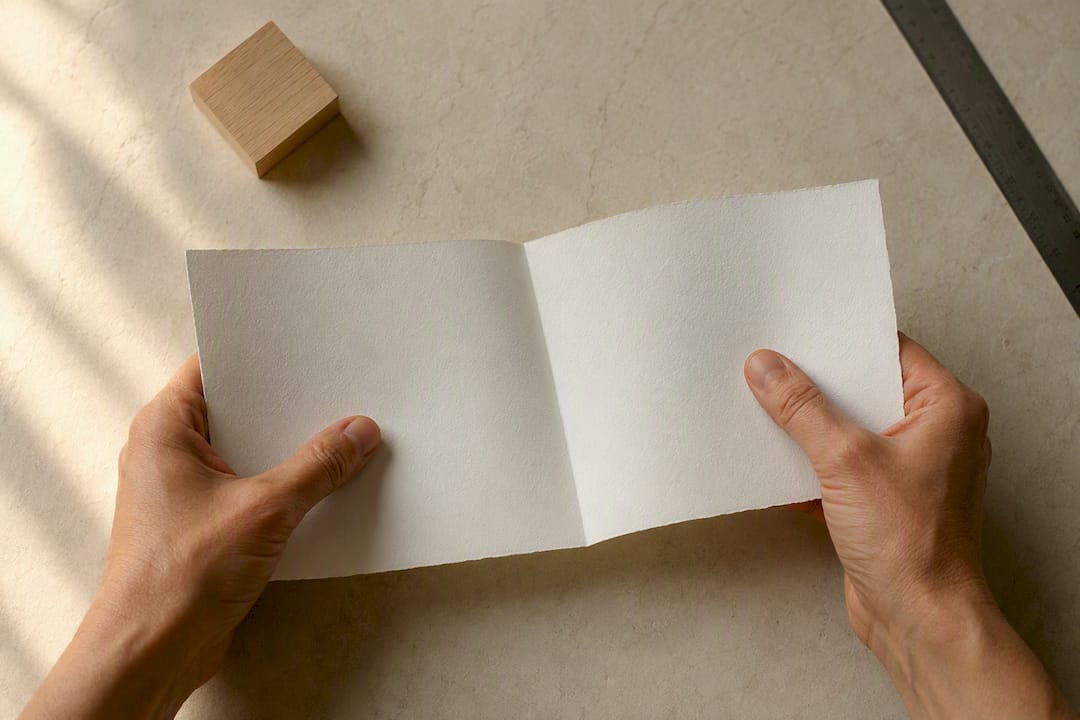
Longer fibers, like those in cotton rag, interlock more tightly than short wood-pulp fibers. That’s why rag papers hold their strength after accelerated aging tests far better than many wood-based cellulose sheets, even when both start out acid-free.
Where this matters in practice:
- Museum-displayed prints face light exposure and repeated inspection, so durability compounds with chemical stability.
- Genealogy documents and certificates get pulled out, folded, and refiled over generations.
- Fine art reproductions meant for framing need enough rigidity to resist warping over years on a wall.
Pro Tip: If a print is going somewhere it’ll get handled often, like a classroom or a parish office, ask about the paper’s weight and cotton content, not just whether it’s “acid-free.” A thin acid-free sheet still tears easily.
Which Standards Actually Prove a Paper Is Archival?
Two ISO numbers do the real work here. ISO 11108 covers archival paper specifically, requiring both chemical permanence and physical durability for documents meant to last indefinitely. ISO 9706 covers a lower bar called “permanent paper,” which addresses chemical stability but doesn’t require the same durability testing. A sheet can be permanent without being archival.
For photo-based prints, the Photographic Activity Test, or PAT, checks whether a paper or enclosure will chemically react with photographic images over time. It matters most for anyone storing or printing photographs, not general documents.
Quick reference:
- ISO 9706: chemical permanence only
- ISO 11108: chemical stability plus physical durability
- PAT: safety for photographic materials specifically
Buyers should treat “archival quality” as a claim that needs evidence. A product page citing a specific ISO number or PAT result is telling you something verifiable. One that just says “archival” with no reference is telling you nothing.
Should You Choose Buffered or Unbuffered Paper?
Buffered paper carries an alkaline reserve, usually calcium or magnesium carbonate, that actively neutralizes acids over time. For most plant-based materials, paper documents, cotton rag prints, letters, buffering is the safer default because it extends usable life against environmental pollutants.
But buffering isn’t universal. Conservators recommend unbuffered materials for certain photographic and protein-based objects, since the alkaline reserve can react with silver-based photo emulsions or animal-derived media like some albumen prints and leather-bound items.
A simple way to decide:
- Is the item plant-based paper or a pigment print? Buffered is usually fine and often preferable.
- Is it a photograph, negative, or protein-based material? Choose unbuffered enclosures and storage paper.
- Not sure what the material is? Ask a conservator or the manufacturer before committing, since the wrong choice can cause slow chemical damage that’s hard to reverse.
When Do You Actually Need Archival Paper?
Not every printed page needs a 100-year lifespan. Match the paper grade to what the piece is actually for.
- Museum-grade art prints and devotional wall art: cotton rag stock, built to resist decades of light and handling.
- Certificates and legal or genealogical records: archival bond paper, valued for permanence over frequent access.
- Everyday photos and casual prints: acid-free is often enough; full archival grade is optional unless the image has sentimental or historical weight.
“Archival” is generally understood to mean protection against deterioration for 30 years or more. If something is going in a frame for the next generation, that time horizon is worth paying for. If it’s a temporary print, it usually isn’t.
How to Spot Real Archival Paper When You’re Buying
Vague marketing language is the biggest trap in this category. Before you trust a listing, check for these specifics:
- A named ISO standard, such as ISO 11108 or ISO 9706, not just the word “archival.”
- PAT results, if the product is meant for photographs or photo-based prints.
- Stated pH value, ideally 7 or above, plus mention of alkaline reserve.
- Cotton or alpha cellulose content, listed as a percentage rather than a vague claim.
- Explicit “lignin-free” labeling, since lignin content is rarely disclosed unless the maker tests for it.
A red flag worth remembering: any listing that says “archival-quality” with zero test references or standard numbers attached is making a marketing claim, not a verifiable one. Reputable art-paper manufacturers, specialty photo paper makers, and dedicated archival suppliers will usually list these specs upfront.
Pro Tip: Save the spec sheet or product description as a screenshot when you buy. If a print starts discoloring years later, you’ll want proof of what you were originally told.
How Should You Store Archival Paper to Protect It?
Buying the right paper only solves half the problem. Storage conditions determine whether that paper’s chemistry ever gets tested by real-world decay.
Start with enclosures. Use buffered folders for plant-based paper documents and unbuffered folders or polyester sleeves for photographs and sensitive media. Remove metal paperclips and staples immediately. Metal fasteners rust, stain, and physically weaken the fibers around them over time; archival-safe alternatives like folded paper strips or plastic clips do the same job without the damage.
Environment matters just as much as the enclosure:
- Keep relative humidity stable, generally in the 30 to 50 percent range, since swings encourage mold and warping.
- Avoid direct light exposure, especially UV, which fades pigments and accelerates paper breakdown regardless of how archival the sheet is.
- Store at stable, moderate temperature, away from attics, basements, or exterior walls prone to swings.
- Limit exposure to airborne pollutants like smoke or off-gassing plastics, which slowly exhaust the paper’s alkaline reserve.
Pro Tip: An archival sheet’s alkaline reserve isn’t infinite. In a humid or polluted environment, it can be used up decades earlier than expected, so the enclosure and the room matter almost as much as the paper itself.
Why This Matters for Devotional Art and Fine-Art Prints
Some retailers build their catalog around pieces meant to stay in a home, church, or prayer space for years, not just a season. Saint portraits, Gospel scenes, and framed devotional art only deliver on that promise if the underlying paper and printing process hold up.
If you’re ordering a fine-art print as a Confirmation gift or for a parish display, it’s worth asking the retailer directly about cotton content, pigment-based printing, and whether the paper meets a named standard rather than a generic “archival-quality” label. Pigment-based prints on archival stock behave very differently over time than dye-based prints, so the ink matters alongside the paper.
Browsing the saint print collection or a piece like the Sacred Heart of Jesus print is a good place to start that conversation, and pairing any purchase with a thoughtful gallery wall layout helps protect the print further by keeping it out of direct sun and high-traffic wear.
The Real Gap Between Archival Marketing and Archival Fact
Most people assume “archival” and “acid-free” mean the same thing, and most retailers are happy to let that assumption stand. It’s cheaper to slap “archival-quality” on a product page than to test against ISO 11108 or run a Photographic Activity Test. That gap between the label and the lab is where a lot of disappointment happens ten or twenty years down the line, when a “museum-grade” print starts yellowing at the edges anyway.
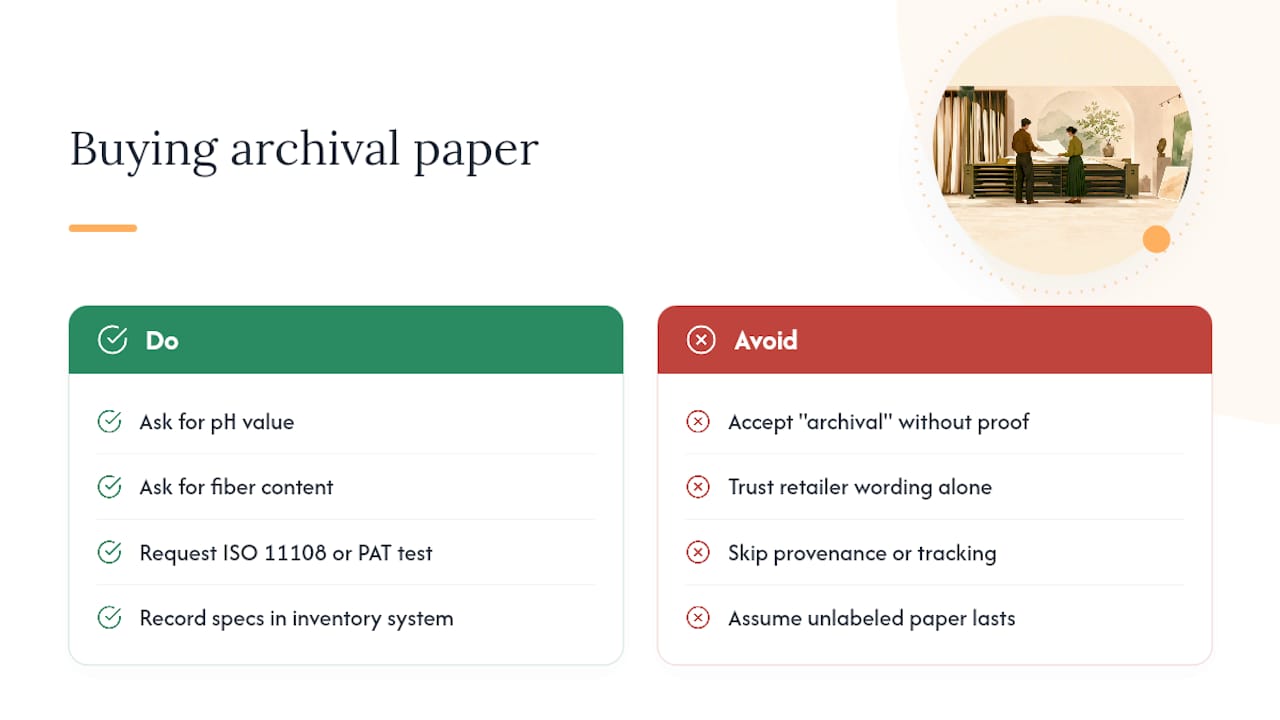
The uncomfortable truth is that most consumer paper products will never carry a real standard number, because most buyers never ask for one. That’s not a reason to distrust every product without an ISO citation. Plenty of solid cotton rag and alpha cellulose papers are genuinely durable without formal certification. But it does mean the burden sits on the buyer to ask specific questions: What’s the pH? What’s the fiber content? Has anyone tested this against a real standard, or is “archival” doing marketing work instead of chemistry?
For anyone preserving something with real sentimental or historical weight, whether it’s a family photograph, a Confirmation certificate, or a saint print meant to outlast the person who bought it, that extra five minutes of asking is the cheapest insurance available. A tool like an art archiving and inventory system can also help collectors track paper specs and provenance across a growing collection, which matters more the longer these pieces stay in the family.
— Griffin
Sources
- NISO — New and emerging specs & standards, July 2025
- Acid-free paper — Wikipedia
- Library of Congress — Preservation FAQ (buffered vs unbuffered)
- NPS Conserve O Gram — Buffered and Unbuffered Storage Materials