

Choose paper when fine detail, small text, or archival framing matter most. Choose canvas when texture, a ready-to-hang look, or low glare under bright lights matters more. Both formats are offered for saint and devotional artwork, so the right pick usually comes down to the image itself and how you plan to display it.
TL;DR:
- Fine details, text, and subtle gradients are better preserved on paper prints, especially when using pigment inks and proper coatings.
- Large, decorative, or painterly artworks benefit from canvas, which hides texture at distance and resists glare in brightly lit rooms.
- Shipping and framing costs can significantly affect the total price, with paper often being cheaper initially but more expensive to frame and install.
- Durability depends more on ink quality and display conditions, with both formats lasting decades if protected from sunlight, humidity, and handling.
- For series or multiple pieces, rolled paper reduces shipping volume and storage, while stretched canvas simplifies installation and creates a ready-to-hang display.
Table of Contents
- Canvas vs Paper Prints: A Quick Side-by-Side Comparison
- Technical Differences: Substrates, Inks, and Finishes That Affect Fidelity
- Which Looks Best Where: Matching Material to Image and Room
- What Actually Determines How Long a Print Lasts
- Comparing the True Cost: Print, Frame, Shipping, and Replacement
- Framing, Installation, and Display Trade-Offs
- Sizing, Shipping, and Handling for Large Pieces or Series
- Five Steps to Choose the Right Medium for Your Wall
- Our Take on Material Choices for Devotional Art
- How Divine Prints Can Help You Choose the Right Format
- Sources
- FAQ
Canvas vs Paper Prints: A Quick Side-by-Side Comparison
The fastest way to eliminate the wrong option is to match your image and your wall to the material’s strengths, not the other way around.
Canvas:
- Softens fine detail slightly but adds a tactile, painterly surface
- Usually ships ready-to-hang, cutting out framing decisions
- Reflects almost no glare, even under bright ceiling lights
Paper (fine art or photo print):
- Holds crisp lines, small text, and subtle tonal gradients
- Needs matting and glazing for a finished, gallery-style look
- Comes in finishes (matte, luster, gloss) that change contrast and reflection
Photographs with fine gradients, portraits with skin-tone nuance, and anything with lettering or intricate iconography tend to read better on paper. Broad brushwork, abstract color fields, and large decorative pieces read well on canvas, especially at a distance where the weave disappears into the image. A large canvas viewed across a living room hides texture that would be obvious on a small desk print.
Technical Differences: Substrates, Inks, and Finishes That Affect Fidelity
Canvas has a woven texture, and that weave physically interrupts fine lines the way a screen door interrupts a clear view. Cotton and cotton-poly blends vary in how pronounced this effect is: a tighter poly-blend weave holds more detail than a heavy cotton duck. Coatings applied after printing (typically a matte or satin varnish) add protection but also soften the surface further.
Paper avoids that problem entirely. Fine art paper is smoother than canvas, which is why it holds up better for:
- Small text, signatures, or iconographic detail
- Subtle gradient transitions in skies or skin tones
- Fine linework in illustrations or drawings
Ink matters as much as substrate. Pigment inks resist fading far better than dye-based inks, and look for prints with archival certification and a protective coating regardless of which surface you choose. A cheap dye-ink paper print will fade faster than a well-made pigment-ink canvas.
Which Looks Best Where: Matching Material to Image and Room
Paper is the natural choice for photography, fine linework, lettering, and limited-edition art meant to feel like a gallery piece. It’s also the better pick for anything you might reproduce or study closely, since detail holds up at arm’s length.
Canvas suits painterly work, large abstracts, and pieces meant to feel warm and decorative rather than sharp and precise. Its matte, glare-free surface works well in rooms with big windows or overhead lighting, where a framed paper print under glass would throw distracting reflections.
Room by room, the pattern holds:
- Entryways and hallways: paper in a slim frame, since viewers pass close
- Living rooms and large walls: canvas, especially above 24x36 inches
- Home offices or prayer corners: either works, but paper suits smaller devotional images with text or fine iconographic detail
- Bedrooms: canvas for a softer, less reflective feel near lamps and windows
Scale is often the deciding factor. A small, detailed saint portrait meant for a nightstand or shelf reads better on paper. The same image blown up to fill a stairwell wall works fine on canvas because the viewing distance hides the weave.
What Actually Determines How Long a Print Lasts
The “canvas vs paper” framing misses the real variable: ink and substrate quality drive longevity far more than the material label does. Both formats can last for decades when paired with pigment inks, protective coatings, and sensible display conditions.
What actually shortens a print’s life:
- Direct sunlight, which fades even pigment inks over years
- High humidity, which can warp paper and loosen canvas on its stretcher bars
- Handling with bare hands, which leaves oils that discolor the surface over time
- Cheap, uncoated dye-ink prints, regardless of substrate
For paper specifically, framing behind UV-filtering glass is the single most effective preservation step you can take. Canvas doesn’t sit behind glass, so its longevity depends more on the coating quality and keeping it out of direct sun.
Pro Tip: Hang paper prints away from south-facing windows and check canvas corners once a year for slack. A loose canvas usually means the humidity in the room has shifted, not that the piece is failing.
Comparing the True Cost: Print, Frame, Shipping, and Replacement
A $40 paper print can end up costing more installed than a $90 canvas once you add a frame, mat, and UV glass. That’s the trap most buyers fall into: comparing base print prices instead of the final cost hanging on the wall.
- Canvas often costs more upfront but arrives stretched and ready to hang, with no framing bill to follow
- Paper is usually cheaper to produce, but matting, glazing, and a frame can double or triple the total
- Rolled paper ships flatter and cheaper; stretched canvas takes up more box volume and costs more to freight
- Over a multi-piece order or a rotating display, paper’s lower shipping and easy replacement often make it the more economical option long term
If you’re outfitting one wall, compare the fully framed price. If you’re planning a series or a rotation, paper’s shipping and storage advantage usually wins over time.
Framing, Installation, and Display Trade-Offs
- Canvas typically arrives gallery-wrapped on stretcher bars, ready to hang with a single hook or wire, and needs no glass, which means no glare and less weight on the wall.
- Paper needs a mat and glazing choice, either standard glass, UV-filtering glass, or acrylic, each with a different price and clarity trade-off, and the finished frame adds weight that requires proper wall anchors.
- Cleaning canvas means a dry, soft cloth or a barely damp one for light dust. Never spray cleaner directly on the surface.
- Cleaning framed paper just means wiping the glass, never the print itself, since paper is sealed behind glazing.
Readers hanging a canvas piece for the first time can find step-by-step hardware guidance here, and anyone weighing glazing options for a framed paper piece will find more detail in this framing buying guide.
Sizing, Shipping, and Handling for Large Pieces or Series
Rolled paper is the practical choice for anyone ordering several pieces at once or coordinating a themed series, since it stacks flat and takes up a fraction of the shipping volume that stretched canvas needs.
- Rolled paper reduces both shipping cost and storage space for multi-print orders
- Stretched canvas increases freight bulk and can add lead time for larger sizes
- For a coordinated series (say, a set of patron saints for a hallway), order paper unframed and frame locally to match, or confirm canvas stretch depth in advance so pieces hang flush together
Five Steps to Choose the Right Medium for Your Wall
- Look closely at the image. Does it have fine text, thin linework, or subtle shading? That favors paper.
- Check your room’s lighting and viewing distance. Bright windows and close viewing favor canvas or matte paper.
- Add up the total cost, not just the print price: frame, mat, glazing, and shipping all belong in that number.
- Decide how long you want this piece to stay put. A rotating gallery wall favors paper’s lighter shipping; a permanent centerpiece can justify canvas.
- Match the medium to your budget and image type, not the other way around.
Pro Tip: If you’re torn between the two for the same image, order a small paper proof first. It’s the cheapest way to judge detail before committing to a large canvas.
Our Take on Material Choices for Devotional Art
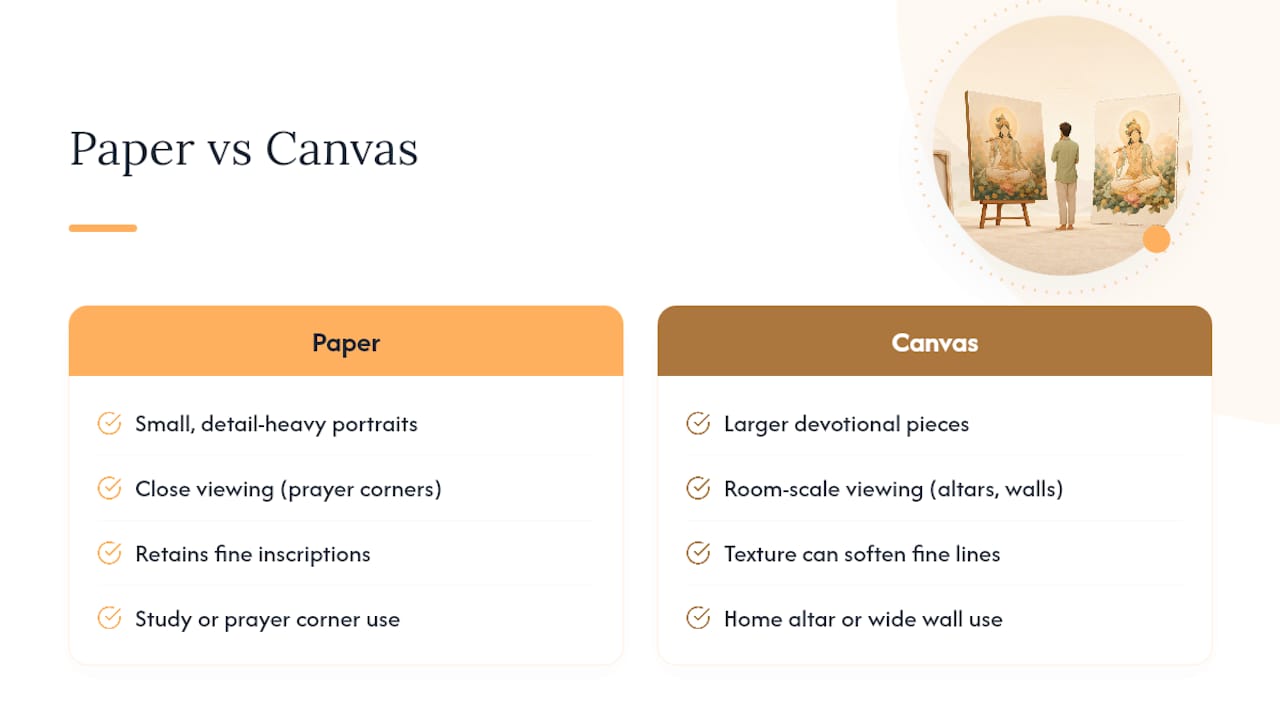
Devotional imagery puts extra weight on this decision because saint portraits often carry fine iconographic detail, inscriptions, or halos with delicate linework that can blur on a woven surface. Both paper and canvas versions of saint art collections are often carried rather than pushing one format as universally better.
Paper tends to serve smaller, detail-heavy portraits meant for prayer corners or study, where a viewer stands close enough to notice a blurred inscription. Canvas earns its place on larger devotional pieces meant to anchor a room, a home altar, or a wide living room wall, where its texture reads as warmth rather than a loss of detail. Neither format is the “correct” one for faith-based art. The image and the wall decide that.
— Griffin
How Divine Prints Can Help You Choose the Right Format
Divine Prints carries its saint and devotional artwork in both paper and canvas, so you’re not stuck picking a format before you’ve picked the image. High-detail portraits with fine iconography or lettering work best as paper prints, while larger devotional pieces meant to warm up a living room or prayer space often work better as ready-to-hang canvas.
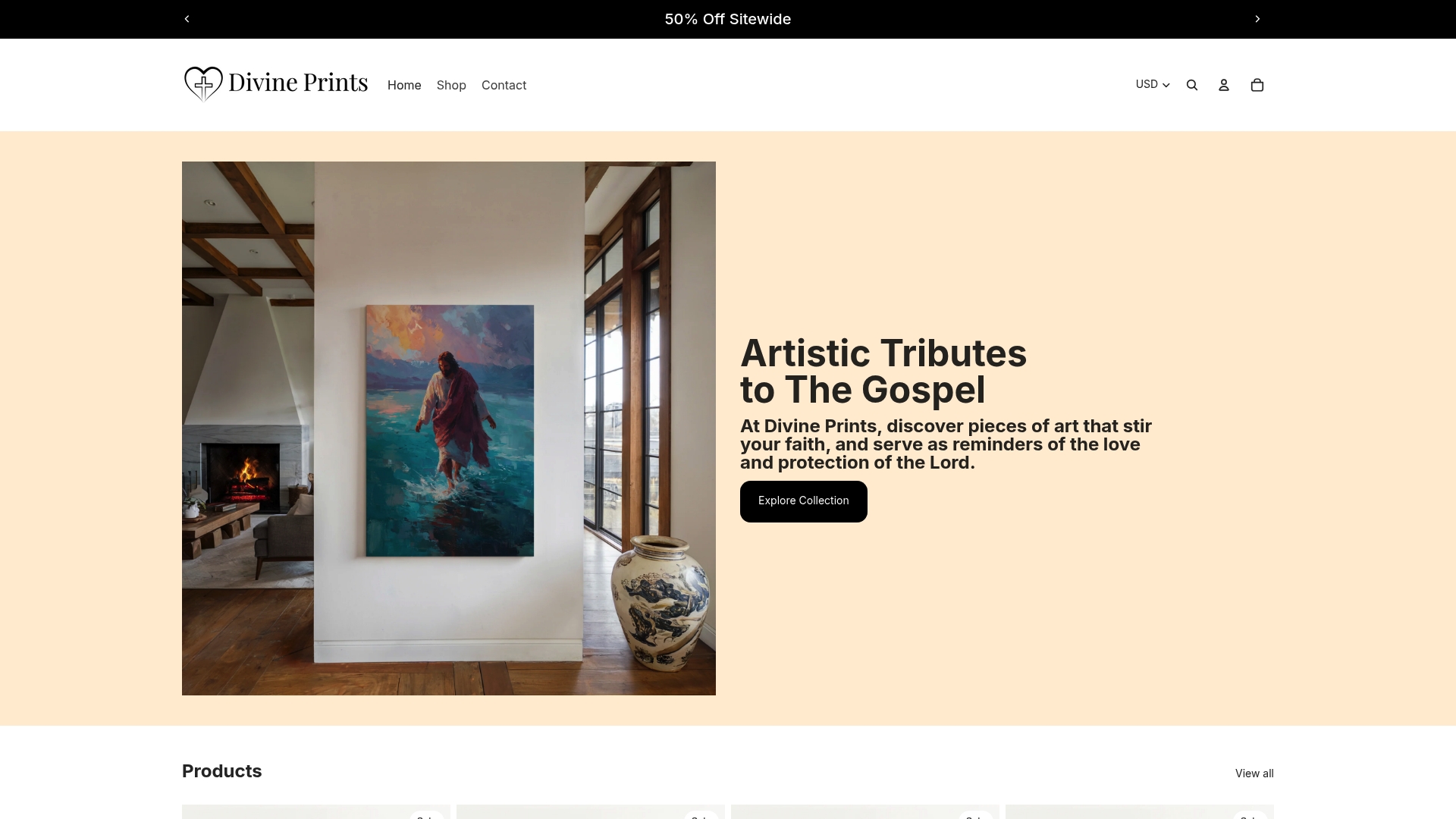
Sizing runs from small devotional prints to large statement pieces, and several products, including The Sacred Heart of Jesus, offer both formats side by side so you can compare finishes before ordering. If you want a broader look at patron saints and historical figures first, browse the Saint Prints collection to see which images come in which formats, then decide based on the detail level and wall you’re working with.
Sources
- Canvas vs Paper prints: Cost, detail, framing and longevity compared
- Canvas vs Paper: Choosing the best medium for your photo prints
- How to Choose Between a Canvas vs Framed Print | Nations Photo Lab
- Canvas Print vs. Art Print — Which One Belongs on Your Wall?
FAQ
Are prints better on paper or canvas?
Neither is universally better. Paper holds finer detail and small text more accurately, while canvas offers a textured, low-glare look that suits larger decorative pieces.
Which is better, paper or canvas, for photographs?
Paper generally wins for photographs, since its smoother surface preserves gradients and skin tones that canvas texture can soften.
Are canvas prints better than photo prints on paper?
They’re not better, just different: canvas suits large, painterly, or decorative images, while photo paper suits detailed portraits and images viewed up close.
What is the difference between a canvas print and an art print?
A canvas print is stretched over wood bars and usually ships ready-to-hang, while an art print is produced on paper and typically requires matting and framing behind glass or acrylic for display.