

In this article, clean canvas art means high-quality devotional canvas prints featuring saints, Jesus, angels, and biblical scenes. The best buying rule is simple: choose museum-grade archival canvas with faithful iconography suited to prayer spaces and gifts, and look to sources like Divine Prints for made-to-order collections built around that standard.
TL;DR:
- Only choose museum-grade archival canvas with pigment-based inks, acid-free backing, and protective coatings for longevity and color stability.
- Select saints and biblical images with recognizable attributes and symbols to ensure they fulfill their devotional and catechetical roles.
- Hang prints using appropriate hardware and placement guidelines to prevent damage, especially in cold or high-traffic areas.
- For gifts, size and subject should match the occasion, with smaller sizes suitable for personal spaces and larger pieces for communal or church settings.
- Confirm production timelines and order from suppliers that offer made-to-order options with warranties against fading and defects.
Table of Contents
- Why sacred images matter in prayer spaces
- How to judge print and material quality
- Choosing the right saint, scene, or symbol
- Hanging, placing, and caring for canvas prints
- Gift guidance for Confirmation, baptism, and First Communion
- Why this matters beyond a single purchase
- Finding the right piece through Divine Prints
- Sources
- FAQ
Why sacred images matter in prayer spaces
Devotional canvas prints are not decoration first. The Catechism of the Catholic Church teaches that sacred images belong in churches and homes to turn the faithful toward God and to recall the “cloud of witnesses” the saints represent. A print of a saint functions as a visual advocate, someone whose story and virtues a household can return to daily. According to the Metropolitan Museum of Art, saints are traditionally identified through attributes and symbols that teach their stories at a glance, which is part of why iconography matters as much as aesthetics.
Choosing devotional prints over generic wall art serves a few concrete purposes:
- They give a family prayer corner or bedroom a fixed point for daily devotion.
- They keep specific saints, feast days, or biblical events present in memory.
- They support catechesis, especially for children learning saints’ stories through images.
How to judge print and material quality
Not every canvas print is built to last, and devotional art deserves the same scrutiny as any heirloom piece. Archival canvas, pigment-based inks, acid-free backing, and a protective coating are the four elements that determine whether a print holds its color and structure for decades rather than fading within a few years. Pigment inks resist UV fading far better than dye-based inks, and acid-free backing prevents the slow yellowing that cheaper boards cause over time.
Most quality providers print to order rather than stocking mass runs, which allows for size and frame customization but also means production lead time matters for gift planning. Stretcher bars (canvas wrapped around a wood frame) suit a gallery look, while framed canvas adds a finished edge for formal rooms or church entries. Look for a clear guarantee against fading or defects before buying, since that language signals a company stands behind its materials.
A practical checklist before you buy:
- Confirm the canvas is described as archival or museum-grade, not just “canvas.”
- Check that inks are pigment-based rather than standard dye inks.
- Ask whether backing is acid-free and whether a protective coating is applied.
- Decide between stretcher-bar canvas and a framed finish based on where it will hang.
- Read the warranty terms for fading, cracking, or shipping damage.
- Compare production and shipping timelines against any gift deadline.
- Review sizing options against the actual wall or shelf space you have.
For a closer look at how canvas and paper differ for devotional use, this guide to choosing canvas or paper prints breaks down the tradeoffs in more detail.
Pro Tip: Ask the seller for close-up photos of actual print texture and edge finishing before ordering, especially for a gift you cannot inspect in person first.

Choosing the right saint, scene, or symbol
Picking a subject starts with matching the image to its purpose. Saints carry attributes that identify them and point to what they stand for, a lion for St. Mark, stigmata for St. Francis, and recognizing those details helps a print do its devotional job rather than hang as a pretty but anonymous picture, per the Met Museum’s essay on saints in medieval art.
Some practical pairings worth knowing:
- St. Joseph suits family rooms and workspaces, tied to his patronage of fathers and workers.
- St. Francis of Assisi fits anyone focused on care for creation or simplicity.
- A patron saint tied to someone’s profession or name makes a personal, lasting gift.
Style matters too. Traditional, icon-like imagery tends to support formal prayer corners and churches, while contemporary devotional art can feel more at home in a casual living room. For a primer on reading saint symbols before you shop, see this guide to identifying saints through iconography.
Hanging, placing, and caring for canvas prints
Display choices affect both the look and the lifespan of a devotional print. The Canadian Conservation Institute recommends fitting protective backing boards and using hanging hardware matched to the wall type, since picture wire can weaken over time and damage heavier pieces. Screw-threaded hooks and wall anchors are a safer choice for larger or framed canvases, and the same guidance warns against hanging paintings directly on cold exterior walls, where condensation can cause long-term damage.
A few placement notes worth keeping in mind:
- Prayer corners benefit from eye-level placement near a chair or kneeler, away from direct sunlight.
- Churches and classrooms need larger scale and secure anchoring for high-traffic sightlines.
- Store extra or seasonal pieces flat with a backing board, never leaned against a cold wall.
For wall systems that need extra support, panels like those from The Panel and Paper Company offer a sturdier backing option in spaces where studs are hard to find. A full walkthrough of hardware and handling lives in this gallery-standard hanging guide.
Pro Tip: For oversized or church-scale canvases, use two anchor points spaced apart rather than a single central hook to prevent tilting over time.
Gift guidance for Confirmation, baptism, and First Communion
Occasion dictates both subject and size. A Confirmation gift often pairs well with the recipient’s chosen saint, while baptism favors a guardian angel or Marian image, and First Communion suits a Eucharistic or Sacred Heart print. Smaller canvases (around 8x10 or 11x14 inches) suit bedrooms and desks, while larger pieces fit church halls or family rooms.
Presentation adds meaning: a framed finish feels more formal for a milestone gift, and pairing the print with a prayer card, such as the USCCB’s Saintly Seven prayer cards, or a handwritten scripture reference turns a print into a keepsake.
A simple ordering checklist for gift shoppers:
- Measure the intended wall or shelf space before choosing a size.
- Pick a subject tied to the recipient’s name, patron saint, or occasion.
- Confirm production and shipping time against the event date.
- Add gift wrap or an inscription if the seller offers it.
Why this matters beyond a single purchase
I have spent time around parish gift shops and family prayer corners, and the pattern is consistent: the prints people keep for decades are the ones chosen for meaning, not just matching decor. The catalog is built around the idea of collections organized around saints, Jesus, biblical events, and angels rather than generic inspirational art. The goal is keeping specific, recognizable figures from Christian tradition present in daily life, not just filling wall space.
— Griffin
Finding the right piece through Divine Prints
Once you know what to look for, archival canvas, pigment inks, acid-free backing, and iconography that matches the occasion, the next step is finding a source that builds around those standards rather than treating them as an afterthought. Some providers make saint, Jesus, angel, and biblical-scene canvases to order on museum-quality materials, sometimes offering a warranty covering defects or fading.
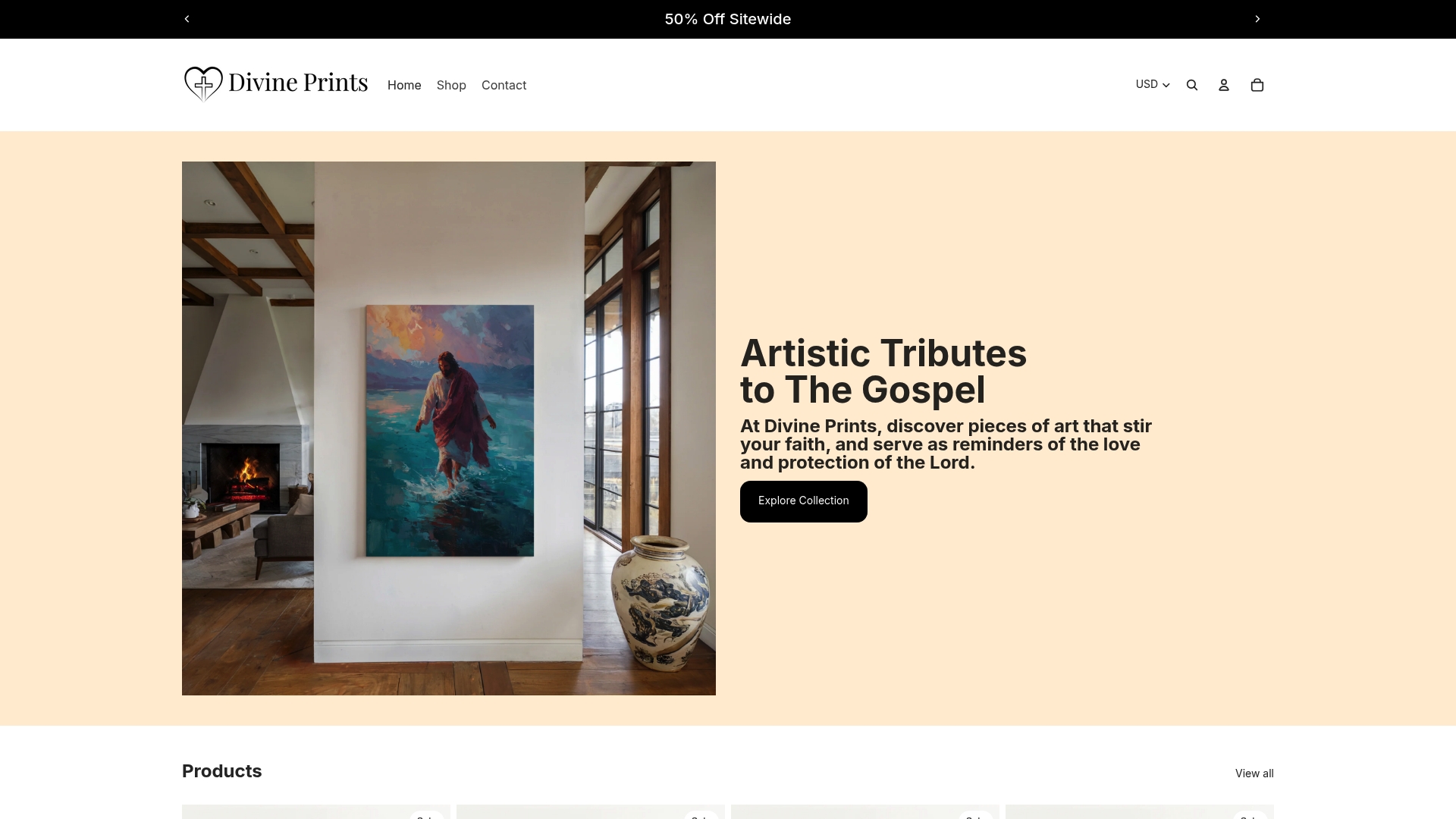
Depending on what you are shopping for, a few starting points make sense:
- Browse Saint Prints for patron saint gifts or a personal devotional focus.
- Check Jesus Prints for Sacred Heart, Good Shepherd, and related imagery.
- Look at Biblical Event Prints for scenes suited to classrooms or church halls.
- Visit Angel Prints for baptism gifts or children’s rooms.
If you are ordering for a specific date, measure your space first, choose a subject tied to the occasion or recipient, and allow time for made-to-order production before the event. Shipping may be available to multiple locations, which can help when gifting across family or parish networks. Start browsing at Divine Prints if you are not yet sure which collection fits.
Sources
- Catechism of the Catholic Church (excerpt) — Catholic Culture
- Saints in medieval Christian art — The Metropolitan Museum of Art
- Storage and display guidelines for paintings — Canadian Conservation Institute
- Saintly Seven prayer cards — USCCB
FAQ
What does “clean canvas art” mean for devotional prints?
In this context, it refers to high-quality faith-based canvas prints, including saints, Jesus, angels, and biblical scenes, made on archival materials meant for prayer spaces and gifts. The key standard is museum-grade canvas with faithful iconography rather than casual decorative art.
How do I know if a canvas print will last?
Look for pigment-based inks, acid-free backing, and a protective coating, since these determine resistance to fading and yellowing over time. A clear warranty against defects or fading is a strong sign the materials meet that standard.
What saint or image should I choose for a gift?
Match the subject to the recipient’s patron saint, profession, or the occasion itself, such as a guardian angel for baptism or a Eucharistic image for First Communion. Attributes and symbols tied to each saint, as explained in museum scholarship, can help confirm the image fits the intended meaning.
How should I hang a canvas print safely at home or in a church?
Use hanging hardware suited to the wall type, screw-threaded hooks and anchors for heavier pieces, and avoid placing canvases directly against cold exterior walls where condensation can form. The Canadian Conservation Institute recommends backing boards and compatible hardware for long-term protection.
Does Divine Prints offer made-to-order devotional canvases?
Yes, Divine Prints produces saint, Jesus, biblical-scene, and angel canvas prints to order on museum-quality materials, backed by a warranty against defects or fading. Collections are browsable directly through the Saint Prints and Jesus Prints pages.